BACK
Toffaha - Saving Food in the Desert
Saudi Arabia is hot. That sounds obvious, but for farmers, it is an engineering constraint, not a weather complaint.
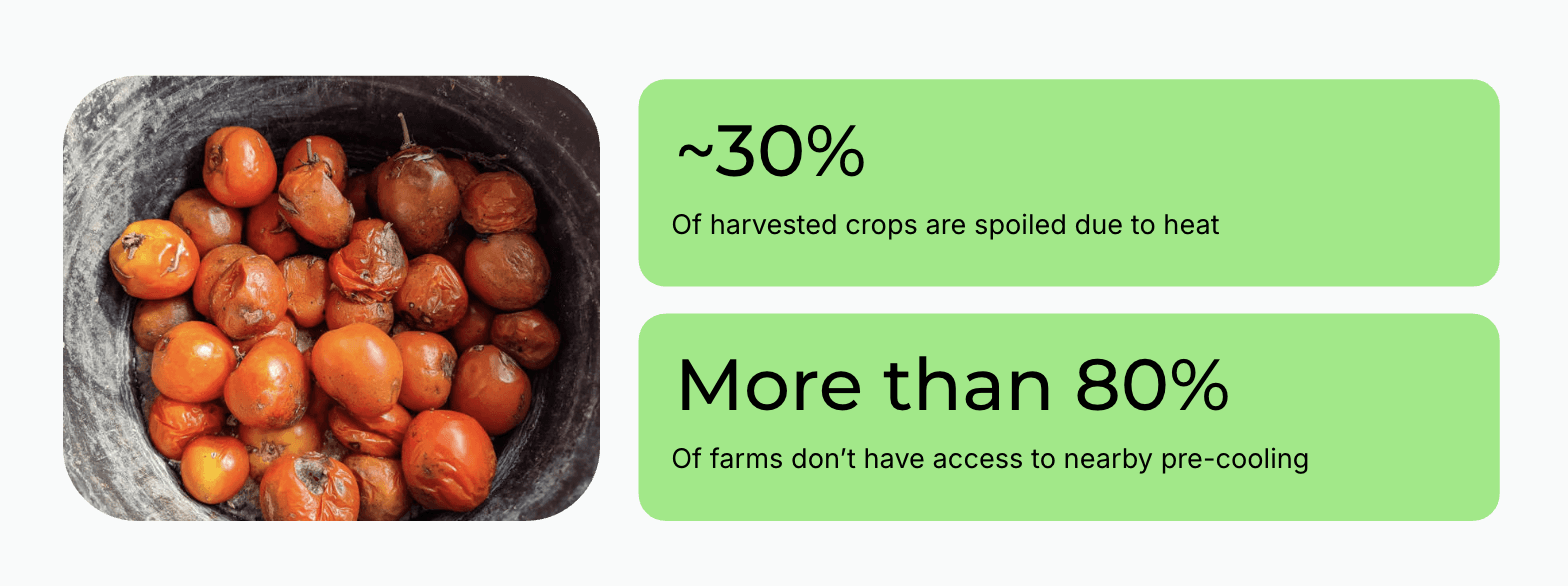
In peak summer, fresh produce can lose half its shelf life in a single afternoon without cooling. Around 30% of harvested crops are spoiled due to heat, and more than 80% of farms don’t have access to nearby pre-cooling facilities.
At the same time, Saudi Arabia still imports roughly 80% of its food because small-scale farms are not well-integrated into the supply chain.
Toffaha grew out of a simple question:
What would it look like to give small farmers the cooling infrastructure and market access of a major distributor, without asking them to build a single warehouse?
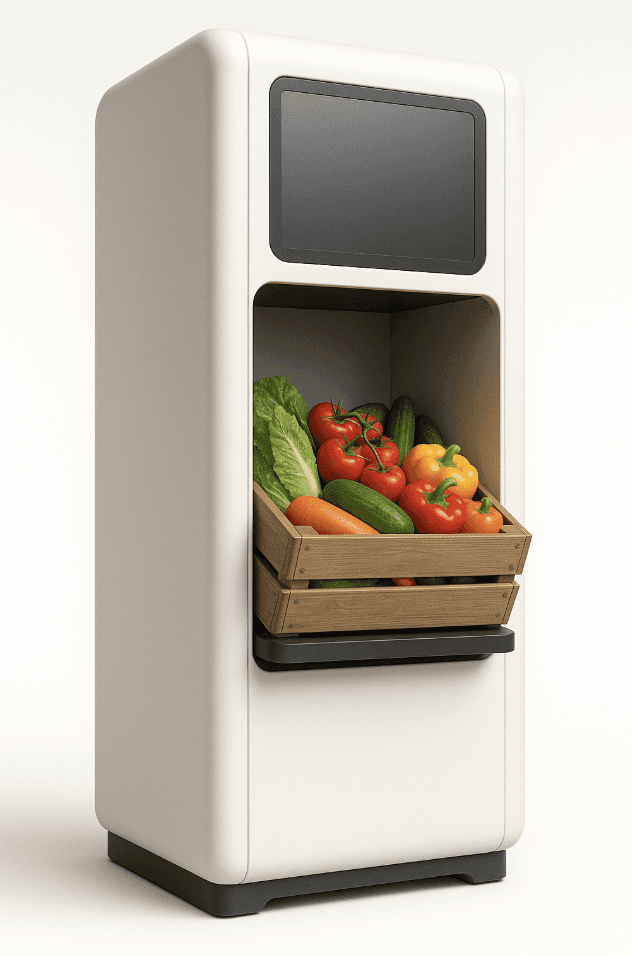
Our answer to that was a kiosk.
Framing the Problem
From a distance, “food spoilage” sounds like a storage problem. Yet up close, it is a timing and distance problem.
Harvest happens far from cities.
Pre-cooling plants are clustered around large farms or urban centers.
Small farmers have to choose between paying to haul produce long distances in the heat or selling quickly at low prices before it spoils.
There are three intertwined issues cause all of this:
Physical heat – Without rapid cooling, farm produce dehydrates and decays.
Missing infrastructure – The cold chain is built for large industrial players, not small scattered farms.
Weak bargaining power – When your tomatoes are hours away from rotting, you will accept any price.
Meanwhile, supermarkets have their own pain: it is easier to import from established suppliers than to coordinate hundreds of small farms.
The result is a supply chain where food travels far, spoils often, and leaves local farmers underused.
What We Optimized For
As we explored the problem, four principles started to drive the design.
1. Compress the time between harvest and payment
If farmers could cool, grade, and sell produce in a single interaction, and get paid instantly, we would reduce spoilage and improve their cash flow.
2. Put cooling where the heat is
Instead of asking farmers to reach the cold chain, move pre-cooling closer to them. This meant designing hardware that can live near farms, withstand harsh climates, and run cheaply.
3. Make automation legible
For the supply chain to be efficient, we need to reduce human effort.
4. Integrate with existing buyers
The goal was not to become a supermarket. It was to become the bridge between small farmers and retailers.
The Concept: A Refrigerated Produce Kiosk
The world’s first refrigerated produce kiosk.
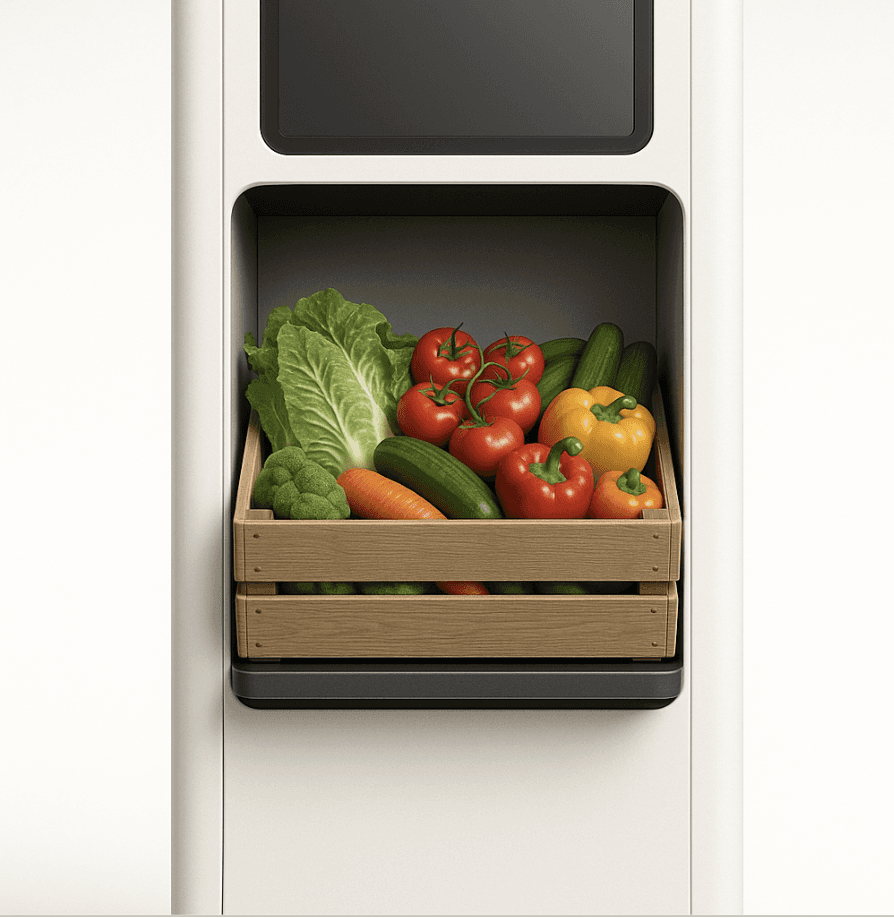
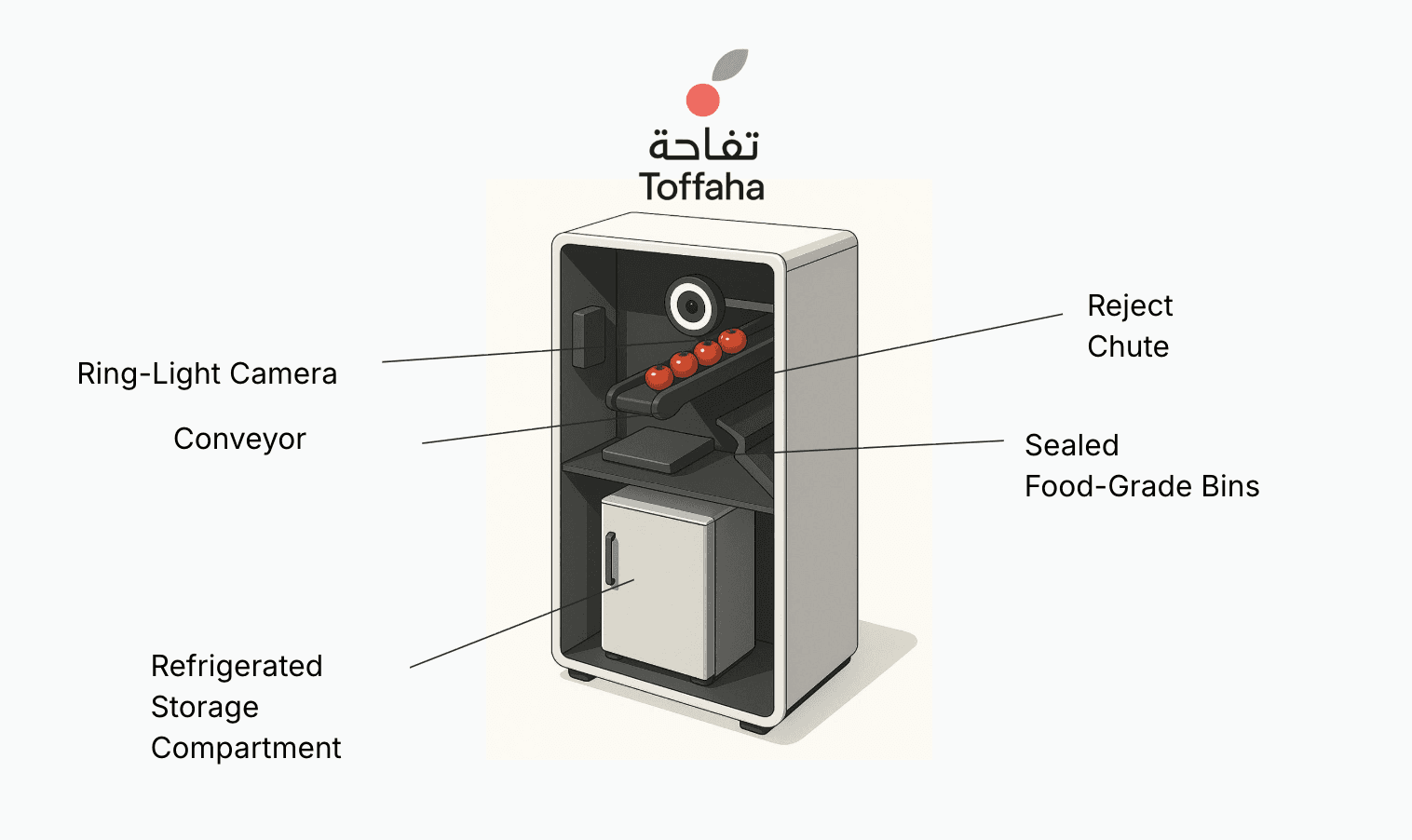
Under the Hood
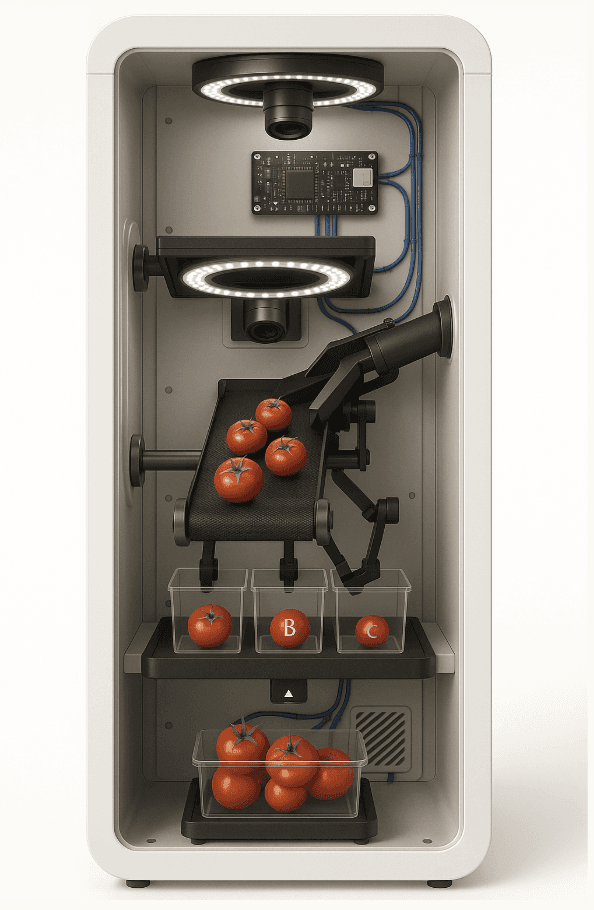
A ring-light camera to capture images of each item.
An AI & computer vision algorithm identifies the produce type and quality grade.
A conveyor to move produce past the inspection area.
The compact hardware handles scanning, weighing, and physical sorting.
Sealed, food-grade bins in a refrigerated compartment to store accepted produce.
A reject chute to separate damaged items.
A cloud platform calculates prices, associates batches with farmers, and triggers payouts.
From the farmer’s perspective, though, none of that should feel complicated. The experience had to feel like using an ATM or a vending machine in reverse: you insert tomatoes and get money out.
Designing the Farmer Experience
The high-level flow interaction for farmers:
Find the nearest kiosk to your farm → Deposit your produce → Let the kiosk inspect, filter, and grade.
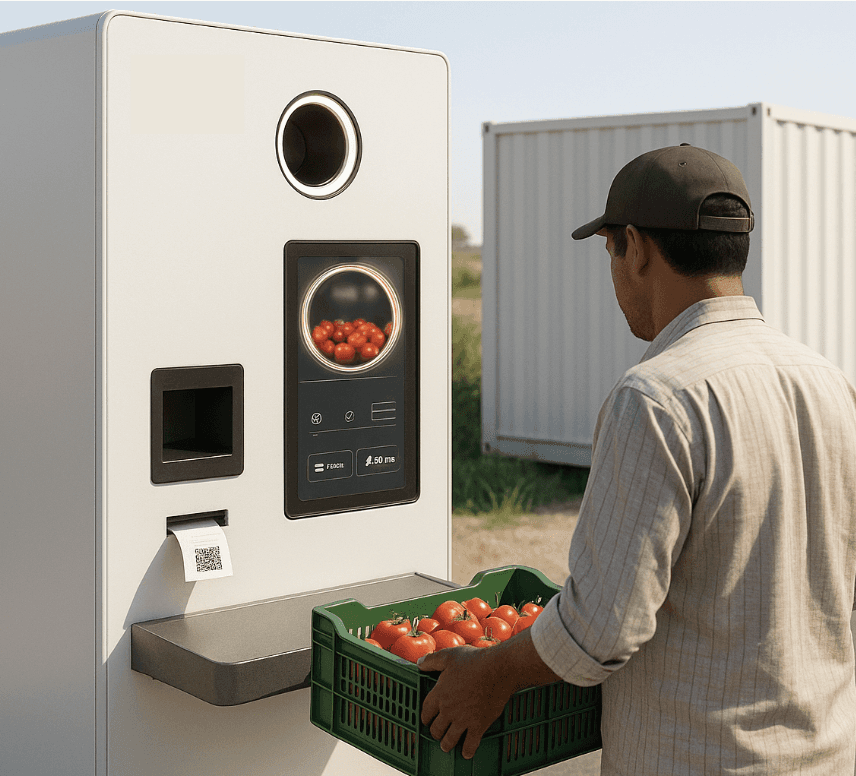
Design-wise, we made a few key choices:
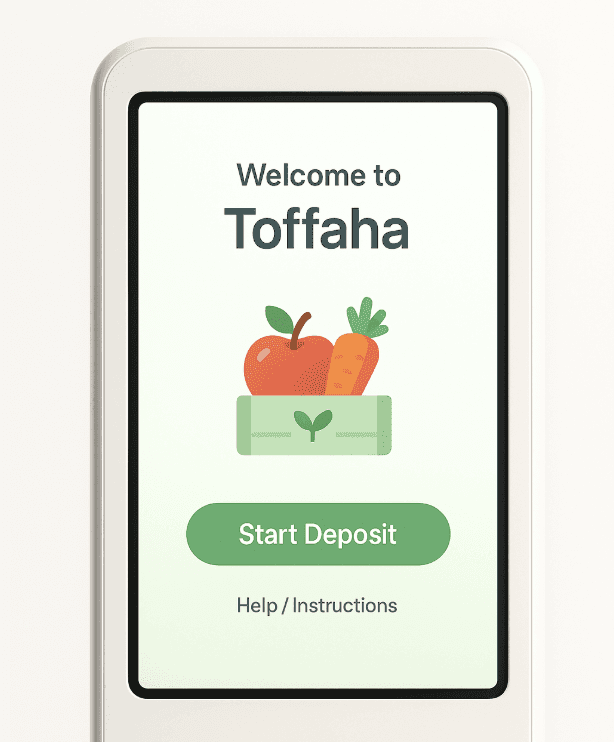
One clear call to action: “Start Deposit”
The UI doesn’t overwhelm farmers with options, the main button is one large, friendly “Start Deposit.”
Transparent grading and pricing
Once the produce has been scanned, the kiosk:
Shows total weight.
Breaks it into quality categories visually (Grade A, Grade B, Reject), mirroring the tomato tiers shown in the cutaway mockup.
Displays a simple price breakdown before confirmation.
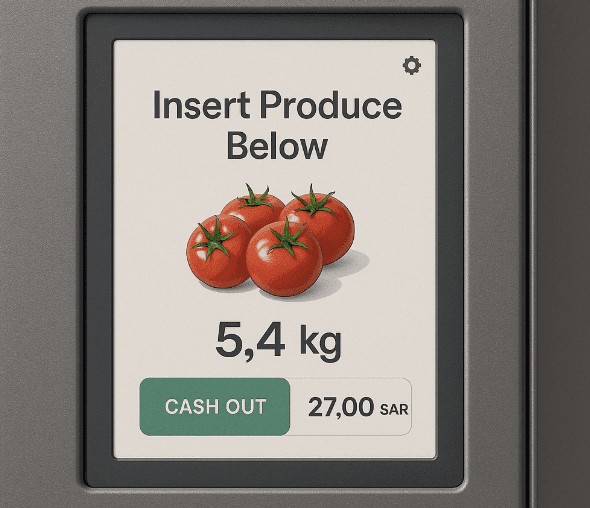
The farmer knows exactly what they’re earning before hitting “Confirm.”
The kiosk then prints a receipt and pushes the payment via the cloud platform. There is no waiting for an accountant, and no middleman negotiations.
Designing rejection without humiliation
Rejection is inevitable, as some produce will be too damaged to accept. The UI’s job is to explain why some items were rejected in simple language (“overripe” or “visible mold” or “unripe”), and to make it clear that this outcome is about quality standards. This maintains trust in the system even when it delivers bad news.
6. Plugging into the Supply Chain: Supermarkets and Buyers
A kiosk full of pre-cooled, graded produce is only valuable if someone wants to buy it.
Schedule pickup → Purchase with minimal loss → Receive produce → Sell with profit margin.
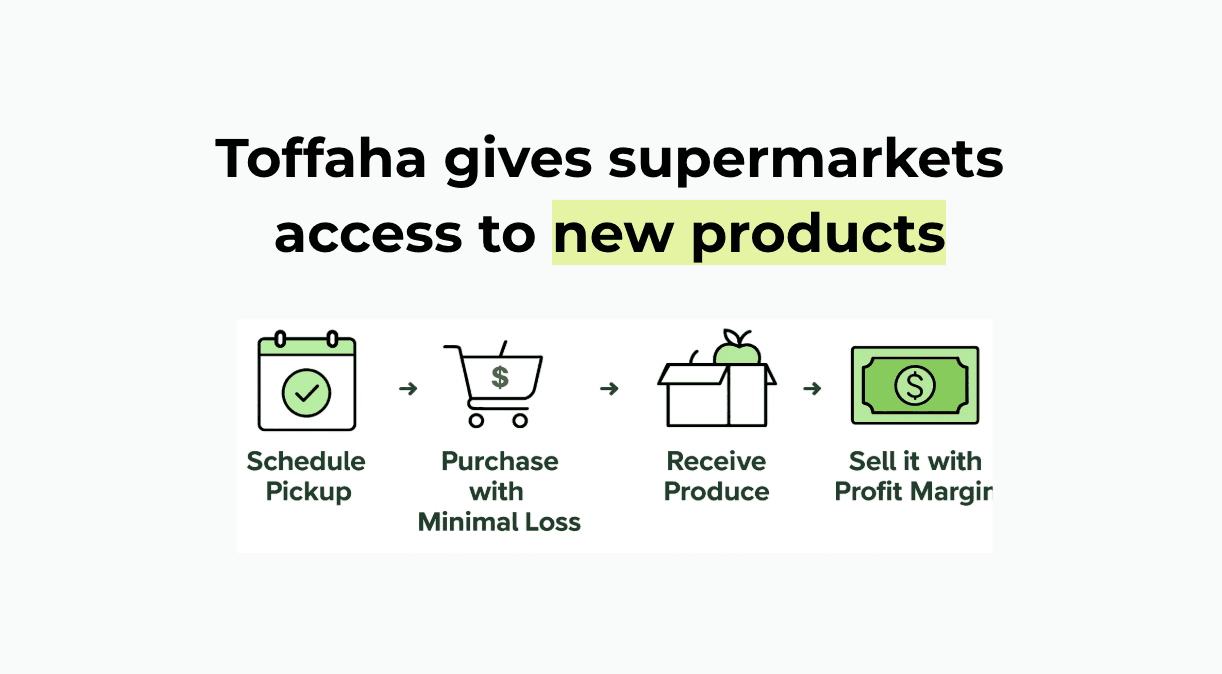
The backend groups approved produce into batches that supermarkets can see by type, grade, and location.
Buyers can schedule pickups from kiosks, confident that goods have been kept at a safe temperature in sealed, food-grade bins.
Pricing can incorporate dynamic factors (demand, quality, freshness) while still guaranteeing farmers a transparent baseline.
For retailers, Toffaha becomes a new sourcing channel. It offers access to “hidden” local farms without having to negotiate with each one individually.
This project is an exploration of how industrial design, service design, and AI can work together to make the food system in a hot country a little fairer, a little cooler, and a lot less wasteful.