BACK
MSDM - Finally, a fun shopping experience…
First off, what the hell does MSDM mean?
It came from the initials of our team: Moayad Alismail, Soejung Kim, Drew Brown, and Marybel Elfar.
The name could be more creative, I know, but it was a project ****at a Design Thinking course at NYU, taught by Prof. Heidi Brant and Prof. Dave Derby.
My role in MSDM covered research, concept reframing, service & interaction design, and narrative.
This project was a team effort. We worked together on research, ideation, spatial layouts, and prototyping.
My specific contributions were:
Reframing the brief from “make browsing easier” to “help anxious shoppers feel confident in their decisions,” and pushing us to focus on the fitting room as the real bottleneck.
Mapping the end-to-end journeys and connecting the digital touchpoints with the physical store.
Helping translate sketches into room layouts and 3D visualizations, and facilitating critiques as we converged on a fitting-room-first concept.
Turning the Clothing Store Inside Out
Most fashion stores are built around racks.
You walk in and hit a sea of hangers, mannequins, sale racks, and mirrors with a playlist soundtrack. Somewhere in the back, almost as an afterthought, there’s a cramped fitting room area with a long line, more mirrors, and bad lighting.
Initially, our brief sounded straightforward:
Redesign the offline shopping experience for people who see shopping as a chore.
However, the more we dug in, the more it became clear that the “chore” isn’t walking into a store. It’s standing half-dressed in a tiny fitting room, under harsh lights, trying to decide if you can live with this outfit on your body.
This case study is about how our team ended up flipping the store inside out and designing around that moment.
Starting from the “Wrong” Problem
We didn’t begin with fitting rooms.
We started with the more obvious question:
How can we make browsing less painful for people who hate shopping?
Then, we mapped our own shopping journeys to try and spot any gaps.
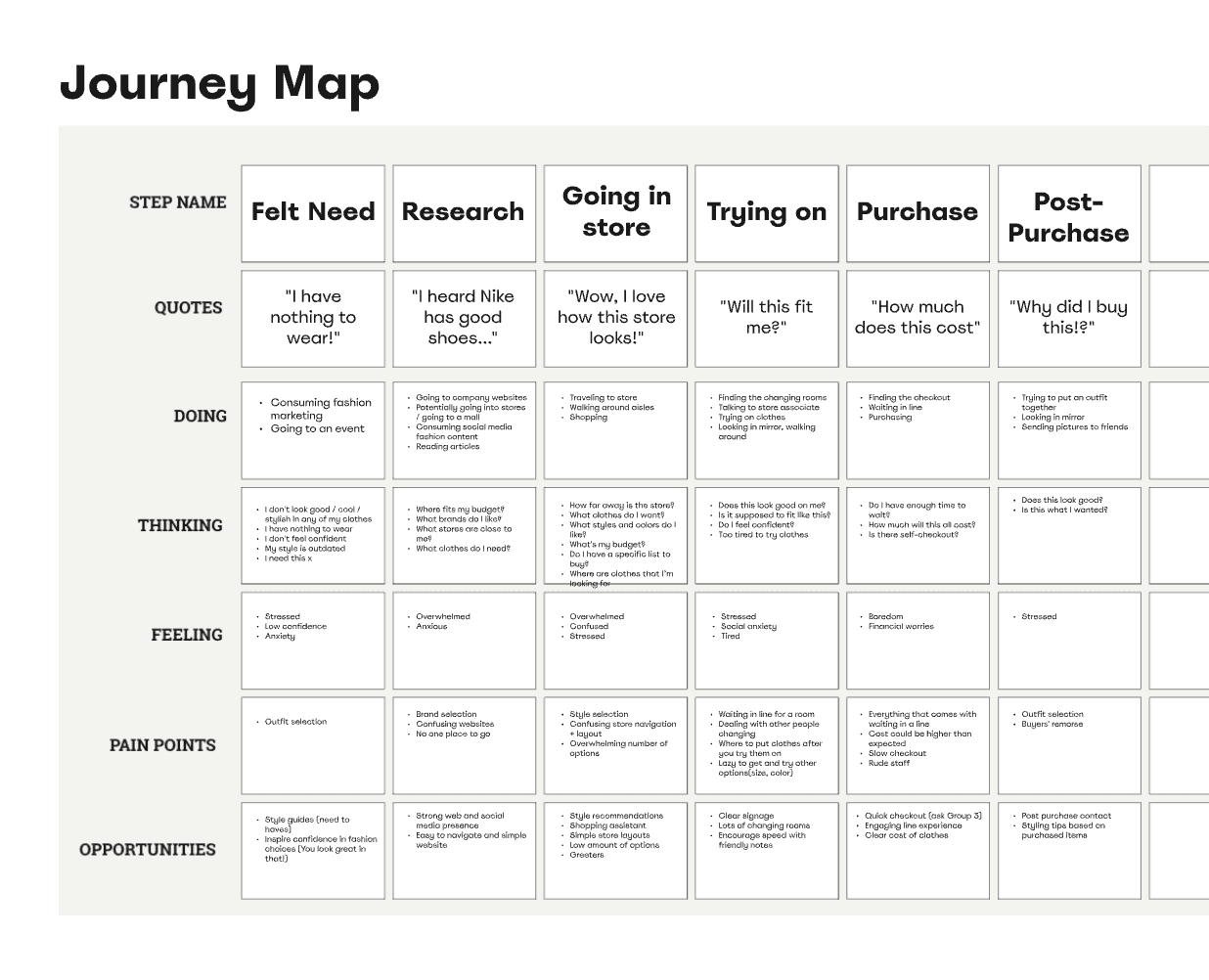
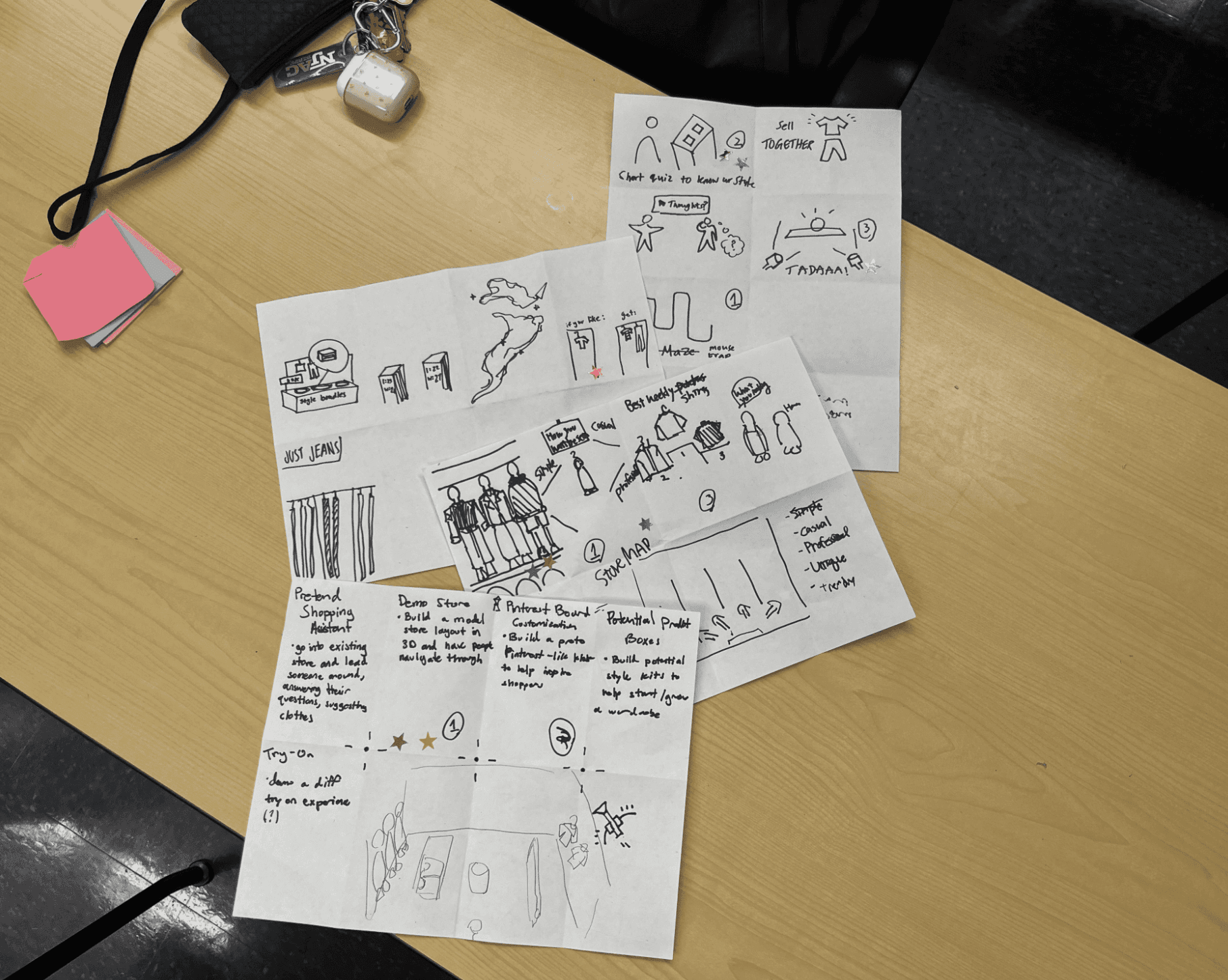
We explored a number of directions:
Personal stylists and style quizzes
Curated “style packages” you can grab quickly
New ways to organize the store
A mobile app that recommends items
Subscription boxes and pre-picked outfits
And other related concepts
One early idea we liked was organizing the store by style rather than gender, with kiosks at the entrance that direct you to your “style section.” For example, you’d tap “minimal,” “streetwear,” or “formal” and be sent to a curated zone that matches your taste.
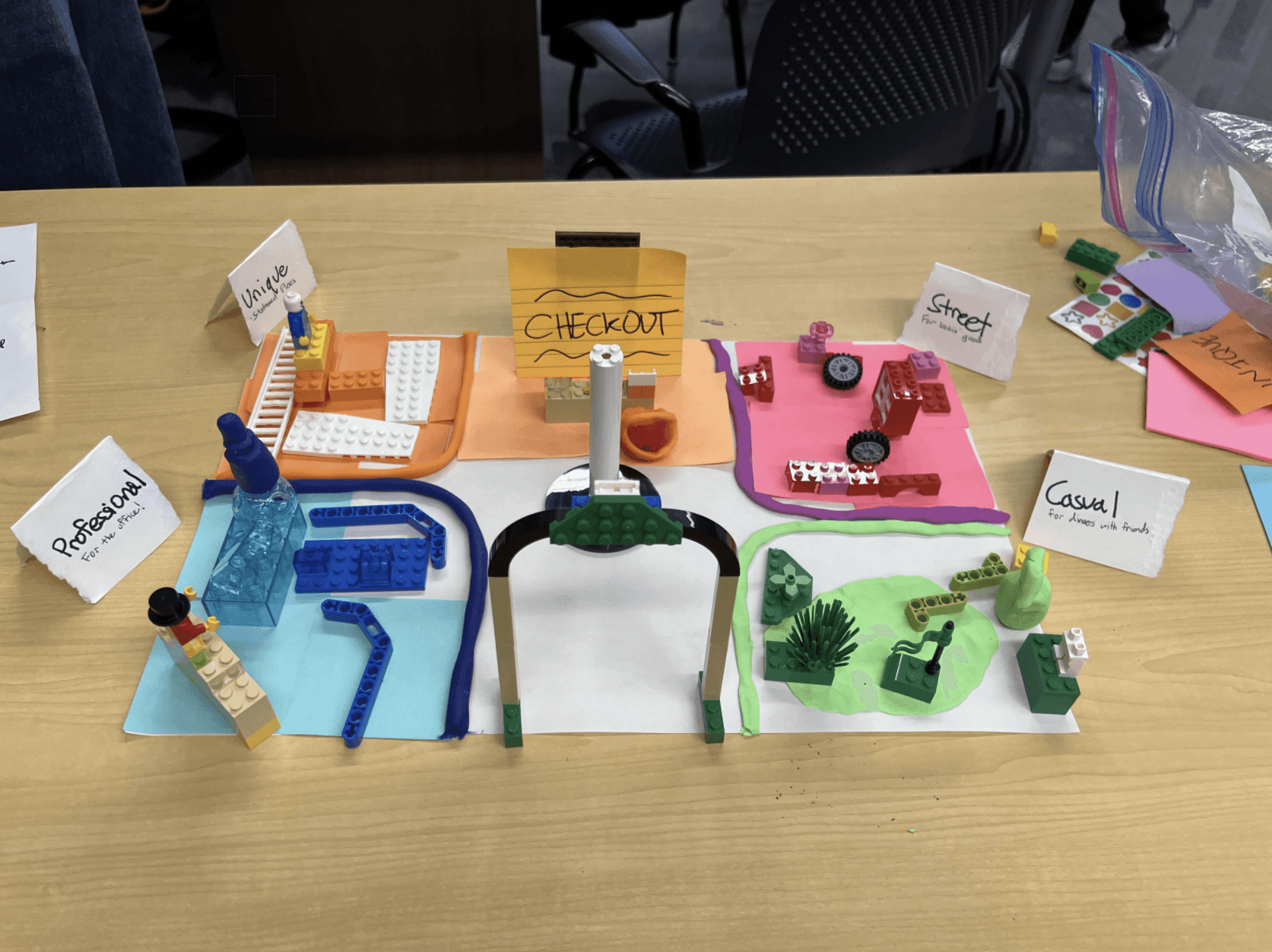
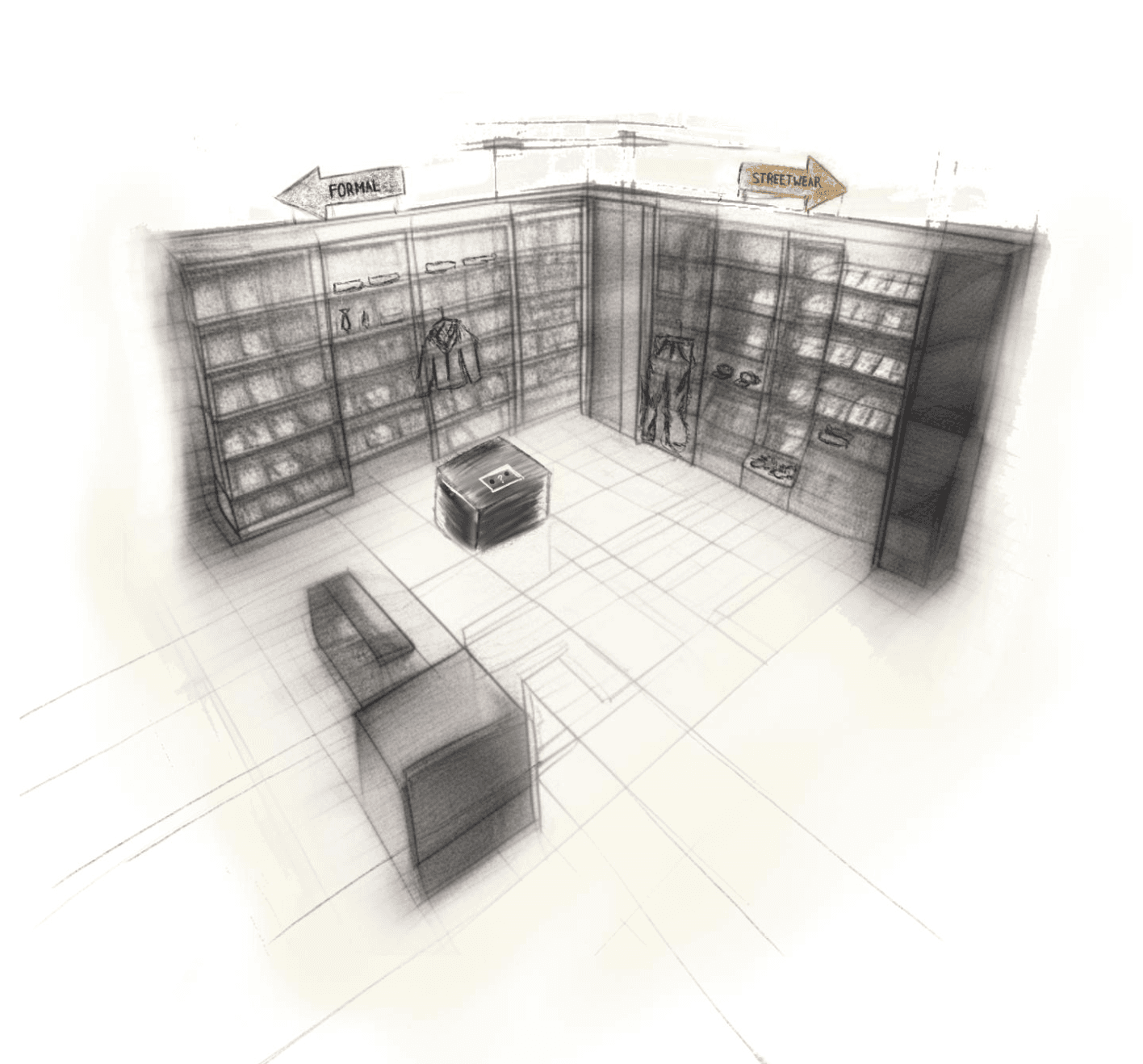
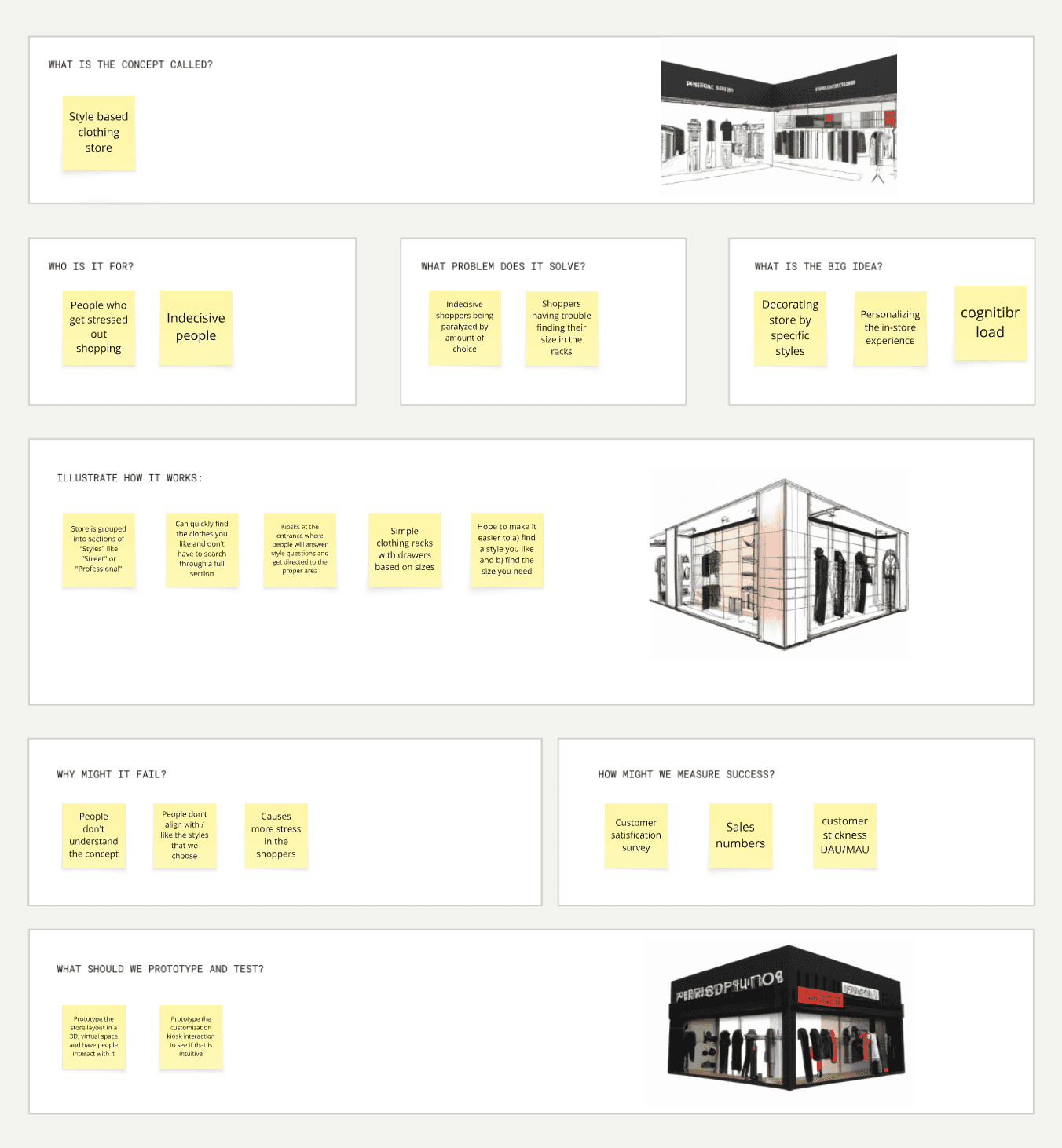
It looked innovative on paper. But as we stress-tested it, the cracks showed:
The term “style” is subjective and unstable.
Moving racks around doesn’t change someone’s core anxiety of “How will this look on me?”
The emotional spike doesn’t happen on the shop floor; it happens behind a fitting-room curtain.
Instead of segmenting the store based on different styles, why not present a kiosk for the shopper once they enter so we can better guide them through the store? The following is the design of the kiosk’s flow.
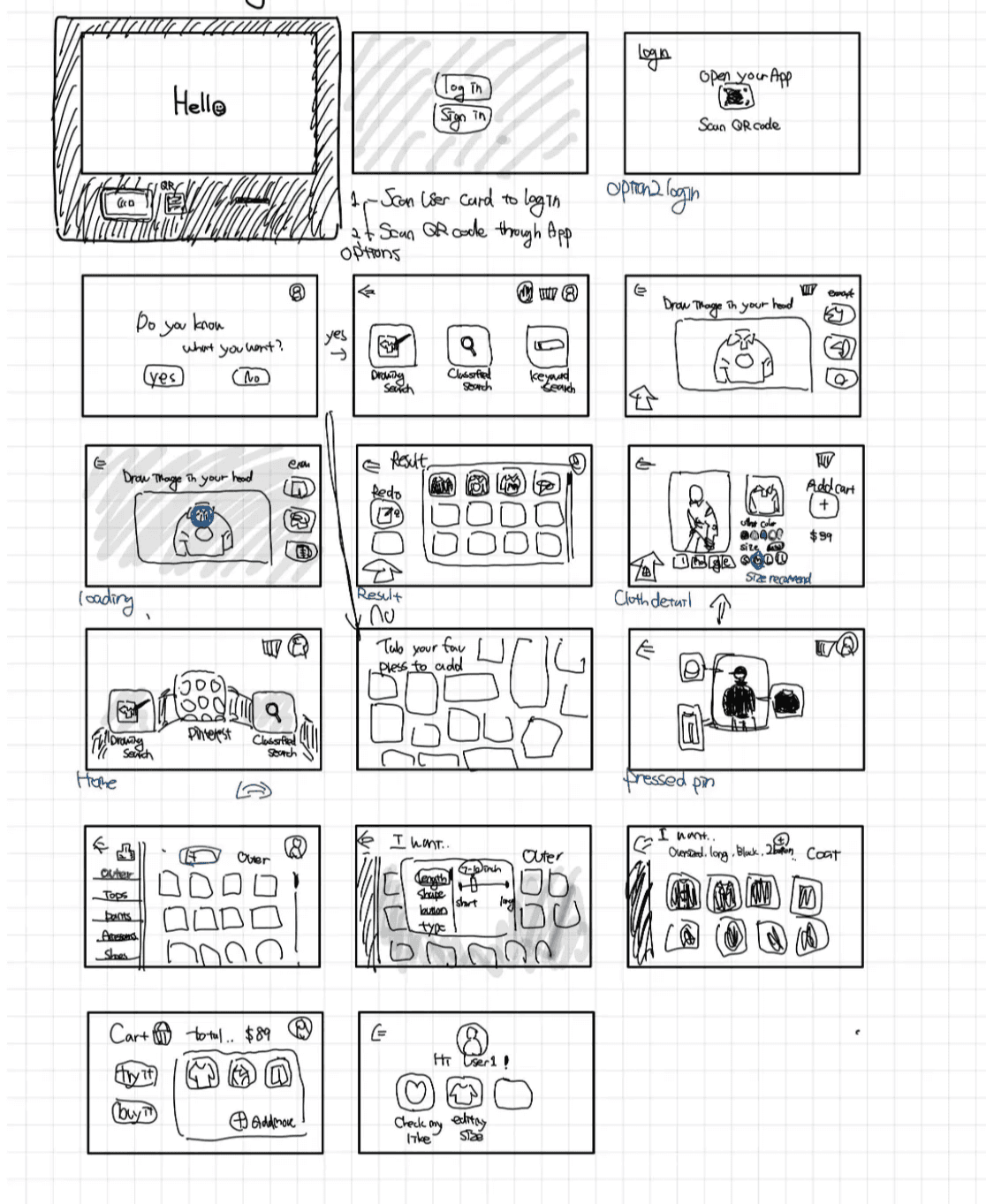
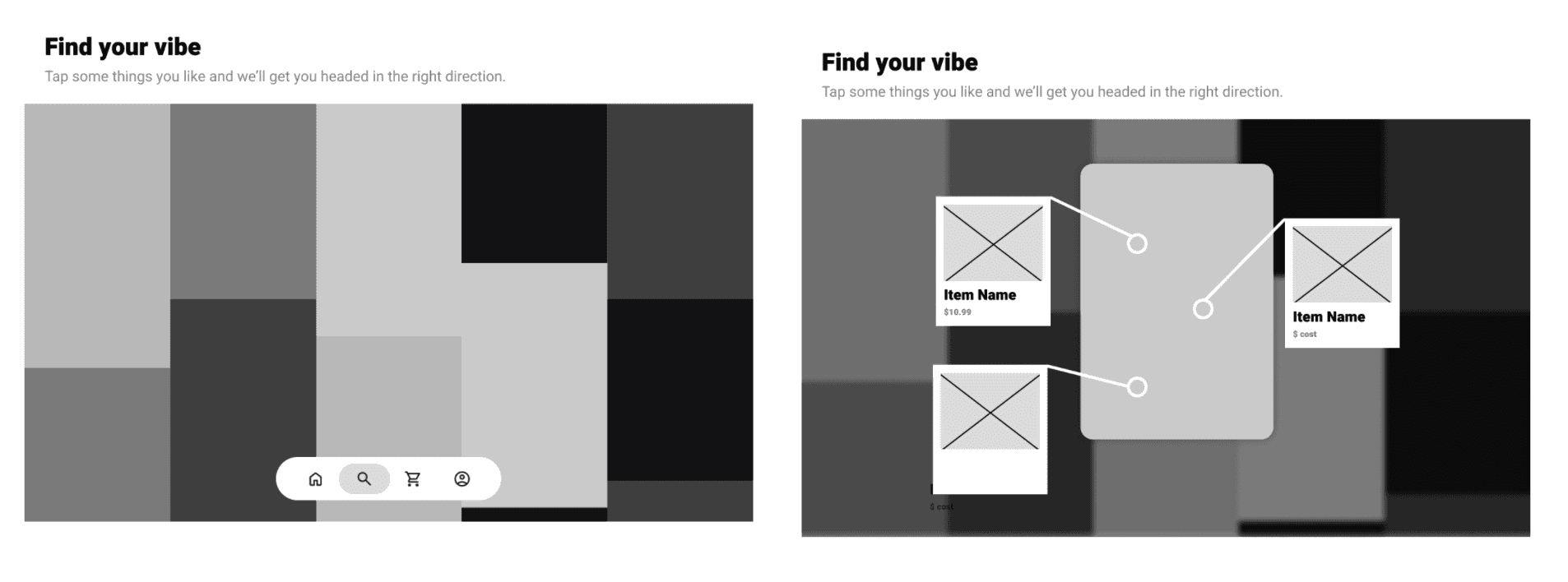
We noticed many people browse outfits through pinterest to get some ideas. So, why not design a clothing store in the same familiar design?
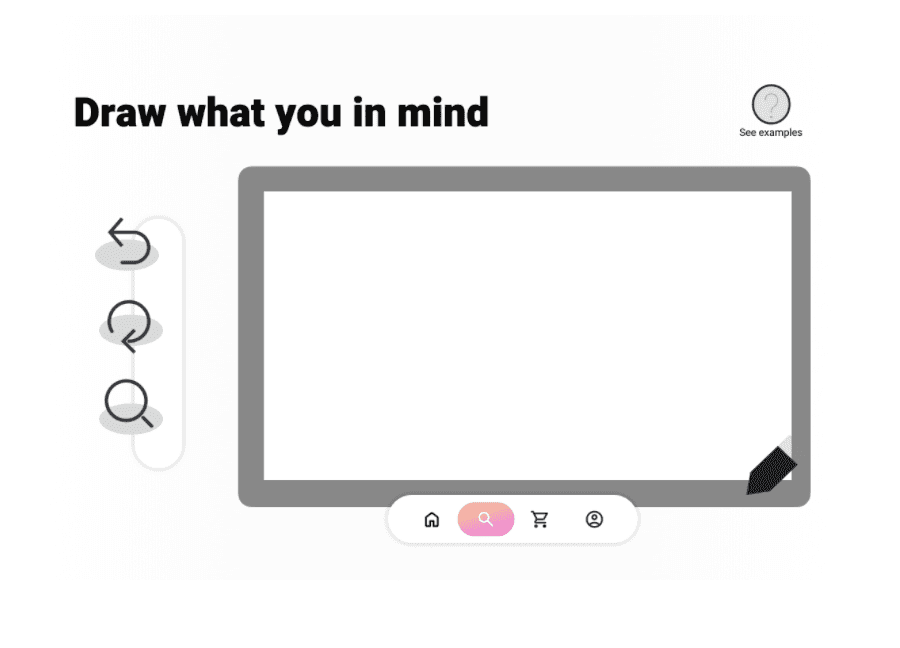
If you didn’t find a fit to your taste, why not draw it, and we’ll look for something similar?
You can tell that we rushed to ideation and solution-thinking before truly understanding the problem. Of course, you could argue that design thinking is inherently iterative, so there’s no such thing as “rushing,” as long as you keep cycling back. But Don Norman puts it perfectly: “Never solve the presented problem.” That’s when we decided to take a step back.
Reframing the Problem
Instead of treating shopping as a generic chore, we asked:
Who exactly feels bad in stores, and what is happening at that moment?
One of the most helpful conversations we had was with Lisa, a Gen Z shopper. In her own words, she “likes shopping, but always struggles to make the final shopping decision.” She wasn’t bored by browsing; she was stuck at the moment of commitment.
When we showed her our early concepts, two things happened:
She lit up when we described a fitting-room-focused store, saying it would “definitely have strong advantages toward Gen Z,” especially people who prefer privacy over interacting with staff. She immediately saw side benefits we hadn’t even highlighted, like making theft harder if most of the action happens in monitored rooms rather than among deep racks.
She quietly dismantled one of our first ideas. On the app side, we had been exploring sorting clothes by “vibe” or style labels. Lisa’s reaction was blunt:
“Classifying with vibe is too subjective. People will have different definitions of cute, cool.”
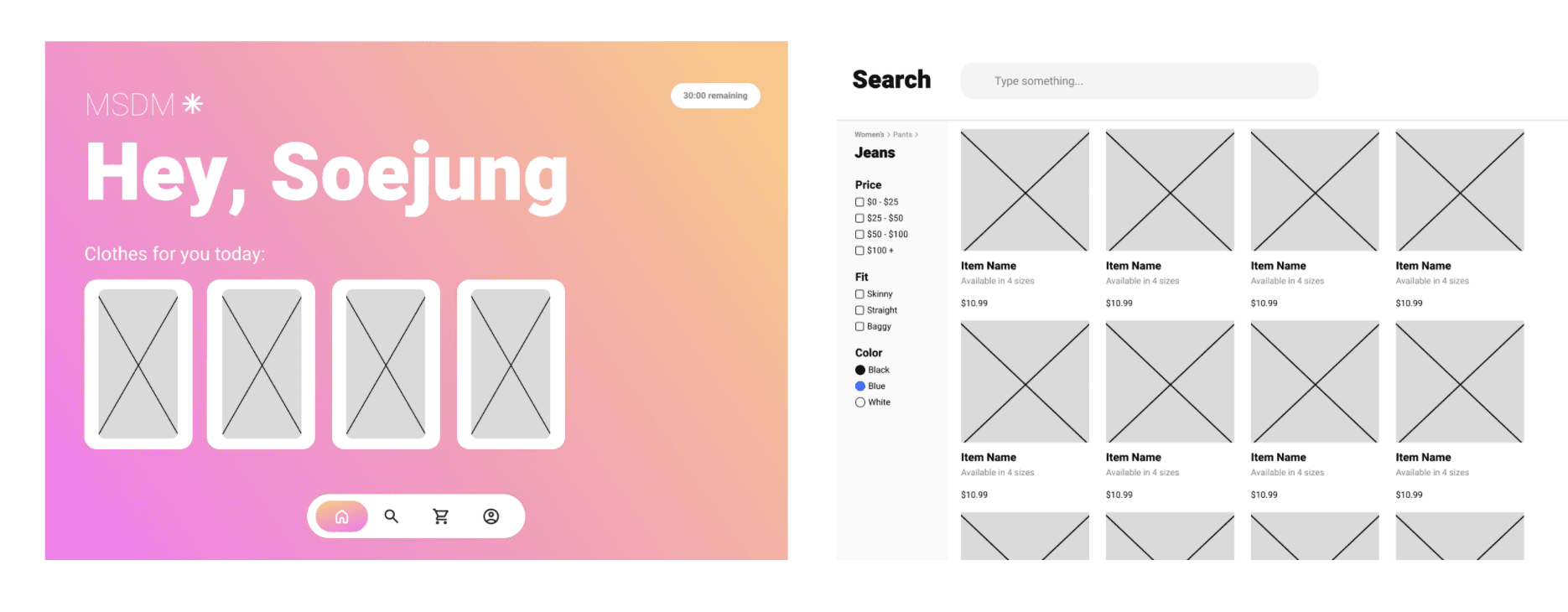
Instead, she asked for structured filters (length, thickness, width, pattern) and even a “drawing search” where you sketch what you want and AI finds the closest match. In other words, she wanted clarity, not vibes.
She also pushed our thinking on the service layer with the following comments:
Suggesting time-limited rooms with different rules for reservations vs walk-ins (for example, short sessions for walk-ins and longer slots for pre-booked visits). This directly fed into our split between appointment-based and quick-try flows.
Asking for multi-sided mirrors and rooms big enough to try outfits with friends. This reinforced our hunch that the fitting room is a social and emotional space, not just a measurement box.
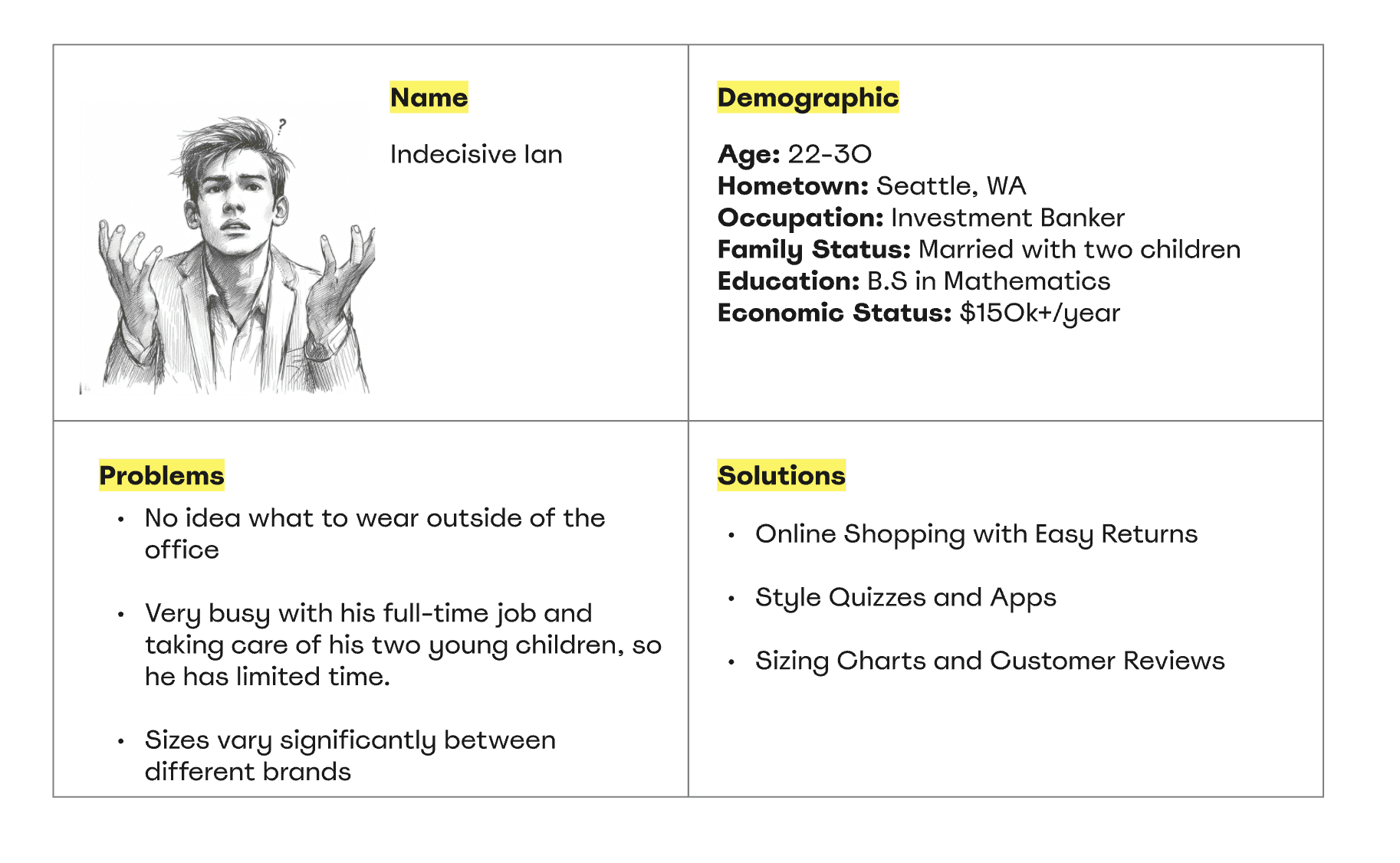
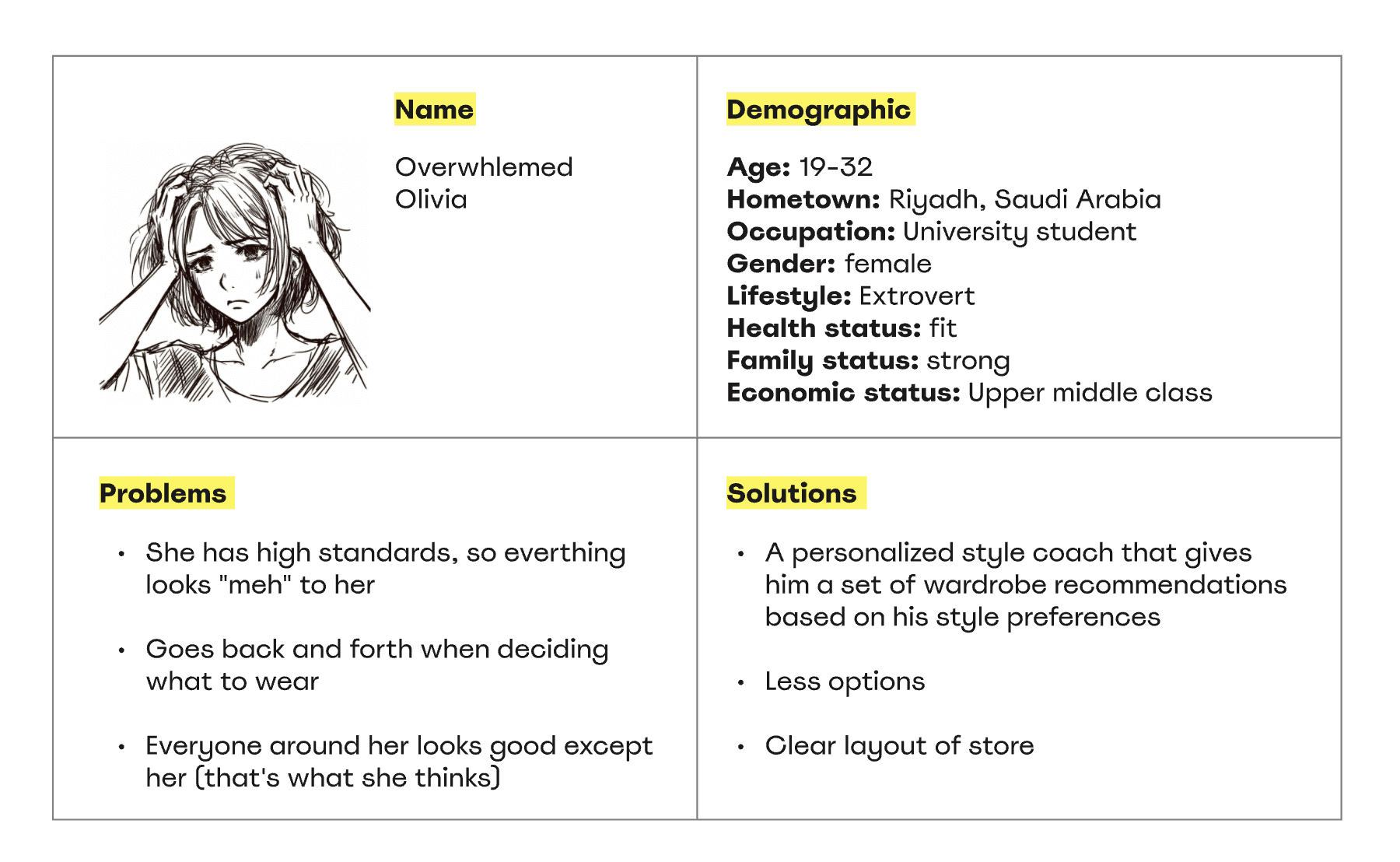
Combined with other interviews and our personas (Indecisive Ian, Overwhelmed Olivia), Lisa’s feedback illustrated a pattern impossible to ignore:
The pain doesn’t peak on the shop floor; it peaks in the fitting room.
The problem isn’t “I hate stores”; it’s “I don’t feel confident in my decision.”
Vague style labels and “vibes” actually make things worse; people crave clear signals and a safe, private space to decide.
Another interesting insight we gathered was that some people “test” new clothes. For instance, they wear them on low-stakes outings—like a quick trip to the supermarket—before debuting them at special events or in front of friends. Is there a way to enable that kind of testing experience before a purchase is even made?
That’s what led us to rewrite our problem statement as:
How might we redesign physical clothing stores for people who are anxious about purchasing clothes so that they feel more confident in their style decisions?
From that point on, the fitting room stopped being “back-of-house” and became the center of the entire concept.
Insight: The Fitting Room Is the Product
If you ask a traditional retailer what their store sells, they’ll say “clothes.”
For this project, we treated the store as selling something else:
The moment when a person says, “Yes, I feel okay in this.”
That moment almost always happens in a fitting room.
It’s where the body, the fabric, the mirror, and time pressure collide.
It’s where anxiety peaks: “Do I look okay in this? Is this me?”
It’s where people abandon items or buy things they later regret and never wear.
So instead of designing a better browsing experience, we designed a fitting-room-first store.
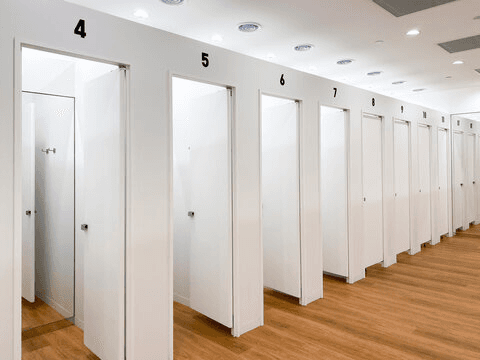
Concept: A Fitting-Room-First Store
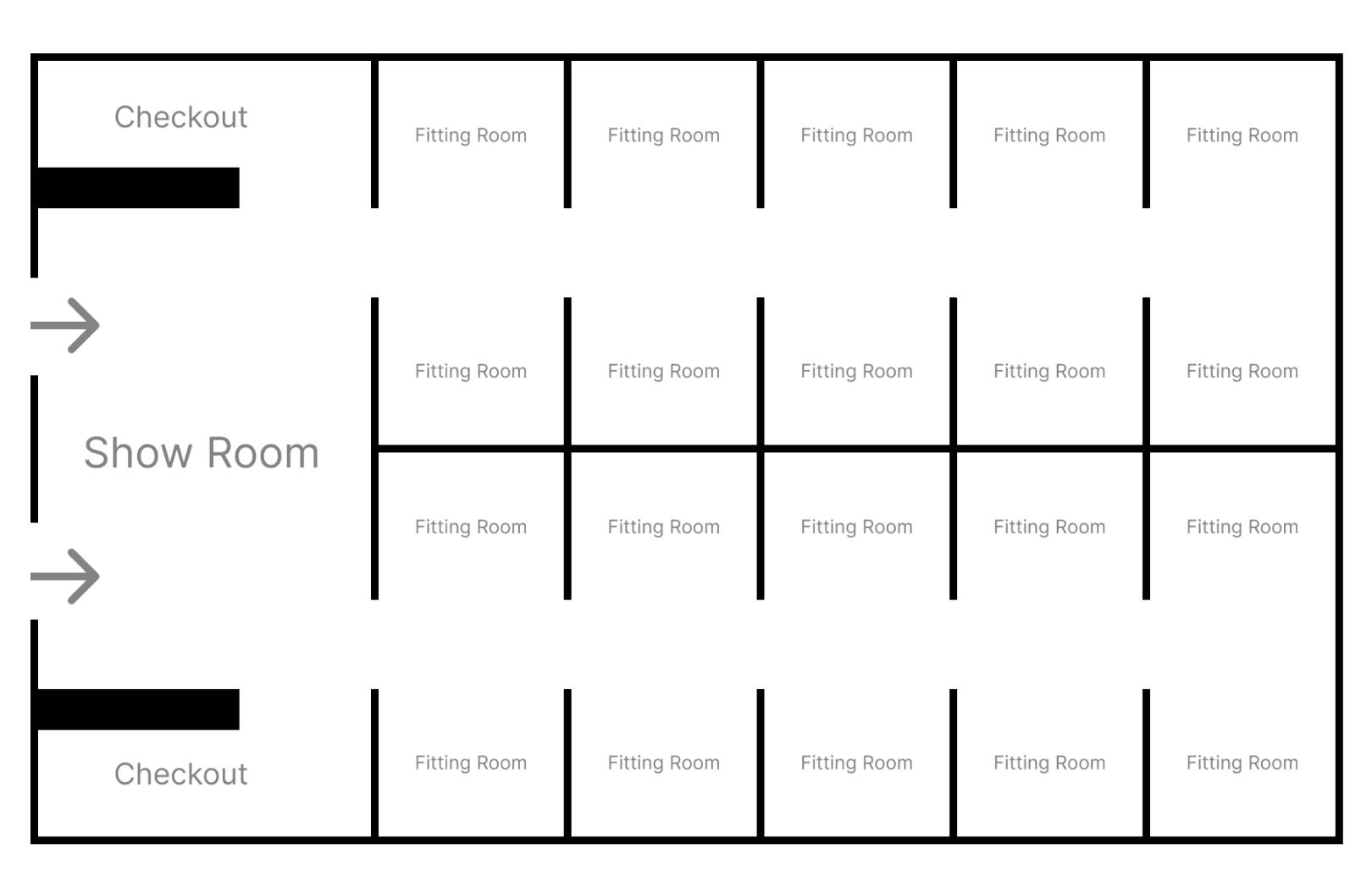
In the final concept, the store’s layout is flipped:
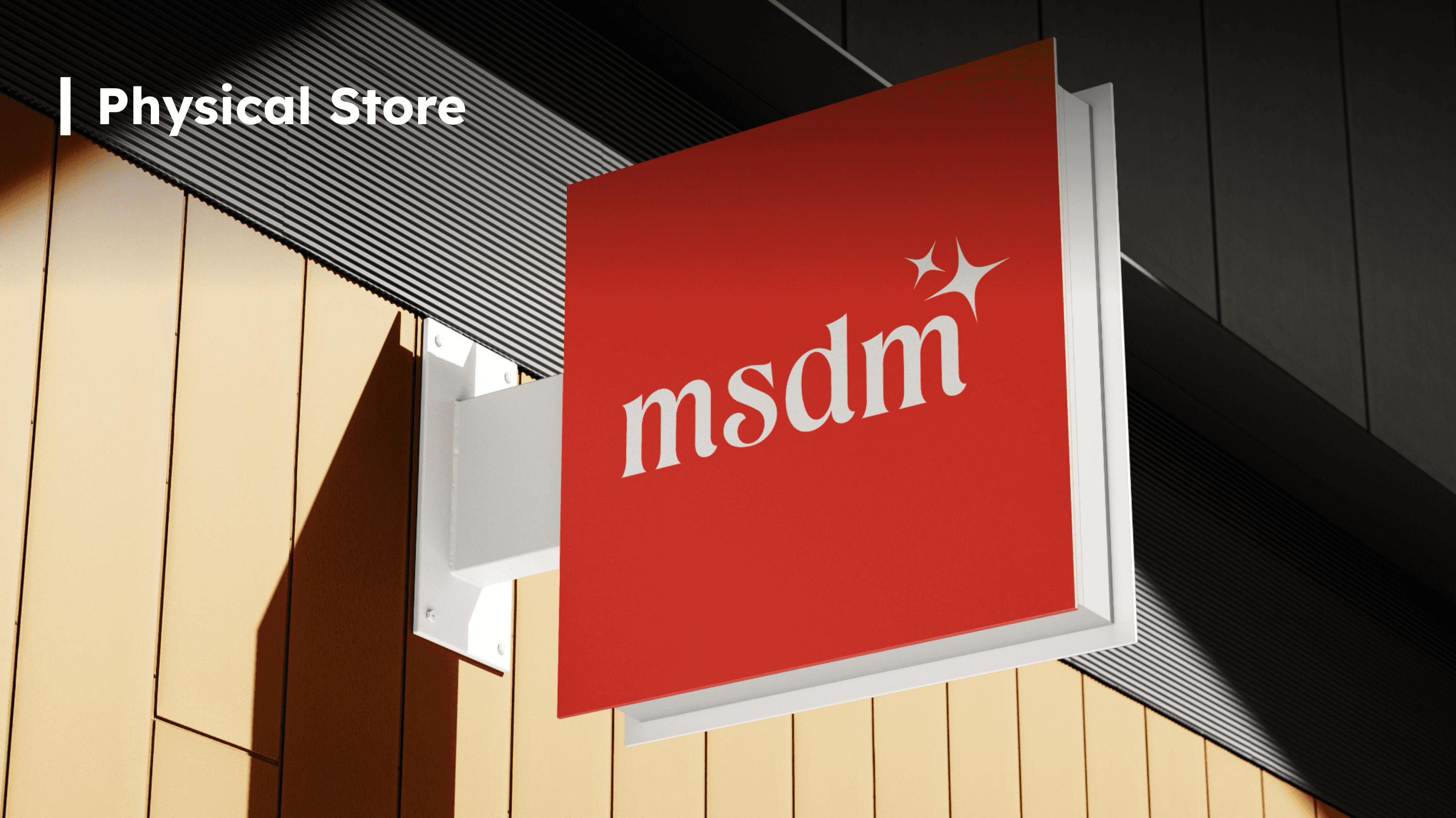
The front is a slim showroom with a few key looks, mannequins, and touchpoints for inspiration.
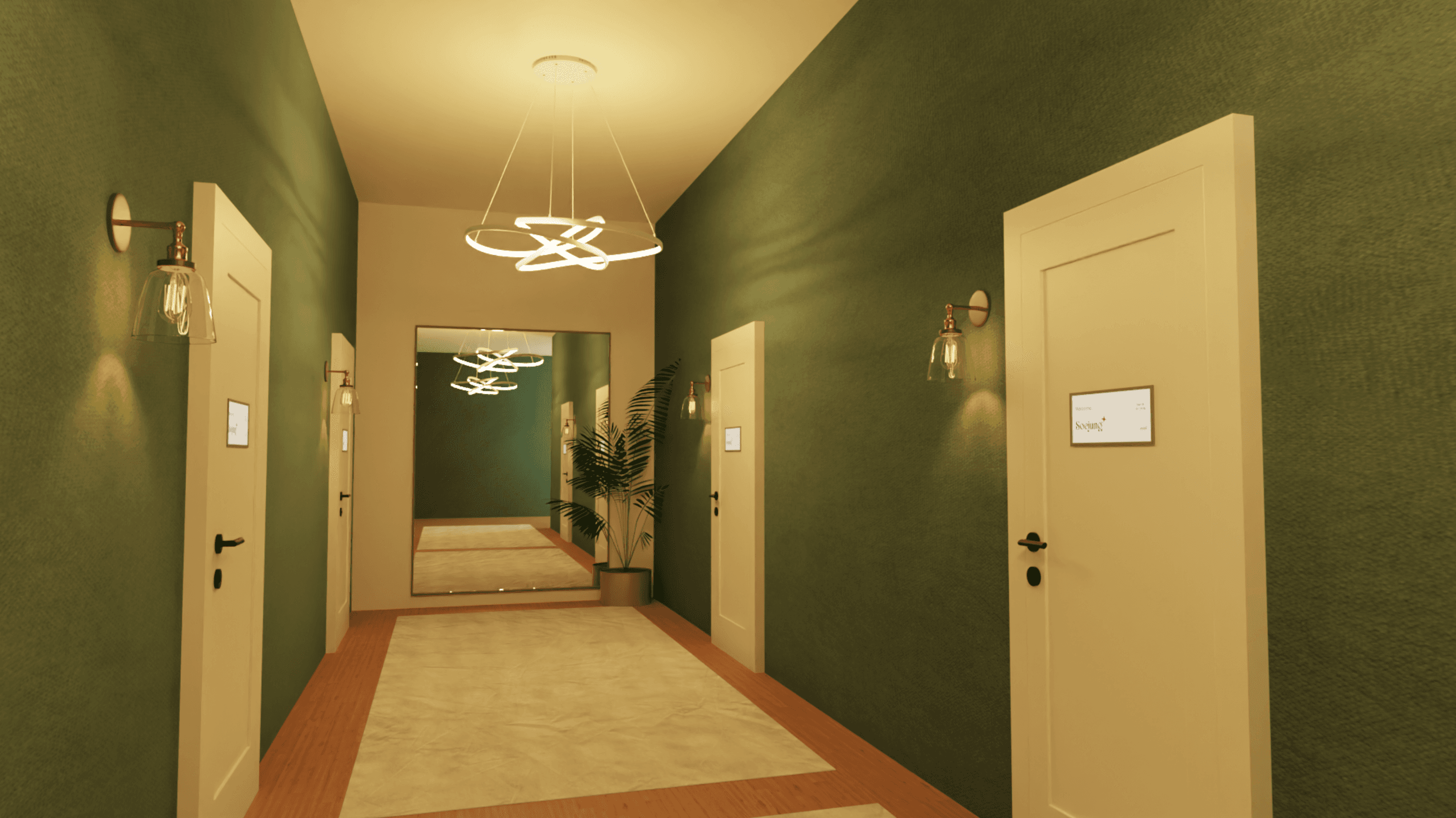
The majority of the square footage is dedicated to high-quality fitting rooms, arranged along corridors more like hotel rooms than an afterthought at the back.
On the floor plan, it looks almost “wrong” compared to a typical store: the inventory is less dense, and there are many more doors.
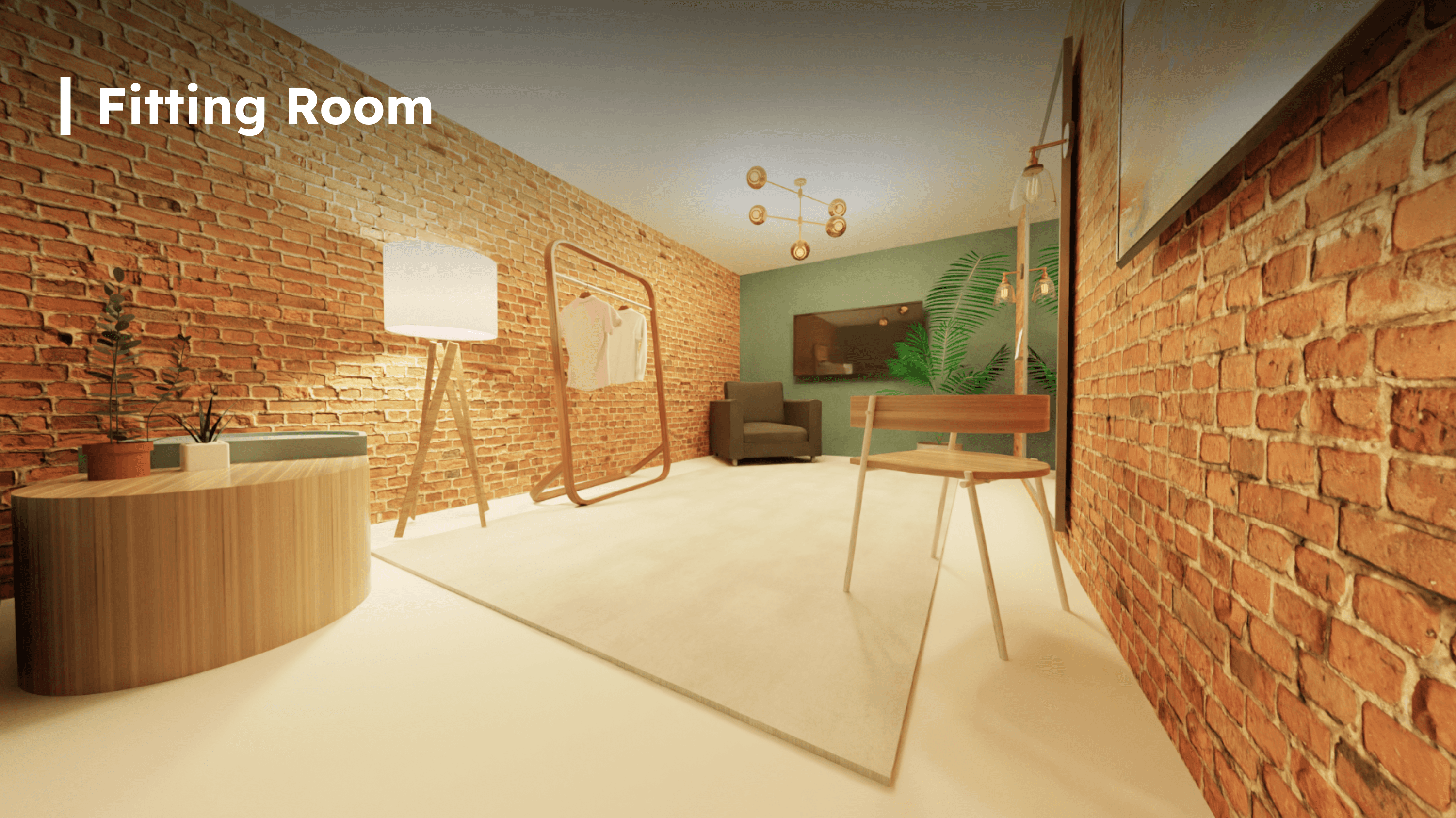
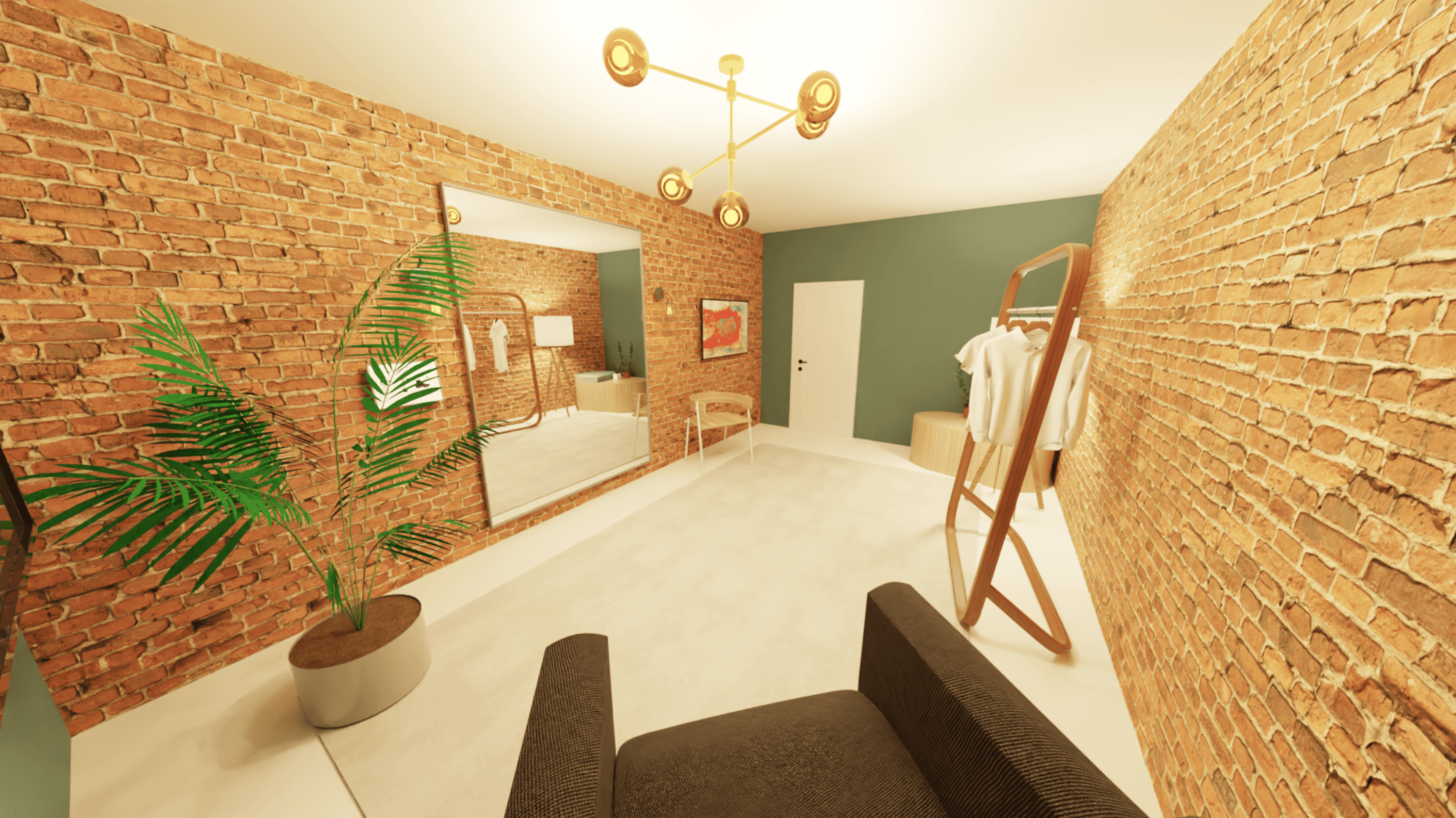
Rather than being a fluorescent box, each fitting room is treated as a mini studio/living room with these qualities:
Warm, adjustable lighting instead of harsh overhead glare
Enough space to move, sit, and put your things down
Hooks and surfaces designed for bags, shoes, and multiple outfits
A flattering but honest mirror setup (at least two angles, not just one flat pane)
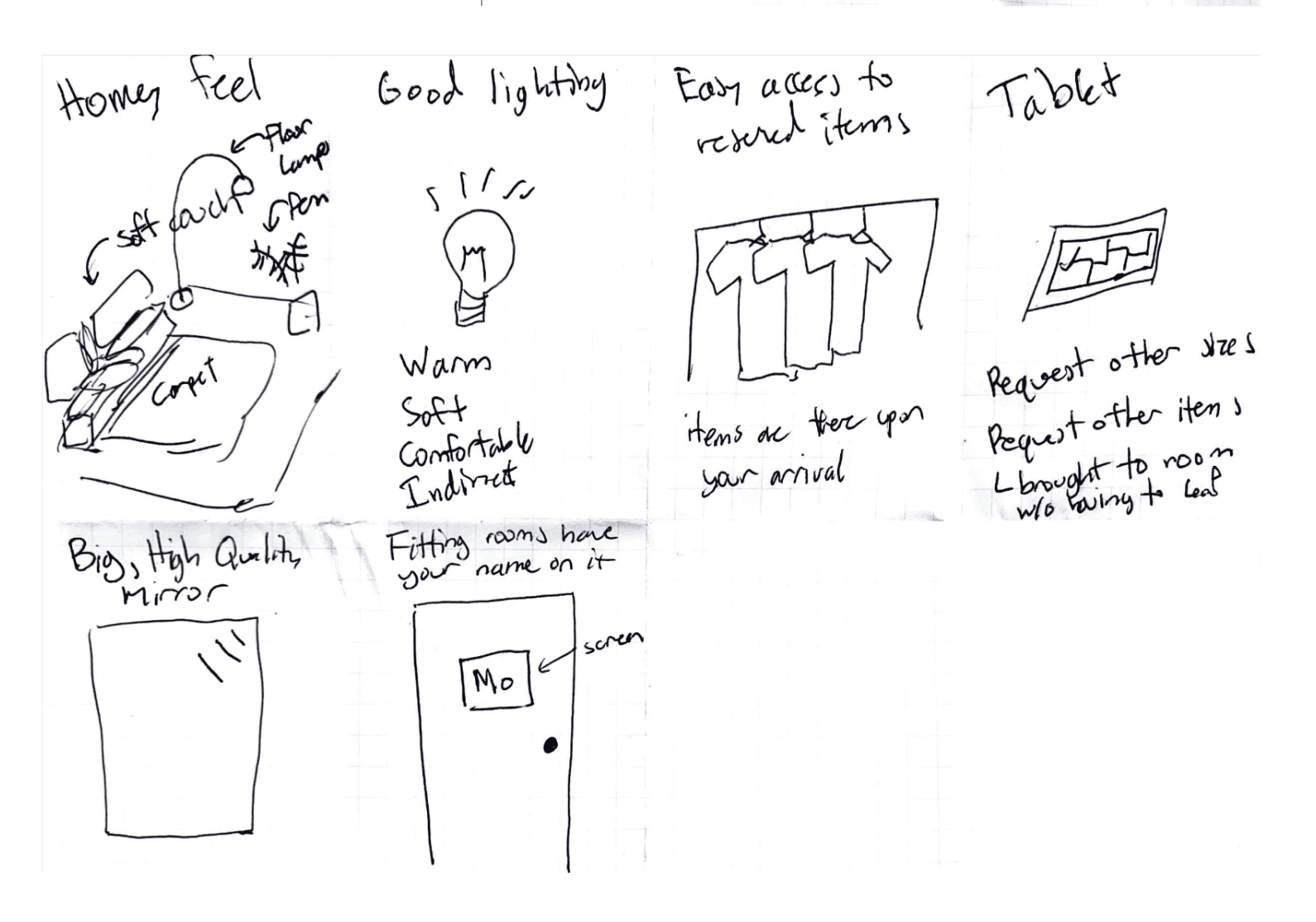
Question: if the store is rack-less, the how will shoppers browse items?
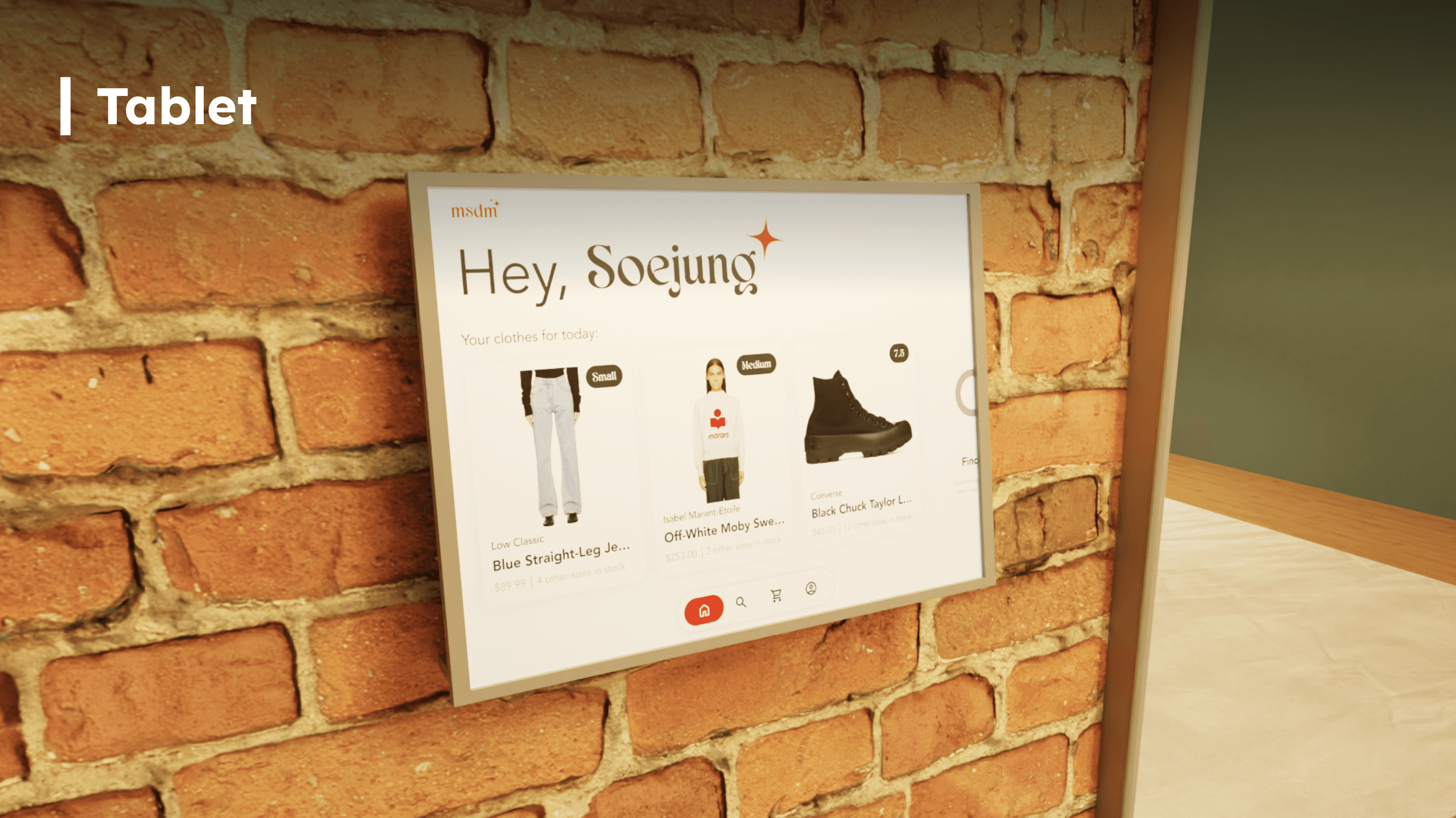
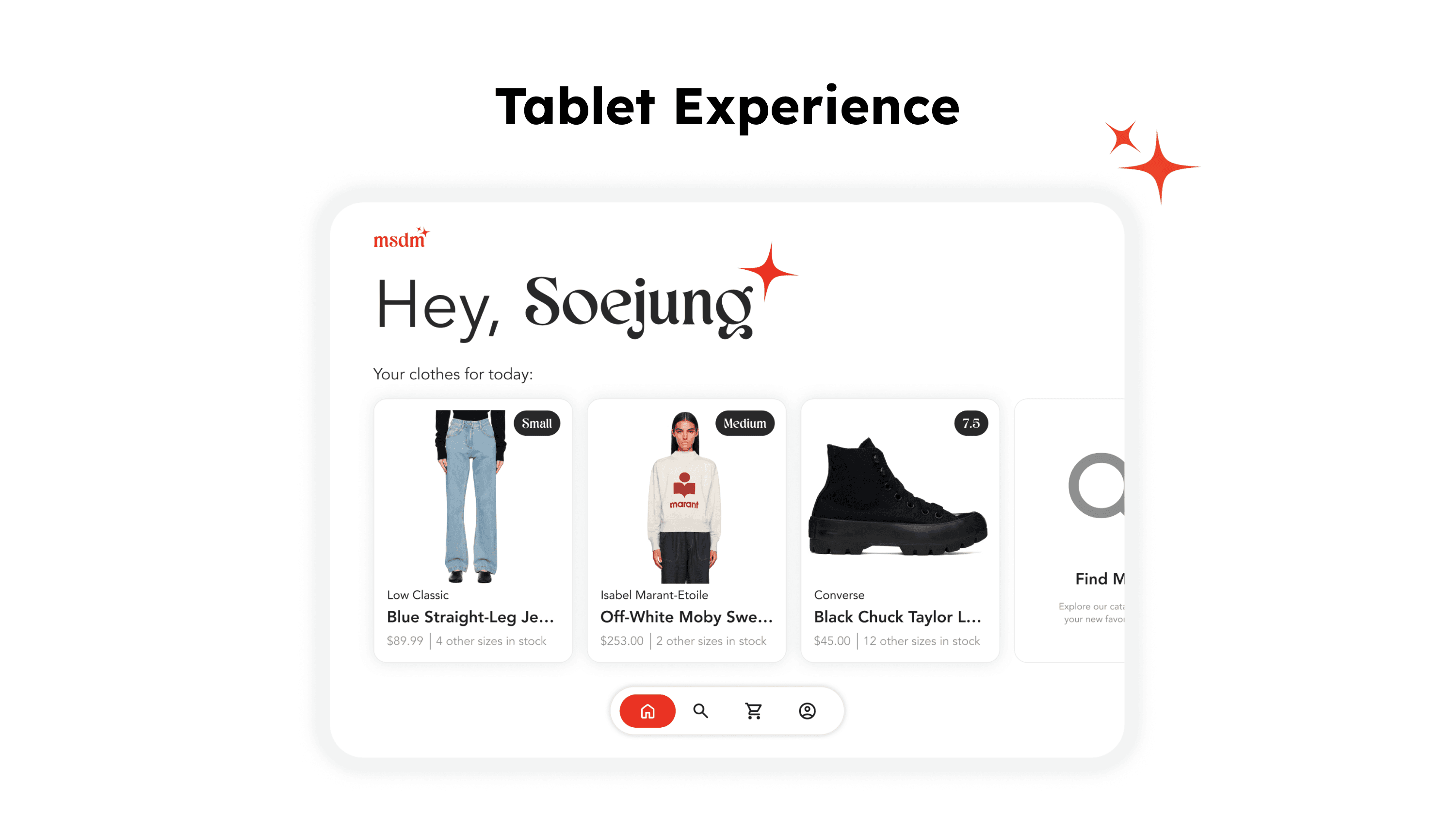
The customer will spend their entire “shopping” experience sitting in a cozy room and browsing items through a wall-mounted tablet. If they find an item they’d like to try-on, they would order it through the tablet and an employee would deliver it to them. This way, the tablet would act like a quiet, non-intrusive assistant.
The entire store experience is organized around getting you into one of these rooms with the right items and letting you stay there long enough to feel confident in your decision.
Spatial Prototyping
To understand how the store would actually feel, we went beyond wireframes. As a team, we:
Sketched different room layouts: where the mirror goes, how you enter, and where a friend might sit.
Built quick clay models and foam mockups of corridors and rooms to test proportions and traffic flow.
Created simple 3D renders to explore lighting, materials, and sightlines.
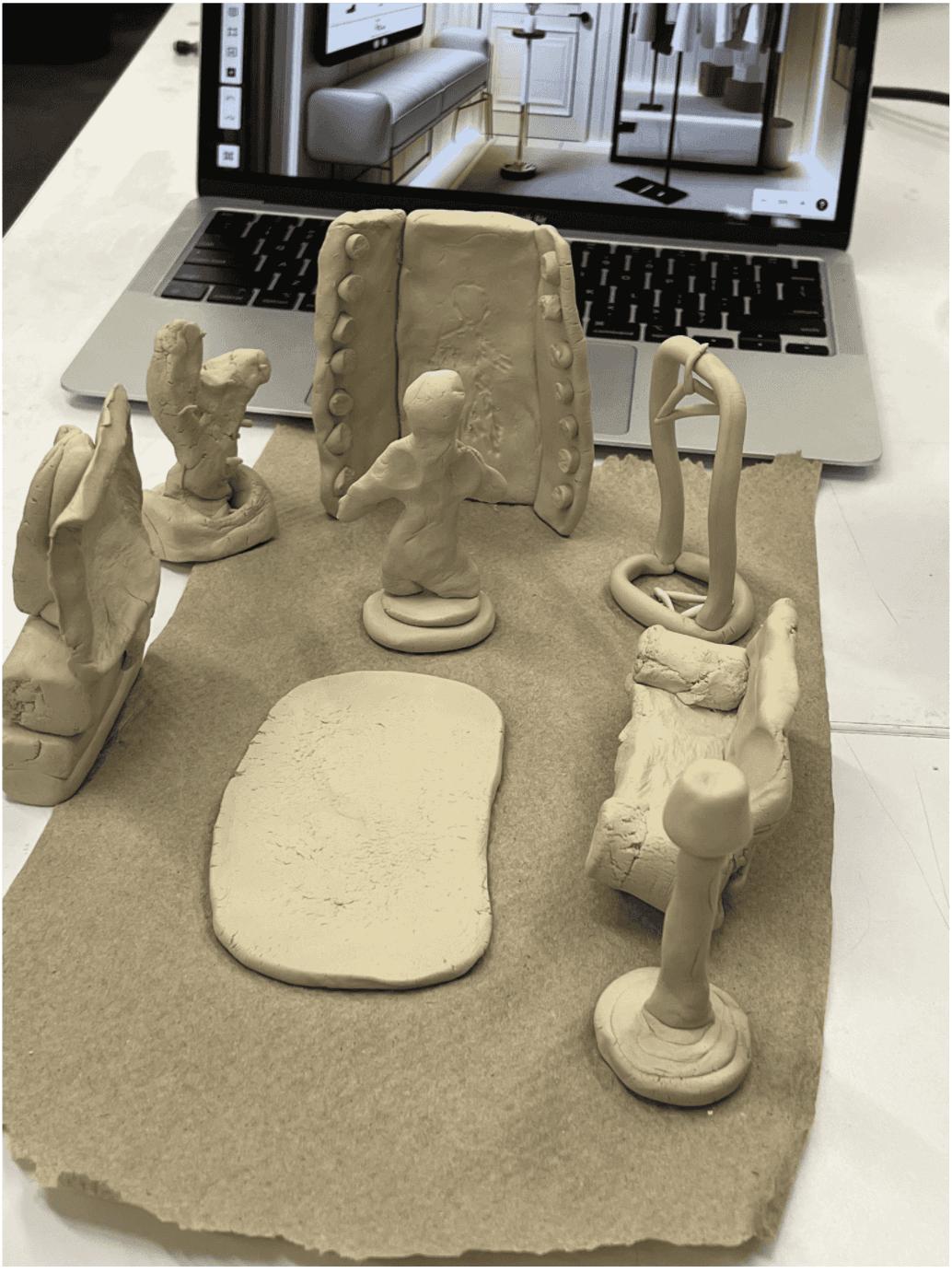
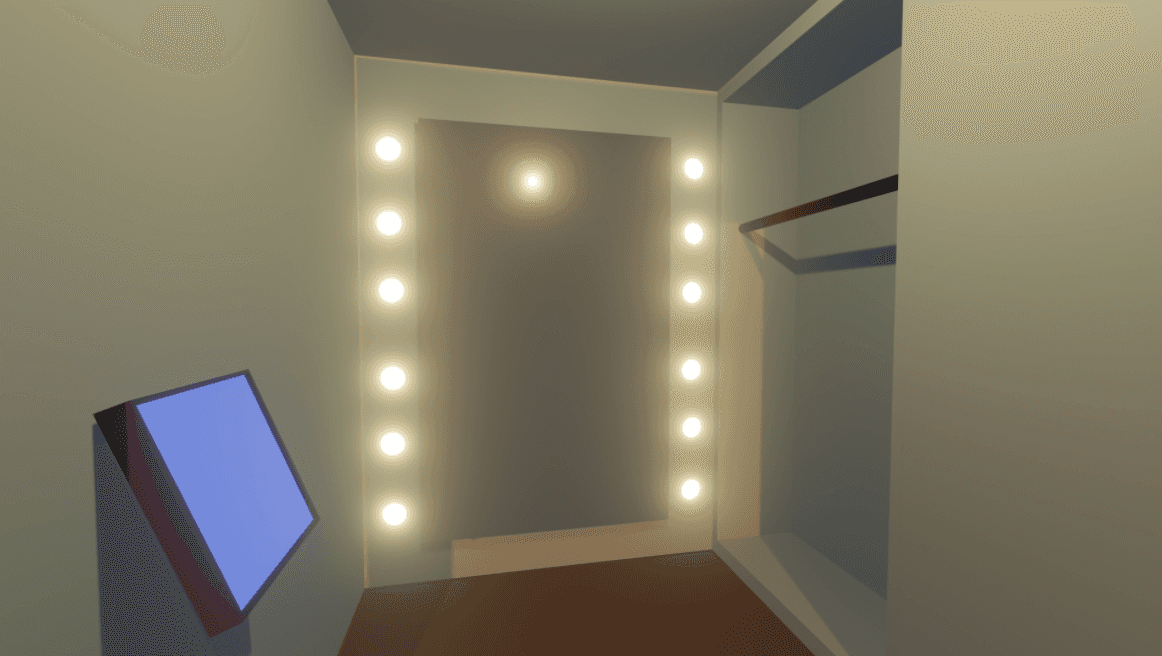
This helped us answer questions like:
How many fitting rooms can we include without making the corridor feel like a hotel hallway?
How do we preserve privacy while still letting staff deliver items quickly?
How big does a room need to be to feel “cozy” instead of “cramped”?
Digital–Physical Flows
Clearly, we’re betting high on that fitting room. But the question becomes, what does the experience look like BEFORE entering fitting room. We designed three main flows: Website, In-store, and tablet.
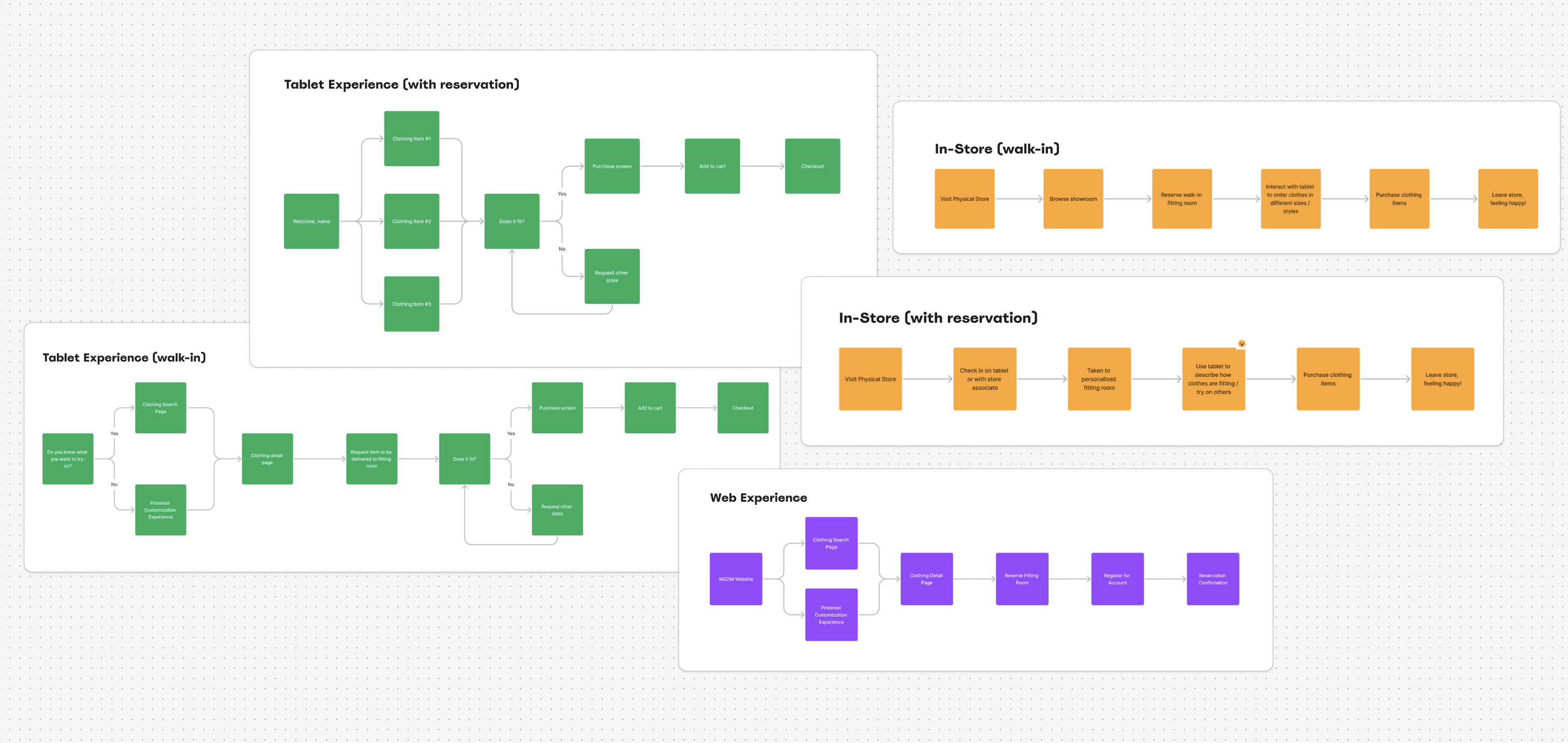
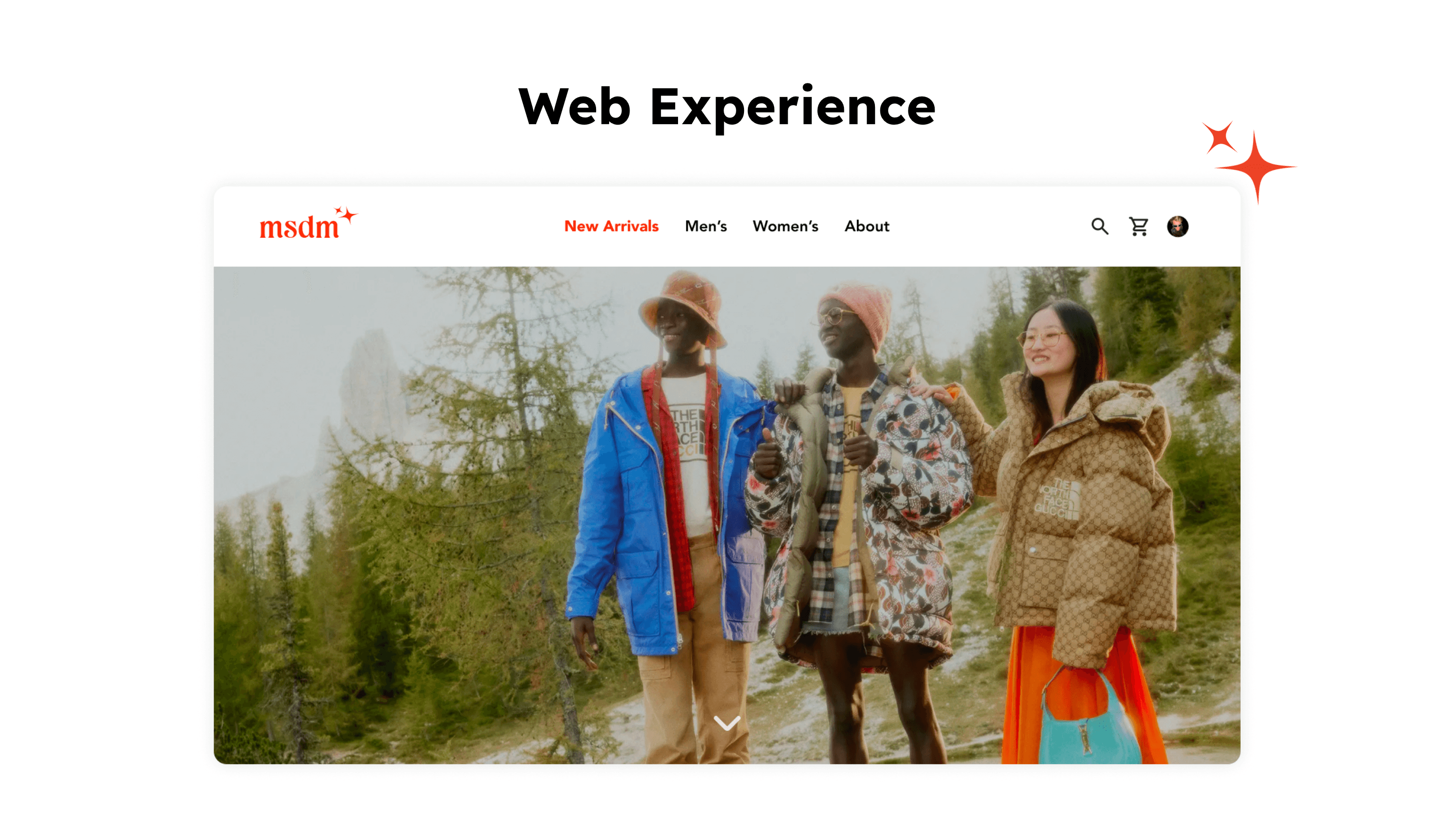
1. Web – Reserve & Pre-Select
Designed for planners and anxious shoppers:
Browse a curated set of looks online.
Answer a short style/size quiz.
Reserve a fitting room time and pre-load it with items you want to try.
Arrive at the store and go straight to your allocated room—no wandering, no queuing.
This reduces cognitive load in-store and makes the visit feel like an appointment instead of a gamble.
2. Walk-In – Light Guidance
Designed for people who just show up:
Walk into the showroom and get a quick orientation.
A kiosk or staff member helps you pick a handful of items to start with.
You’re assigned the next available room.
Once inside, you can continue exploring via the tablet.
This replaces armfuls of clothes and needing to guard a spot in line with a simple, guided “on-ramp” into the fitting-room experience.
In-Room Tablet – Quiet Assistant
Inside each room, a wall-mounted tablet lets you:
Request a different size or color
Ask for similar items (“same vibe, different cut”)
Save items you like for later, even if you don’t buy them today
Behind the scenes, staff receive these requests and deliver items directly to the room. The shopper stays in a private, focused state instead of running laps around the store half-dressed.
In future iterations, this tablet could also:
Remember fit preferences across visits
Offer light, evidence-based suggestions (“people who chose this fit often preferred one size up in this brand”)
Capture what worked and what didn’t to improve future shopping experiences
Our “Pixar Story”
I wrote a narrative for a persona we called Sana—a New Yorker who hates shopping but needs shoes for a party, it goes like this:
Once upon a time, there was Sana, a 20-something living in New York. One day, she gets an invite to her friend’s birthday party in three days. Shocker! Her ex-boyfriend will be there. She has to look her best.
She finds a new dress online and even spends the extra money on 1-day shipping. The dress arrives, and of course, it is way too small.
Because of that, she panics and takes the subway to Soho. Once she gets there, however, it's crowded, hot, and there are just so many options. None of the dresses look right when she tries them on (after waiting 35 minutes for a fitting room).
She runs out of time and has to run home to throw on whatever she can find in her closet, and goes to the party. The entire time, she feels self-conscious about her outfit. Her ex-boyfriend never gives her the time of day.
With MSDM, however, Sana would have been able to get her own spacious fitting room, reserved well in advance of the party, and could have explored all the different sizes and styles of dresses to find what suited her best. Then she could have gone to the party, and her ex-boyfriend would have stared at her all night, but she would have been having too much fun to notice.
Before MSDM
Sana rushes to the mall after class, tired and on a deadline.
She wanders through racks, unsure what suits her.
She grabs random sizes, waits in a long fitting-room line, and tries things under unflattering lighting.
She buys something out of exhaustion, wears it to the party, and feels “off” in every photo.
With MSDM
Sana books a fitting room slot online and pre-selects four dresses in her size and preferred style.
She arrives and goes almost straight to her room; her picks are already inside.
The room feels calm, private, and roomy. It has good lighting, a seat, and no one is knocking on the door.
She uses the in-room tablet to request a different size and a similar style.
She leaves with a dress she genuinely likes and shows up at the party feeling put-together instead of rushed.
We used Sana’s story as a litmus test: if her emotional arc at the party doesn’t change, then the concept is just aesthetics.
What We’d Explore Next
This was a concept project, not a live store, so we closed with a set of next questions we’d like to explore:
Operational modeling
Sure, this whole idea sounds awesome for a shopper and could potentially increase conversion rate and average basket size. But for a retailer, is reduced rack space economically viable? What’s the room-to-staff ratios? How will peak-time scheduling look like? Cleaning and turnover?
Real-world testing
We would love to run a simulation of a mini MSDM fitting-room area inside an existing store, run trials with volunteers, and interview them afterwards about how their confidence and stress levels compared to a normal shopping experience.
Expanding the tablet’s role
Right now, the tablet is like a request terminal. It gives some outfit suggestions, has a wishlist, and subtle education about sizes and cuts. But could we further explore how it can act as a stylist?
This project was so much fun. Every time I shop for clothes nowadays, I just wish MSDM existed.