BACK
Tatheer - New Form of Marketing?
Designing a Performance-First Word-of-Mouth System
I’ve spent the last four months of my life designing a system that tries to make influencer marketing less about hype and more about proof. This is not a growth story or a feature tour. It is a look at the problems I saw in the industry, the principles that emerged as we tried to fix them, and how those principles shaped very specific design decisions in the product that eventually became Tatheer.
Where the Problem Really Is
People today are fluent in a new skill: not seeing ads. An article from NNG backs this up. They swipe past polished banners without even registering them, and have learned to treat brand slogans as background noise. Trust in ads thinned out because everyone was shouting, “WE HAVE THE BEST PRODUCT.” Now, trust tends to cluster around people they already know: a friend’s story, a local creator, a familiar voice. When someone who looks, lives, and speaks like you says, “I use this, and it helped,” it lands very differently than a generic campaign line.
To put it simply, influencer marketing is more effective than digital ads for companies when optimizing an audience’s trust.
However, the current structure of influencer marketing does not really reflect that reality. Most “influencer campaigns” still behave like billboards. Brands rent famous people’s faces for a flat fee, spray content into the feed, then measure whatever numbers the platform exposes. Creators are treated as inventory. They are priced by follower count, pushed into one-off deals, and rewarded for how loud they look on paper, not for the actual value they create. When the campaign is over, brands are left with a folder of screenshots and a vague sense that something probably happened somewhere.
For some companies, the “influencers = billboards” claim doesn’t matter as long as it has a high ROI. But behind the scenes, the operational side is just as messy. Running an influencer campaign means hunting for creators manually, vetting them one by one, negotiating prices via DMs, sending contracts, chasing content, waiting for “final files,” and then begging for performance reports that are usually incomplete or inconsistent. Marketers feel they are doing administrative labour without reliable, interpretable data.
Somewhere, in the middle of all this noise, sits the audience, whose experience is rarely treated as a first-class consideration. People do not open social media hoping to be interrupted by a brand. They open it to see people they care about. When marketing crashes into that space as something obviously foreign (off-tone, off-culture, and clearly scripted), it erodes trust a little more. However, when it fits into how the community already talks, it feels closer to a recommendation than an intrusion. In many regions, especially where trust is still shaped by family, friends, language, and micro-communities, that distinction is everything.
The question behind this project became:
How can we design marketing systems that align with how trust actually forms, keep performance transparent for both brands and creators, and dramatically simplify the way campaigns are run?
Tatheer is my attempt to answer that question in product form.
Campaign Creation: Complexity Without Feeling Heavy
Initial hunch: If the campaign creation form feels like tax software, we’ve already lost.
We knew we had to collect a lot of information from advertisers, including the goal, target audience, tone, constraints, budget, timeline, assets, and how they wanted creators to talk about the product. On paper, that’s dozens of fields. Our objectives were simple:
Keep clicks low.
Minimize “Wait… what do I do now?” moments.
Make the form look and feel simple, even if it’s structurally complex.
Experiment 1 – Multi-step wizard with a progress bar Our first instinct was familiar. We decided to break the form into steps and add a progress bar (“Step 1 of 5”). It looked clean in Figma, but in tests, it did something weird. People saw “1 of 5” and mentally braced themselves for a slog. They clicked through quickly just to see the finish line, skipping over the details we actually needed them to think about. The progress bar was technically helpful, but psychologically discouraging.
Experiment 2 – Pop-up mini-forms We then tried keeping the main form short and hiding “advanced” fields behind pop-up dialogs. This reduced the visual heaviness but created a scattering effect. Users lost their place, forgot what they were doing, and closed pop-ups that were only half-filled. We’d reduced visible complexity at the cost of coherence.
Where we landed We flattened everything back into a single page, but reorganized it around the advertiser’s mental model:
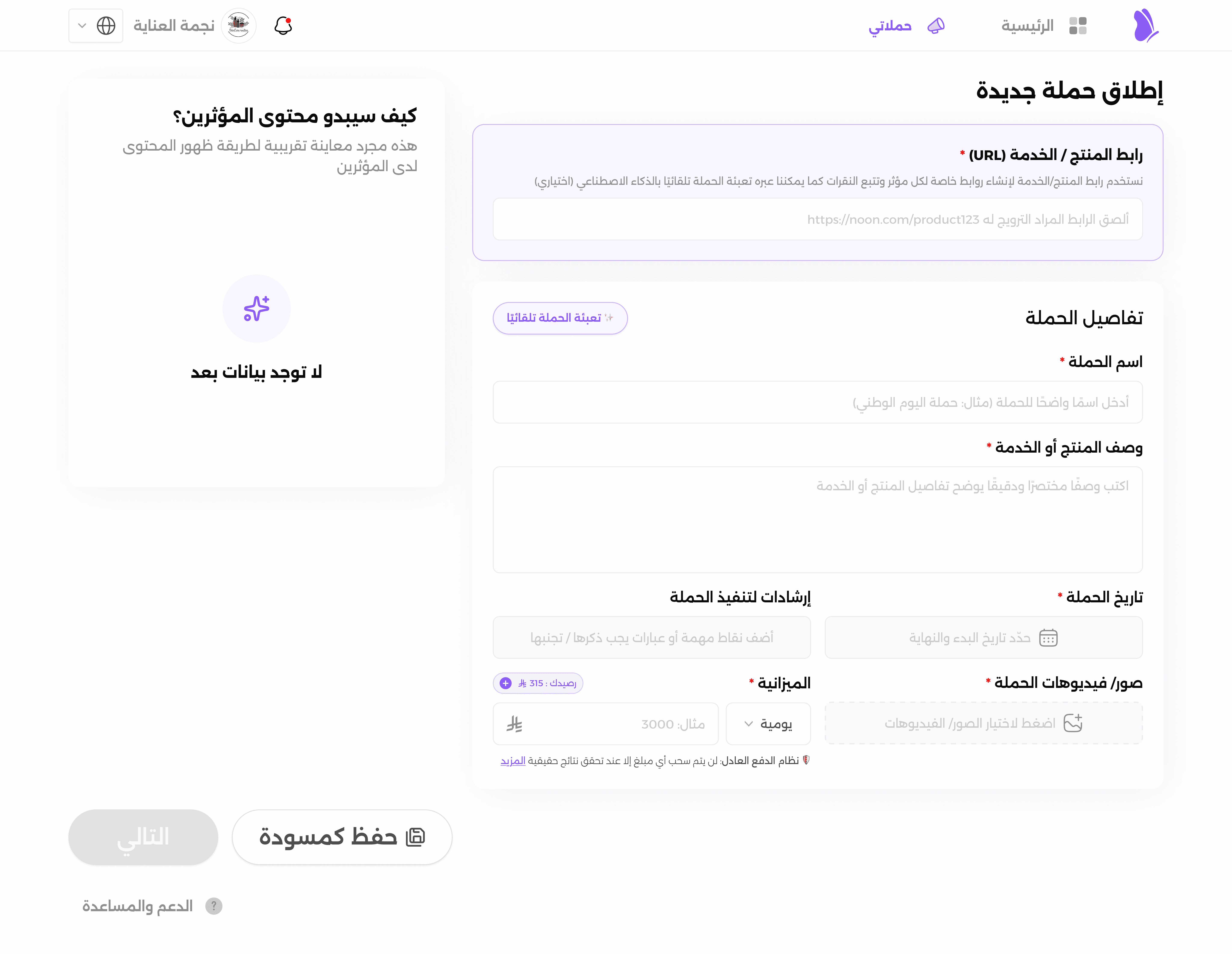
Top: “What are you promoting?” (campaign name, URL, product basics)
Middle: “Who should see it?” (audience, location, preferences)
Bottom: “How should creators talk about it?” (tone, key points, constraints)
Only truly optional details live behind subtle expand/collapse sections, not separate dialogs. The final design still gathers almost as much information as our earliest version. However, our tests showed fewer hesitation pauses, fewer “I’m lost” comments, and more people reaching the end in one uninterrupted flow.
Letting AI Help… Without Being Cryptic
Initial idea: Let AI do the boring writing.
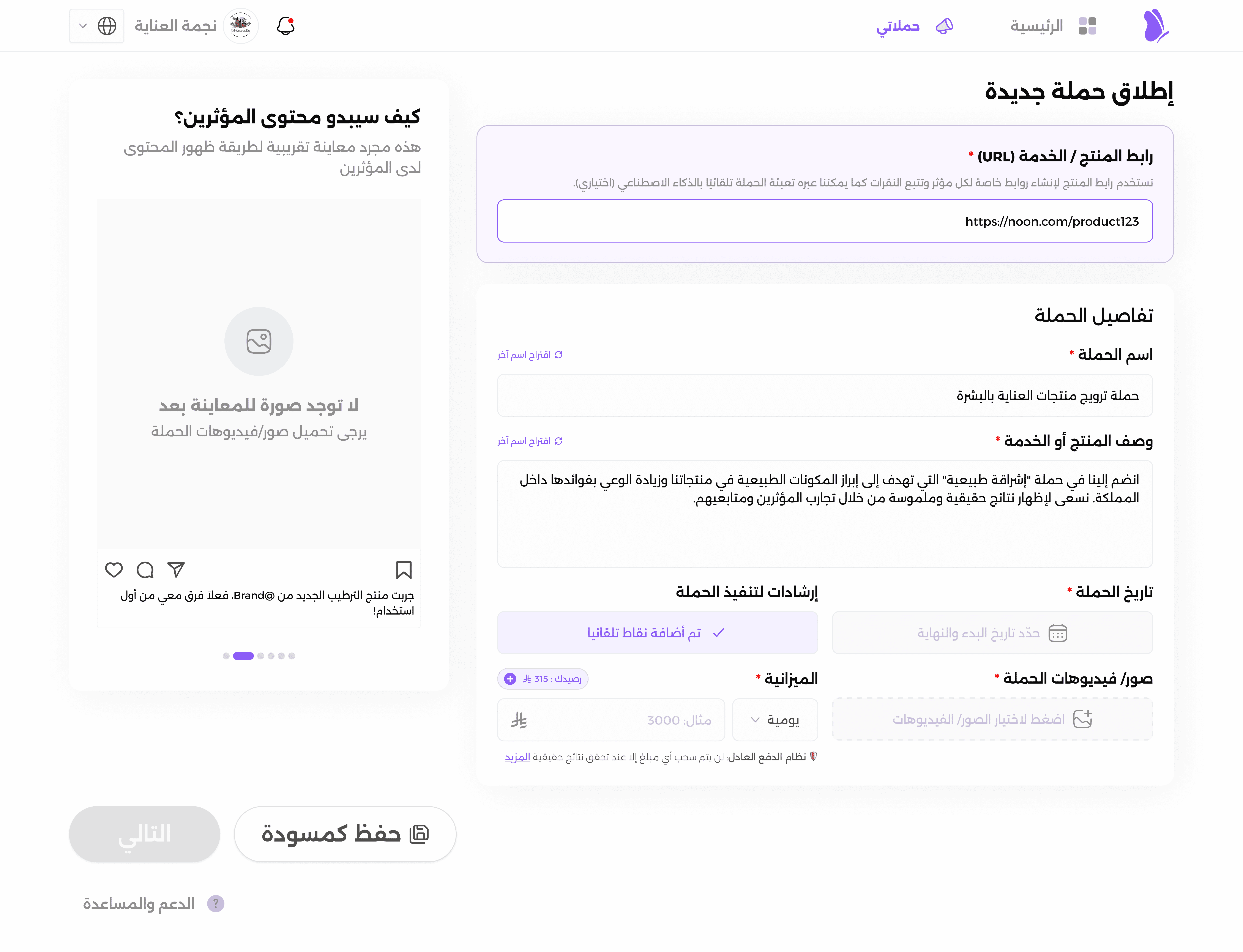
We realized advertisers already had good raw material: their website. So we wired up a feature: Paste your URL, and Tatheer uses AI to draft a campaign description, with suggested visuals, and example copy that creators might post.
The first implementation was purely functional via a “Generate with AI” button. Under the hood, that button depended on the “Website URL” field. If that field was empty, the model had no context and returned errors.
The failure mode In user tests, people discovered the AI generation button first, clicked it immediately, and got an error because they hadn’t yet filled in the URL. From their perspective, the product was breaking its promise: “You said you’d help, and now you’re scolding me.” From ours, the logic was obvious, but logic isn’t what people experience; interactions are.
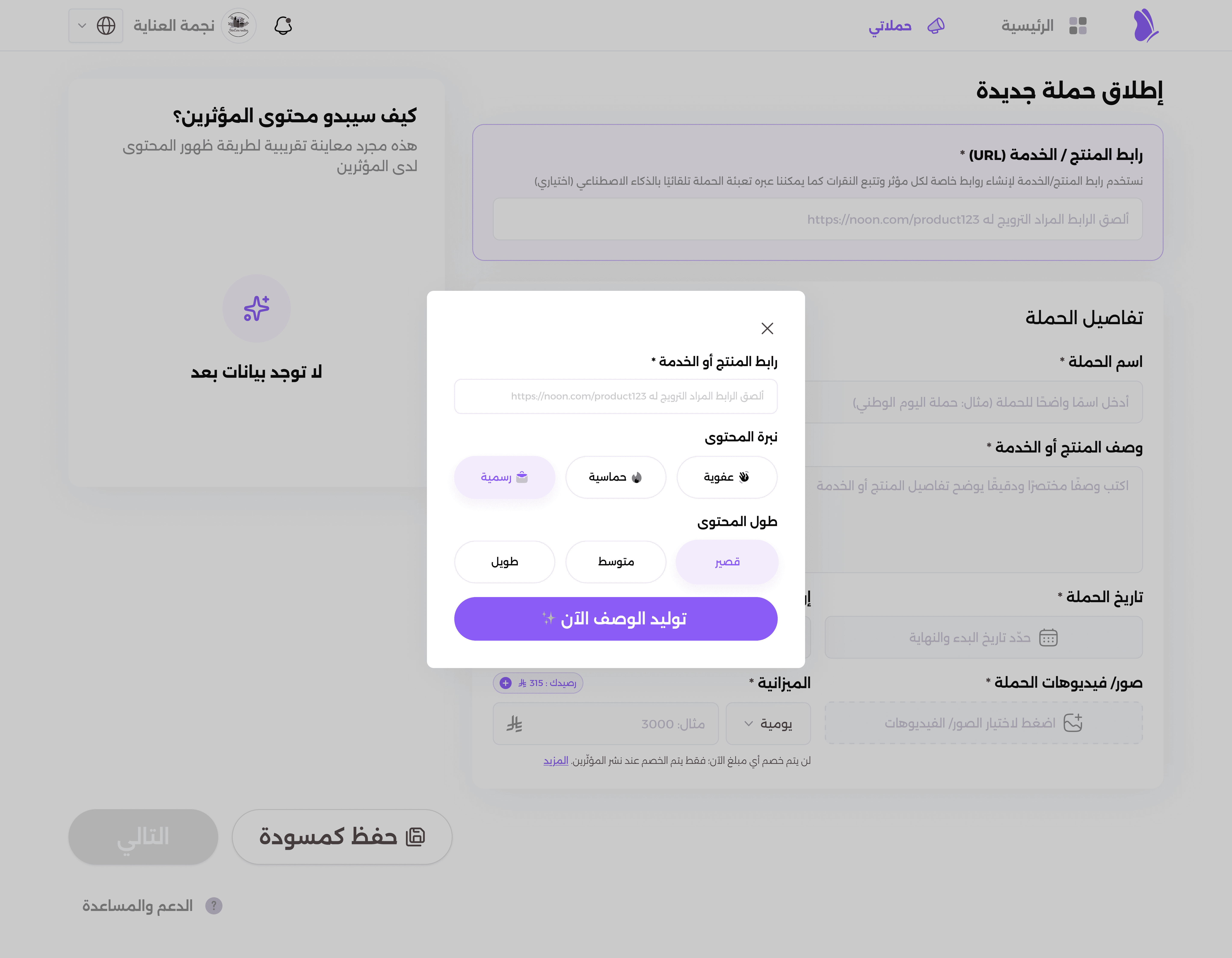
Redesign – Move the restriction into the conversation We changed the choreography:
Clicking “Generate with AI” now opens a small dialog that asks: “What’s your website?” with a one-line explanation: “We’ll read it to understand your product and draft a campaign for you.”
If the URL is already in the main form, we skip that step and confirm we’re using it.
The error state is gone; the missing piece (URL) is asked in context, not assumed.
Now the AI feature behaves more like a conversation than a locked door. The system isn’t saying, “You forgot to fill this field.” It’s saying, “Tell me about yourself and I’ll help.”
Images to include:
Original design: An AI button that silently depended on a URL field.
New flow: AI dialog asking for the URL, then showing the auto-filled brief.
Onboarding Advertisers Into a New Mental Model
Tatheer asks advertisers to adopt a slightly different mental model. You’re not buying a single creator or a single ad; you’re launching a network of trackable storytellers.
We wanted the first-time experience to compress three things into a few minutes:
Understand how Tatheer works.
Feel a real “aha” — This is faster than what I’m used to.
Launch something that looks and behaves like a real campaign.
Experiment – Heavy onboarding screen We initially designed a substantial “onboarding page” that tried to explain everything. We covered how campaigns flow, how wallets and budgets work, how creators join campaigns, and how tracking links operate. It looked like documentation. In tests, people skimmed, then clicked away. They hadn’t felt Tatheer yet; they’d only read about it.
Two key switches:
Prefill everything we responsibly can Using the same URL + AI approach, we prefill the first campaign with the following:
Drafted description
Suggested image or content direction
Default dates and pacing
The user’s job then becomes editing, not authoring from scratch. This reduces cognitive load and lets them see a complete campaign sooner.
Fund the very first campaign ourselves Onboarding is the worst moment to force a payment decision. So, instead of ending the first session with a paywall, we inject a small credit into the wallet for the first campaign. The user’s “first loop” is: create → launch → see results. Only after that do we ask, “Would you like to do more of this with your own budget?” It turns onboarding into a lesson rather than a transaction.
Micro-structure We also broke what used to be one huge onboarding screen into a short sequence:
Step 1: “Here’s your first auto-drafted campaign, based on your website.”
Step 2: “Here’s how your wallet and our credit work.”
Step 3: “Hit launch and watch it go live.”
We sprinkled small “achievement” moments (a tiny celebration after launch) to reinforce the behaviors we actually want: creating and shipping, not lingering in explanation.
Explaining Tatheer to Influencers Without Sounding Like a Scam
While advertisers needed a new mental model for buying, creators required a new mental model for earning. And they were, understandably, suspicious.
Early copy: Our first instinct was to be straightforward:
Turn your influence into stable income.
But this was framed around the “gains.” It sounded aspirational, yes, but in tests and conversations, it elicited eye rolls. It felt too close to “Make $5,000 a week from your phone!”
We scratched that. It was shady.
We pivoted to a more honest question:
“You already make good content. Are you earning enough for it?”
This slight shift did a few things:
It acknowledged their existing effort (”You already make good content”).
It named the quiet frustration (”You’re underpaid”).
It invited them into a conversation about how much is “enough,” instead of promising a fantasy.
Generally, I believe that hooks oriented around pain are more catchy for consumers because they sound relatable.
For the brands side, the problem was different. Marketers don’t want to hear about “influencers”; they want to hear about brand awareness, return on ad spend, trust, etc…
We ended up with a line that visually encodes our thesis:
People don’t trust ads, they trust people
Frankly, that line was a bit too long so we got creative and used some formatting
People trust ads people.
The strikethrough forces a double-take: for a split second, the sentence is wrong, then it resolves. Turns out it was unique.
Money, Anxiety, and “Ready to Launch”
Budgets are emotionally loaded. In interviews, people’s posture changed when we reached the wallet section. They leaned back, squinted, and sometimes opened another tab to “Check with finance.” The worst place to trigger that anxiety is just when they’re excited to launch a campaign.
The naive implementation – Hard stop error Our first wallet design was straightforward: If your balance was less than the campaign’s budget, the “Launch” button was disabled, and you got an “Insufficient funds” error. Accurate, but harsh. It framed money as a red stop sign and broke the flow of building the campaign.
Reframing – State, not scolding We made two key changes:
Inline top-up We kept the user on the campaign page. The wallet is always visible with a clear number and an “Add funds” control. You never have to leave the context to add money, and there are no detours to a separate “billing” section.
New status: “Ready to launch” Instead of blocking them, we let them finish the entire campaign setup and save it as “Ready to launch.” If the wallet doesn’t cover the budget yet, they see a gentle banner:
“This campaign is ready. Add X SAR to your wallet to launch it.” It’s honest about what’s missing, but it doesn’t erase the work they just did.
We also drew a line around our nudges. We wanted to use behavioral insight (like surfacing “You’re about to run out of budget, add more to keep momentum”), but we explicitly avoided dark patterns. There were no fake urgency timers, no shaming copy, and no hiding the actual spend.
Images to include:
Original “Insufficient funds” modal/disabled launch state.
Updated wallet with inline top-up and “Ready to launch” status.
Seamless Signup Without Over-Complicating Identity
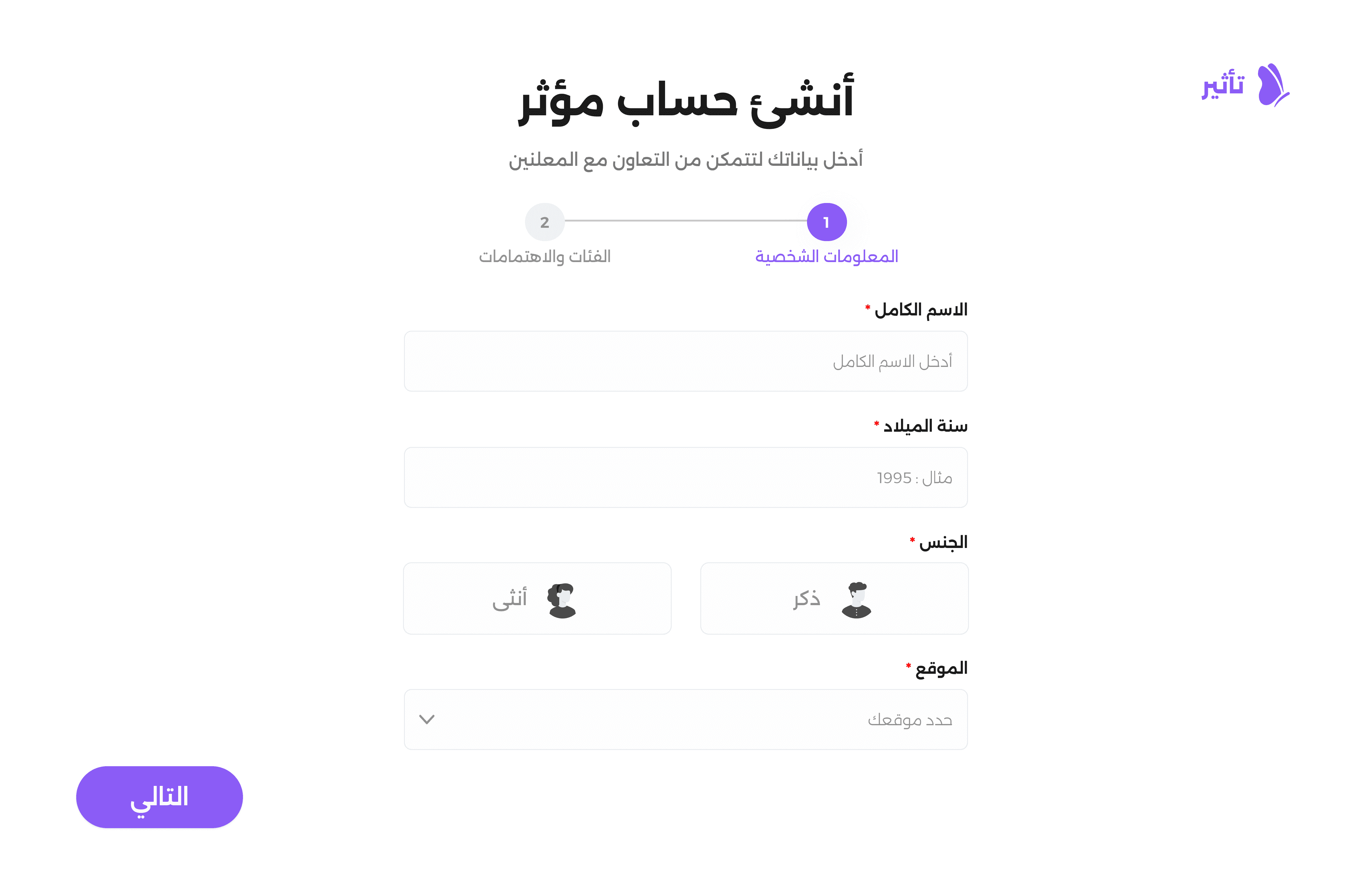
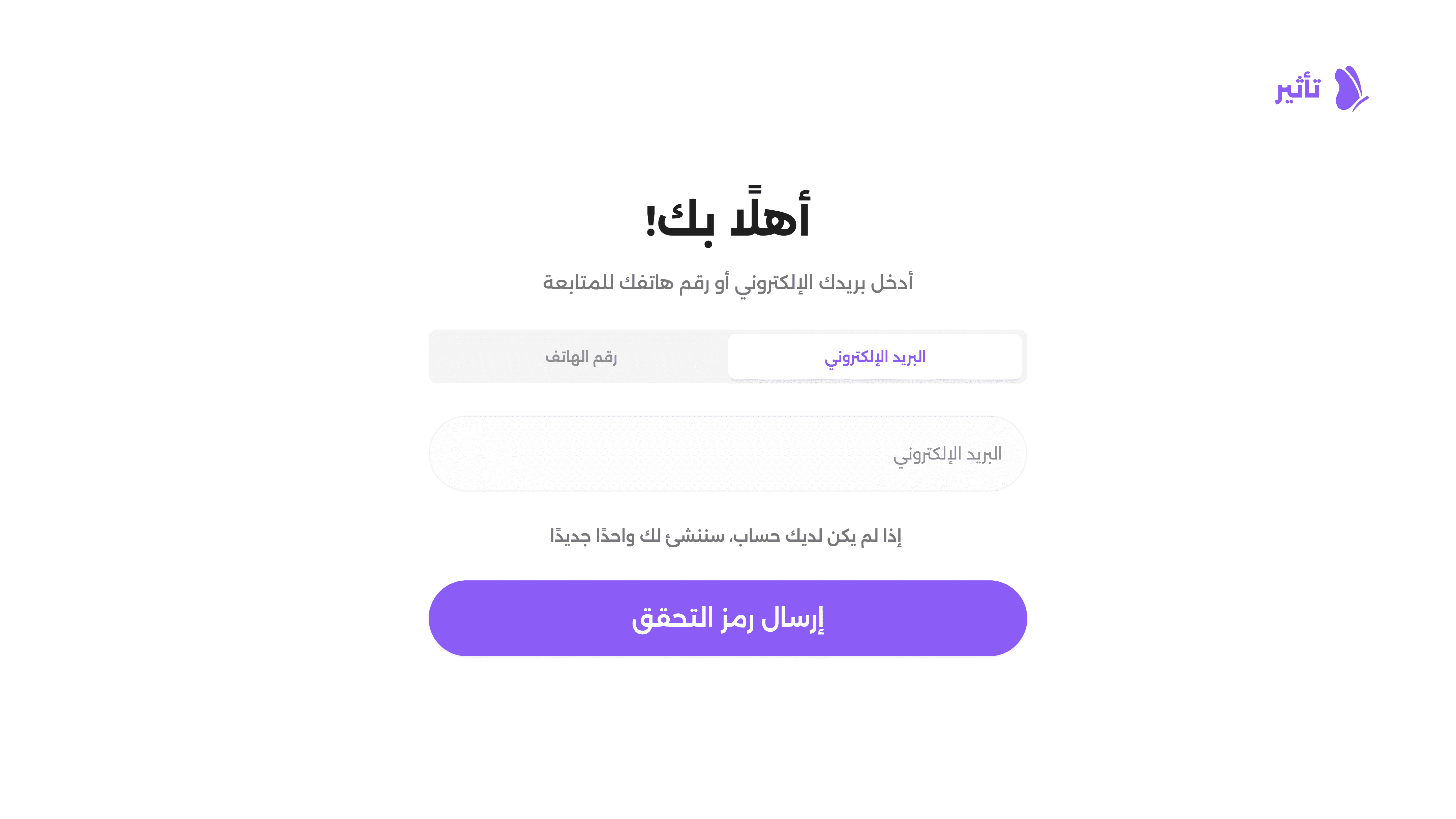
Signup is the first micro-interaction where a product either earns trust or burns it. We wanted Tatheer’s signup to feel almost casual, especially for creators, who are used to dropping into platforms quickly.
Our constraint: No passwords. Password creation is slow, forgettable, and often leads to either weak secrets or abandonment.
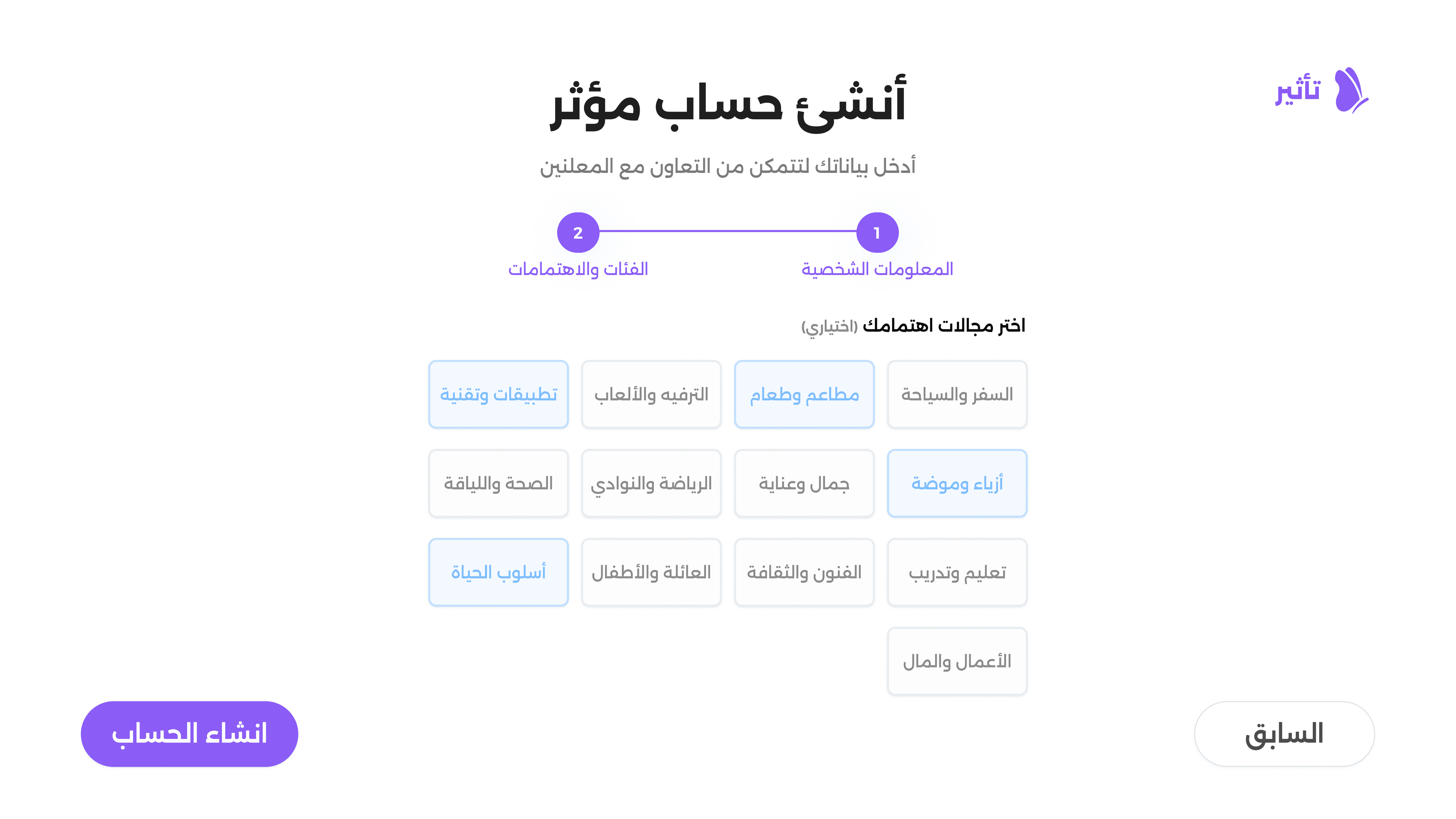
Solution – One-field signup We landed on a simple pattern:
Enter phone number.
Receive OTP.
You’re in.
The same flow works for both advertisers and creators. Their role is determined by what they do next, not by a decision that is forced at the door.
We’re aware this raises questions about security and identity over the long term, and it’s something we plan to layer over (e.g., encouraging email addition later, adding 2FA options). However, for the first encounter, we chose momentum so we reduce friction until people see what Tatheer actually does.
Hoe does “participating” work?
If Tatheer is about paying for real impact, we need proof that posts actually went live. That means creators must upload screenshots, story archives, or links. Most platforms either don’t demand these things or they are buried in manual reporting.
The tricky part is timing: creators don’t take screenshots at the same moment they join a campaign. We initially tried to force “proof” into the same step as “join,” bundling them into one big modal. It made conceptual sense to us, but in practice, it didn’t match their workflow.
What we saw:
People skipped the giant modal, intending to “Do it later,” then forgot.
The interface looked heavy and guilt-inducing: a big list of requirements before they’d even started.
Redesign – Separate actions, consistent expectation
We made three changes:
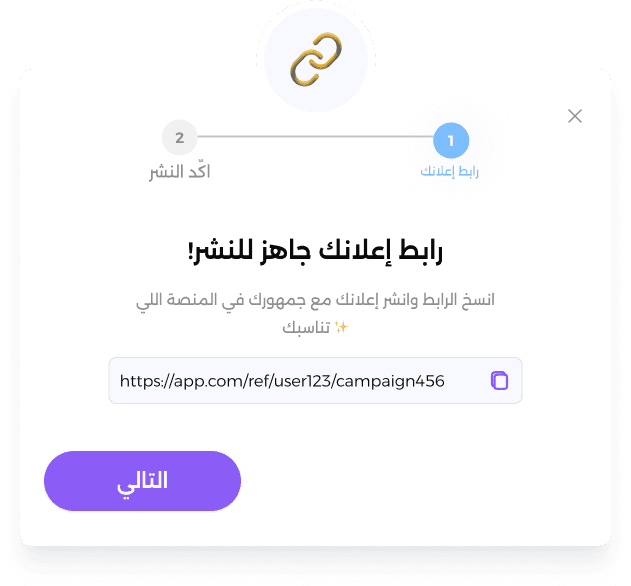
Evidence gates earnings, not participation Creators can join any campaign, see it in their dashboard, and access all its details. But payouts and some performance views remain locked until they upload proof. The message becomes: “Participate freely; to unlock money and stats, show us what you did.”
Threaded reminders Instead of a single scary page, we sprinkled reminders in natural places:
A badge on campaign cards (“Evidence needed”).
A primary call-to-action: “Upload evidence to unlock your earnings.”
A small, focused upload screen that appears when they’re likely to be done posting.
Keep the upload UI boring (in a good way) There was no over-designed wizard – just a simple, clear flow: choose campaign → upload file/paste link → confirm.

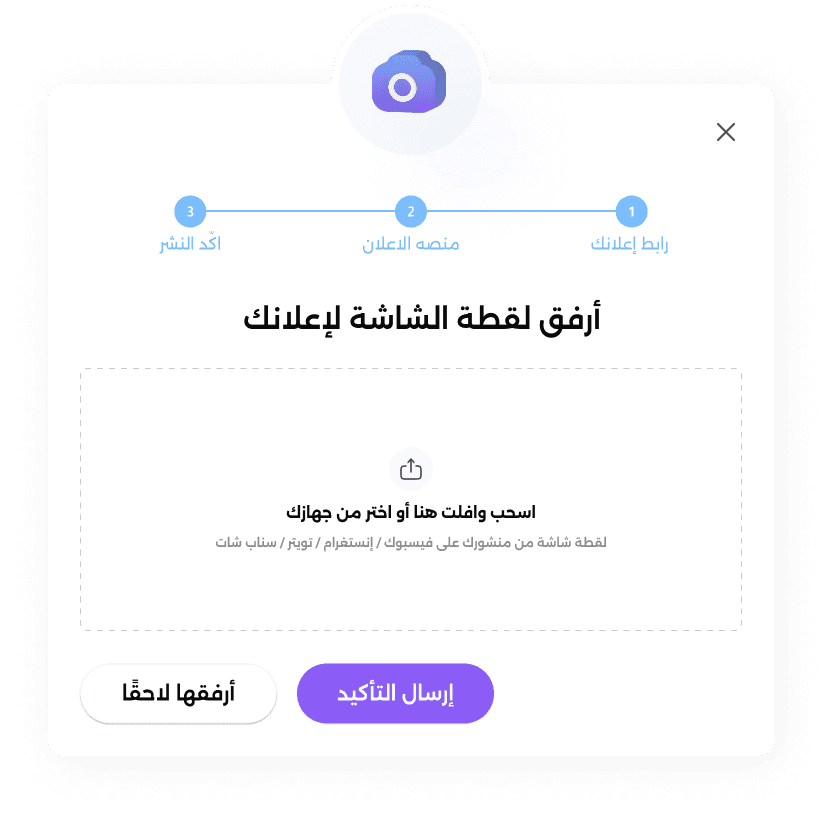
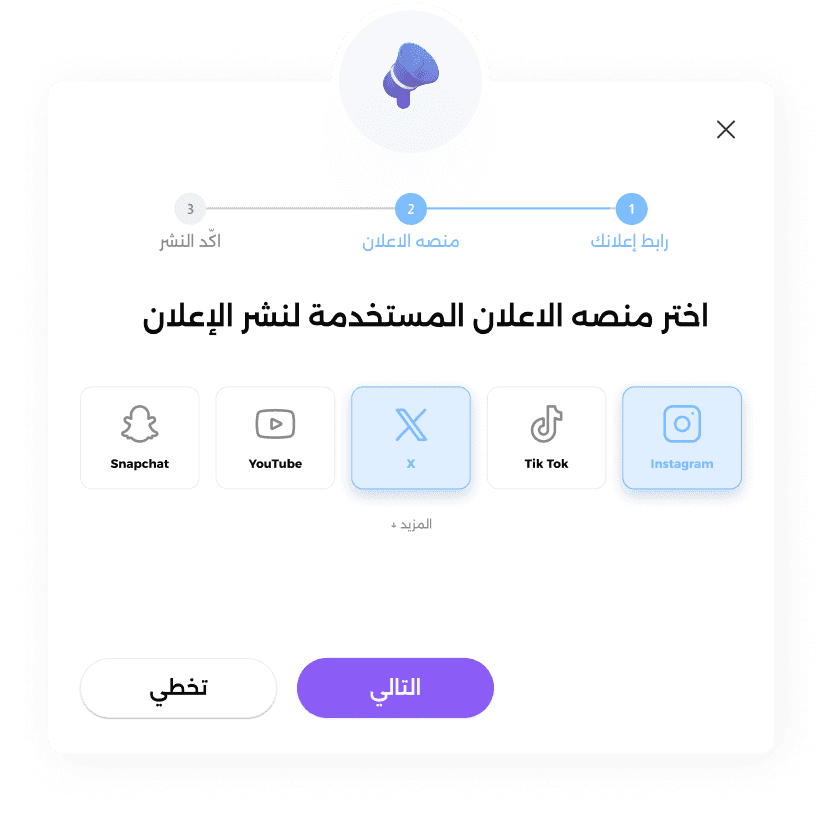
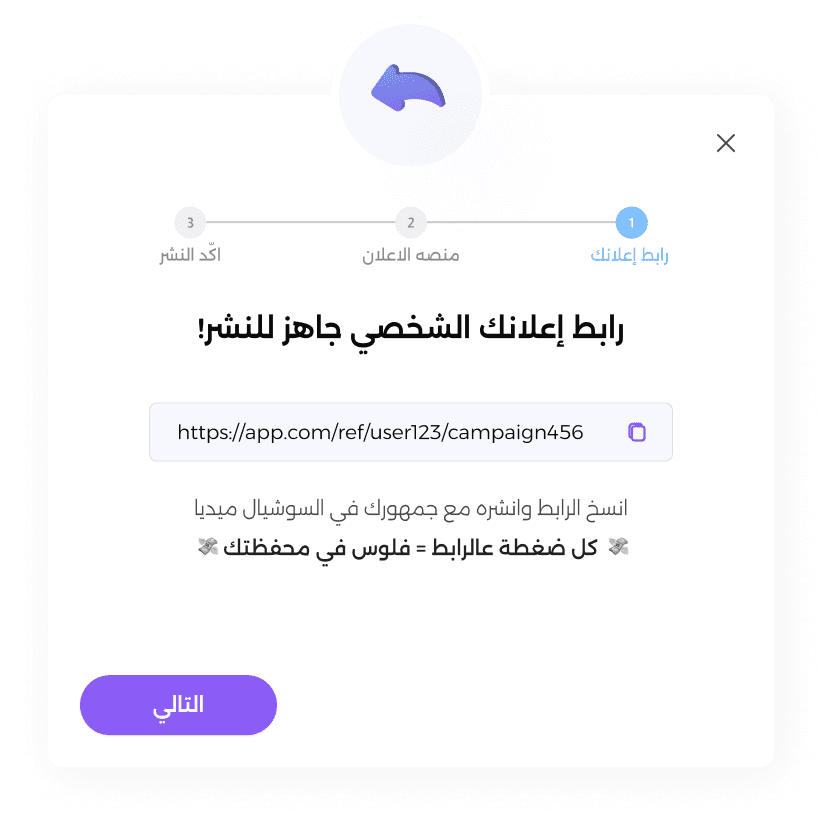
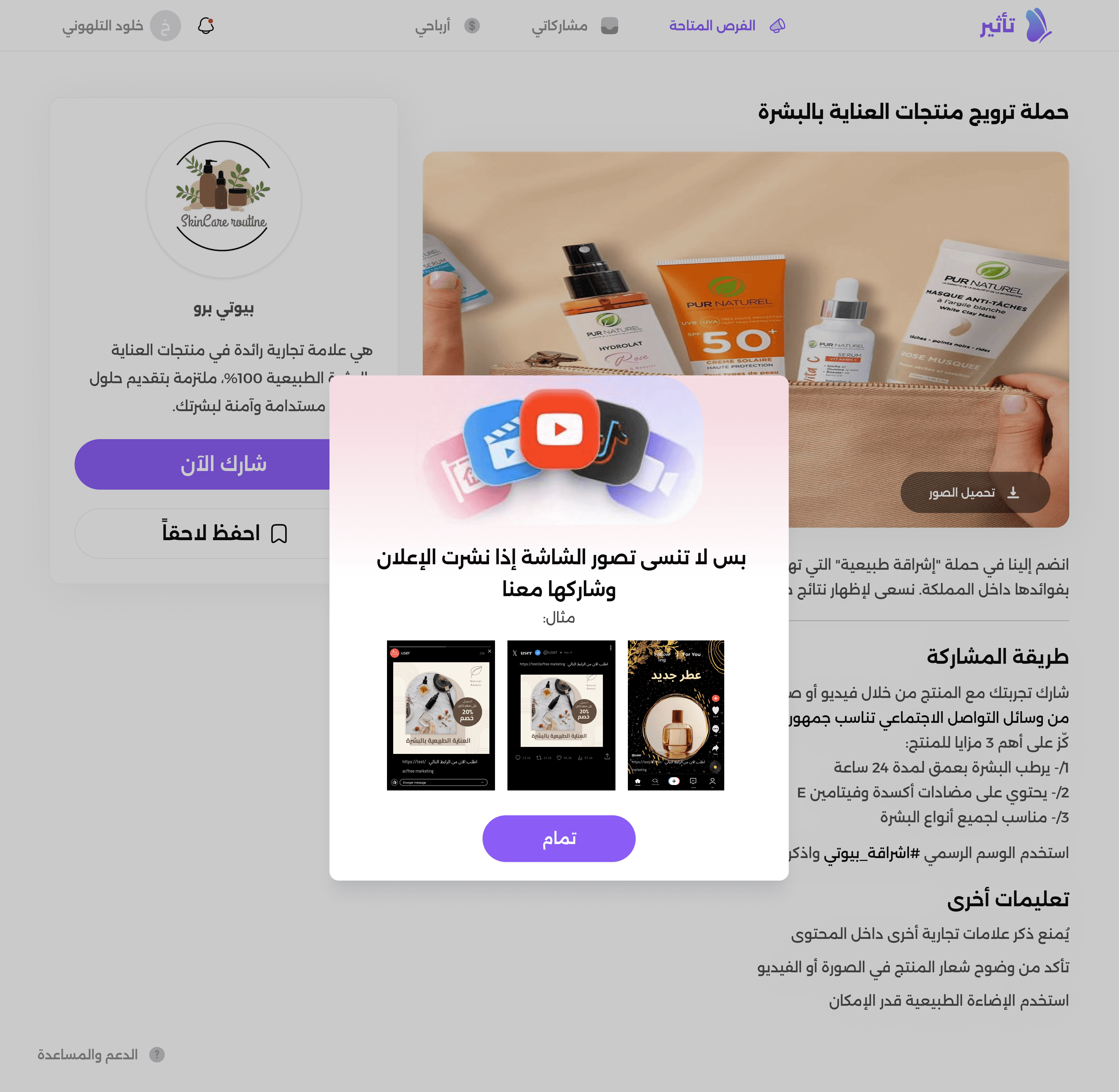
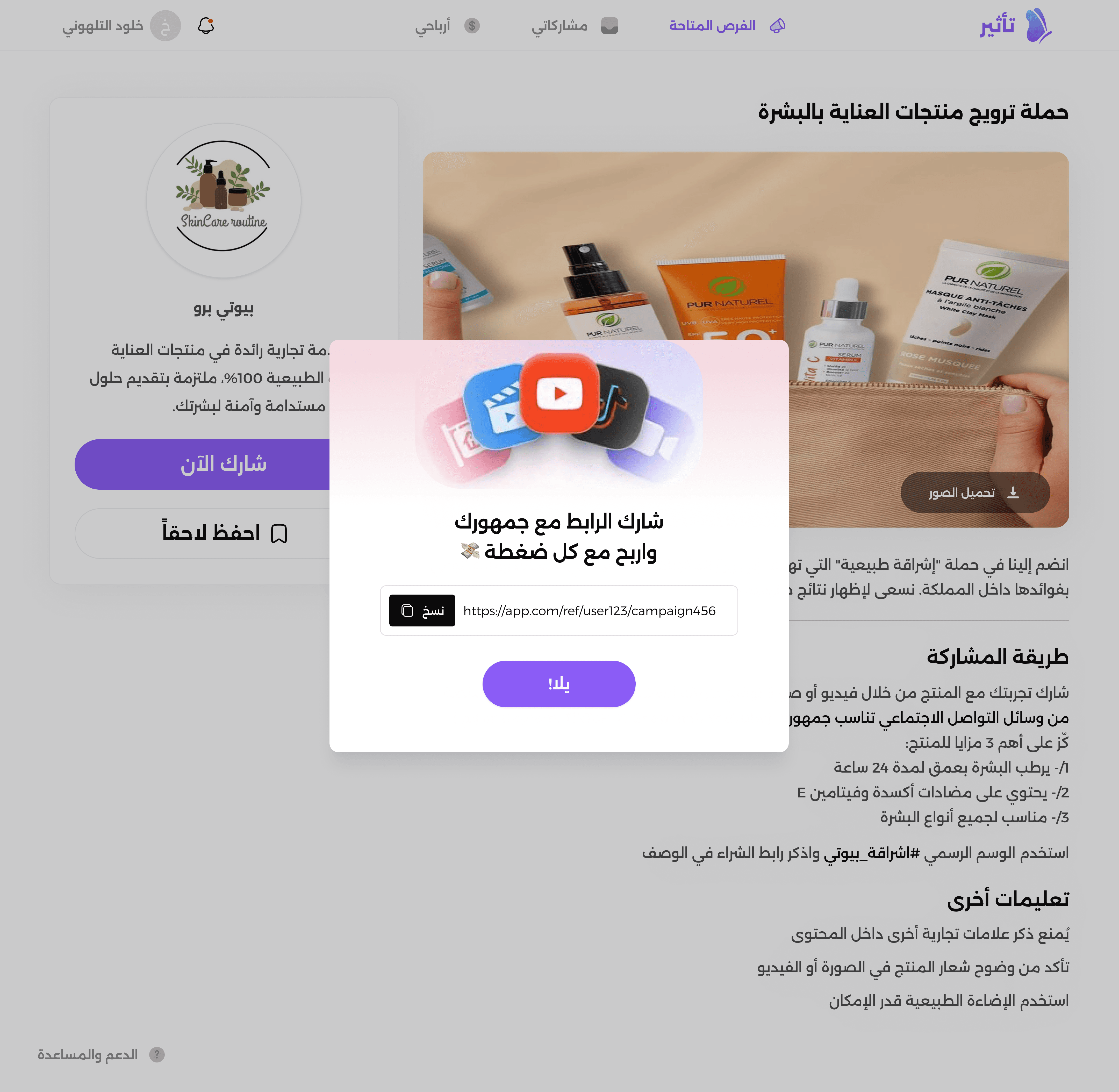
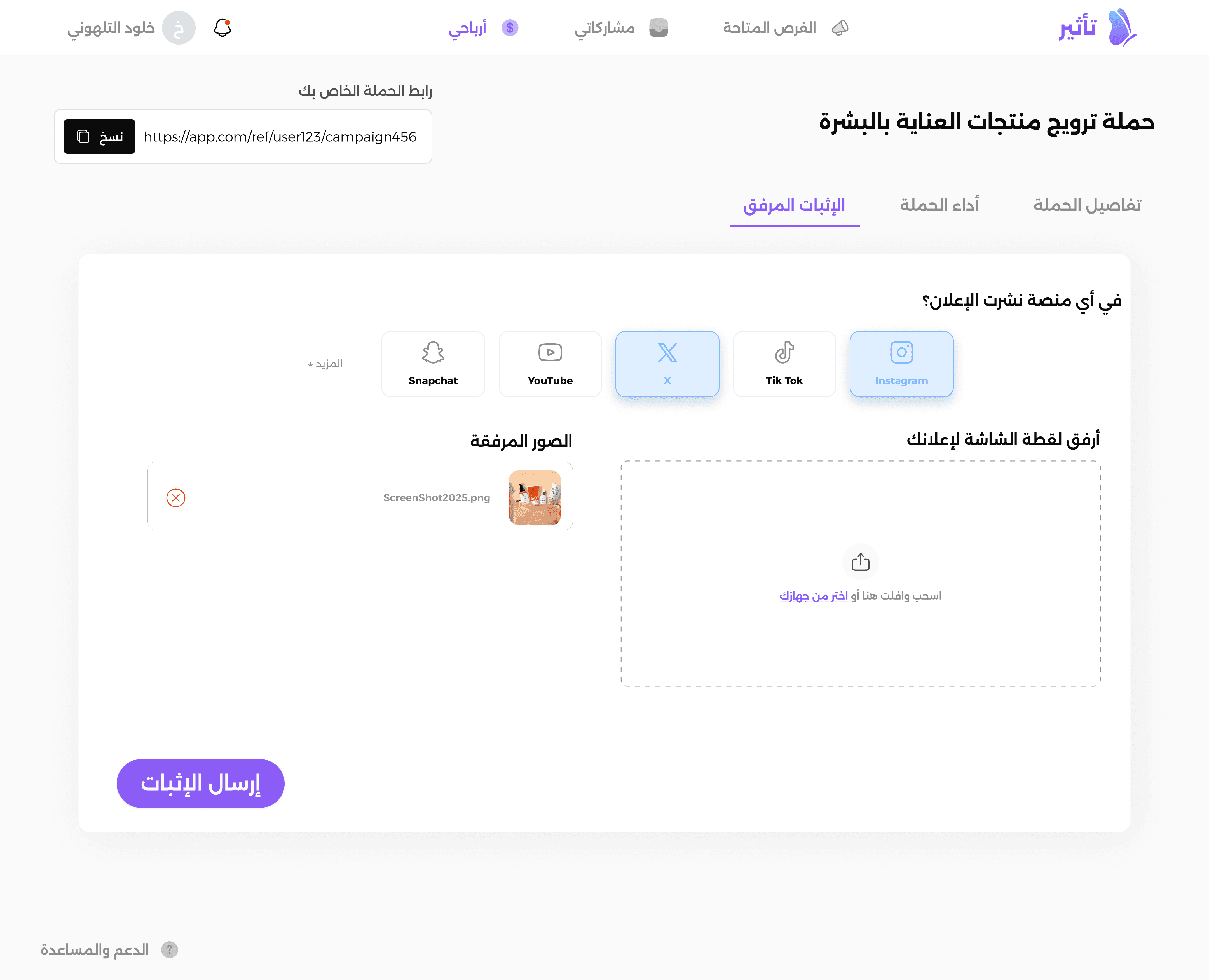
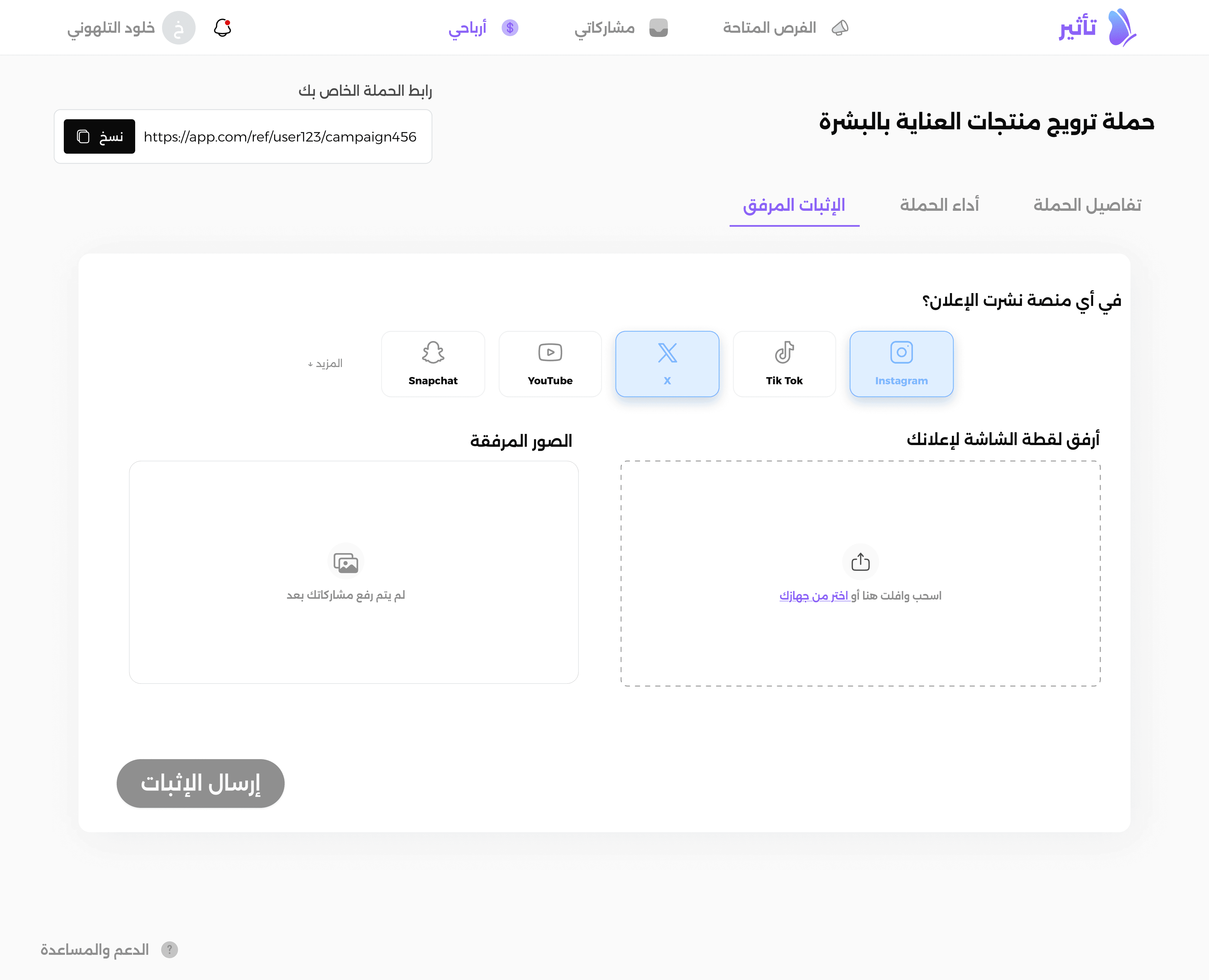
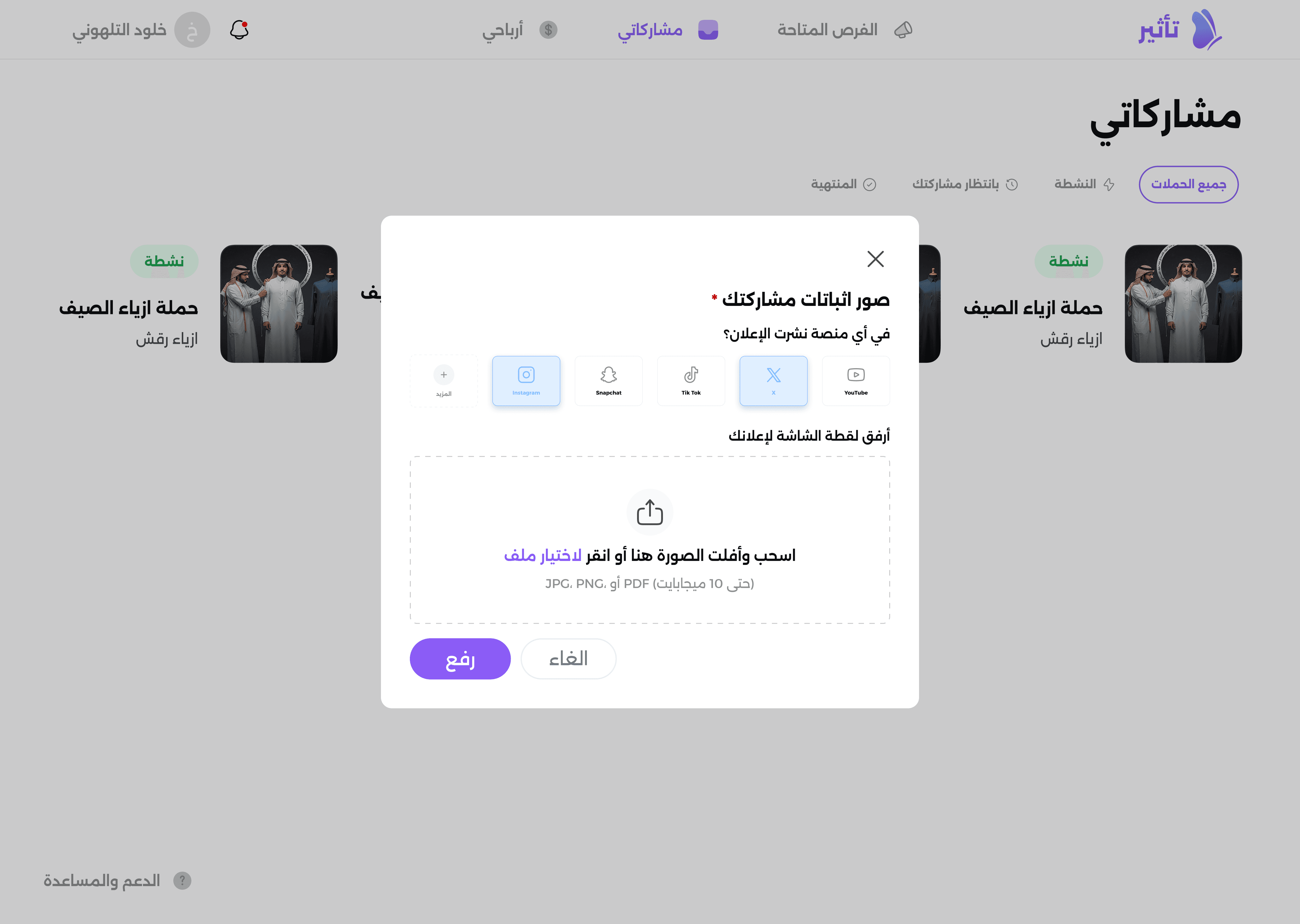
Once they click that button, they get a direct pop-up with two questions: “Which platform did you post this ad on?” and “Can you please share a screenshot of your post?”
Presenting Campaign Participations to Influencers
As creators start joining more campaigns, they need a way to see all their participations at a glance. Our first design looked like every analytics tool ever: a table with rows and columns (campaign name, status, earnings, dates).
As builders, it worked for our brains. For creators, it felt like logging into Excel.
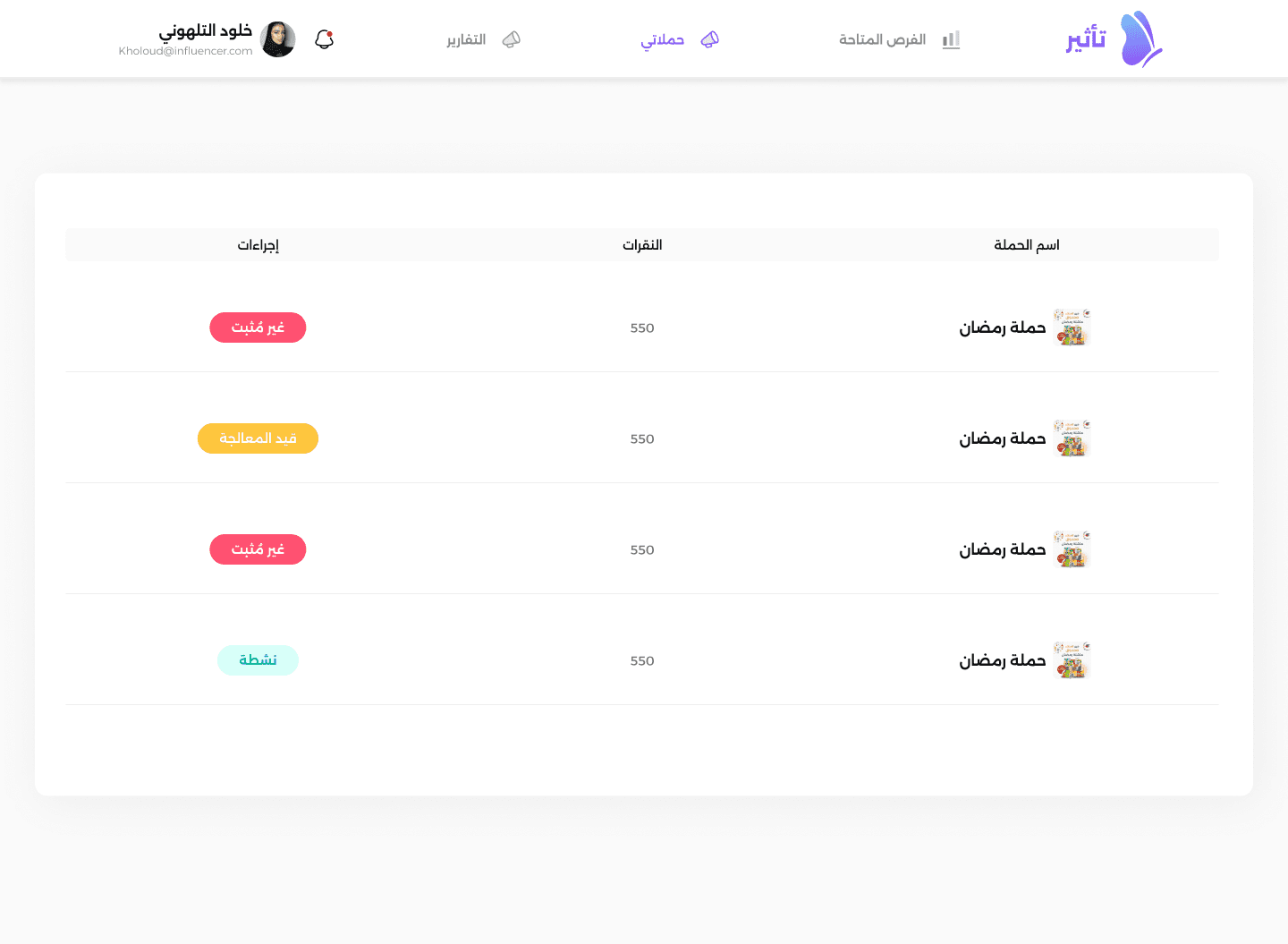
First version
Experiment – Card-based view
We redesigned “My Participations” into a set of cards:
Each card shows the campaign image, title, and a simple status (“Active,” “Completed,” “Evidence needed”).
The detailed metrics live one click deeper, inside each campaign.
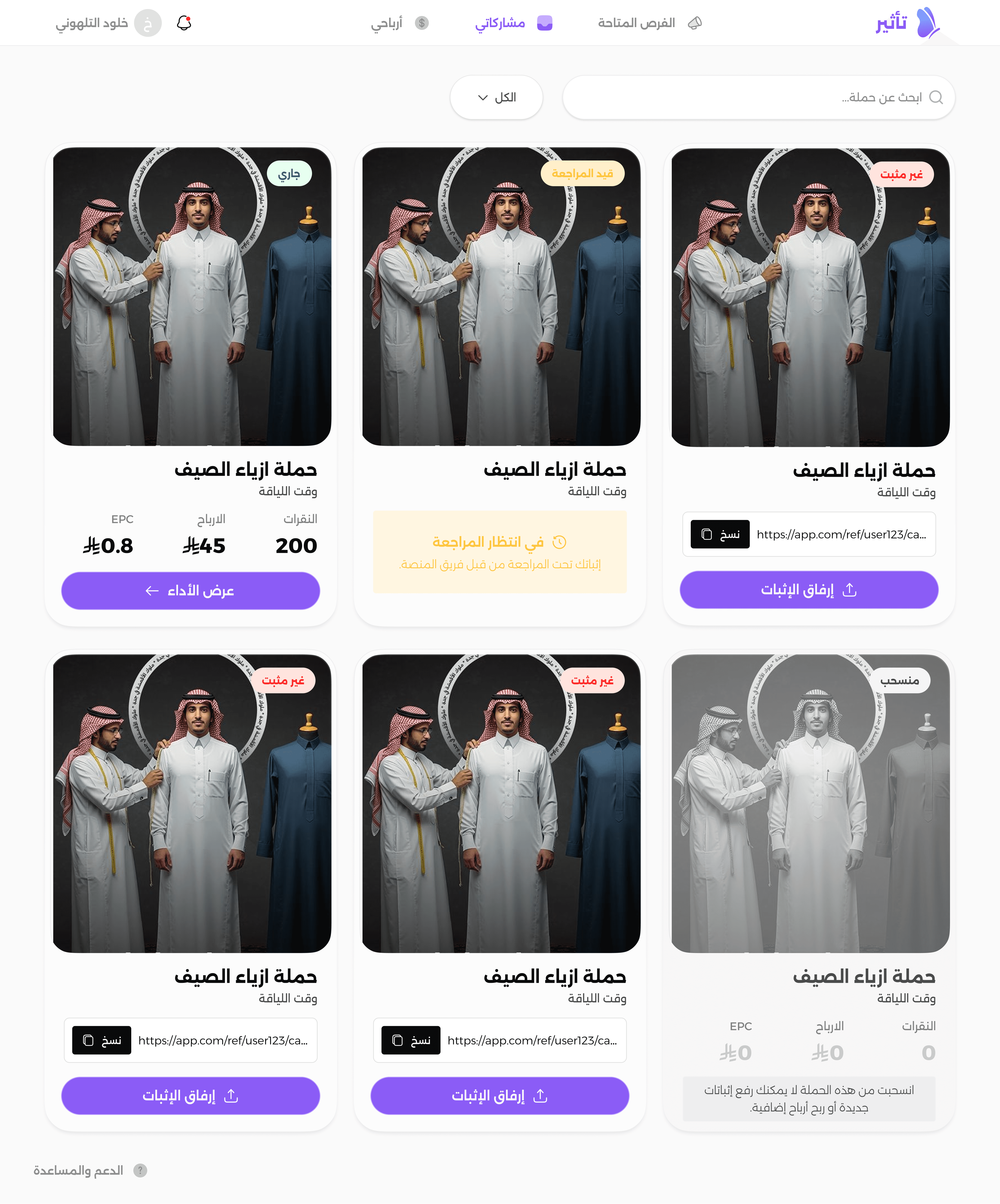
Removing those in-your-face red buttons
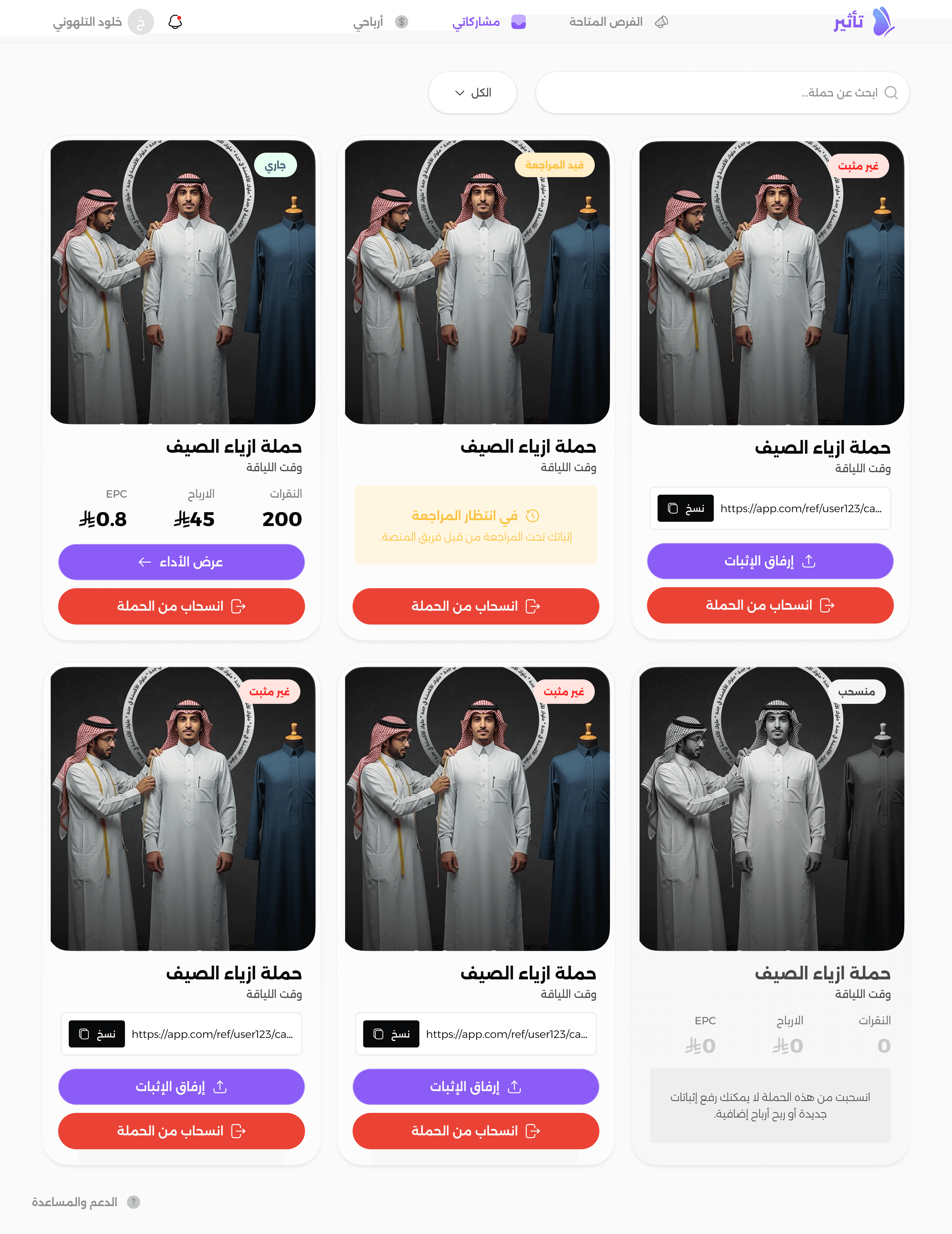
Adopting a card-like design
Creators who tested this version described it as “more like my content apps” and less like work. Browsing their campaigns felt like scrolling through a curated gallery of the stories they were part of, not reading a report.
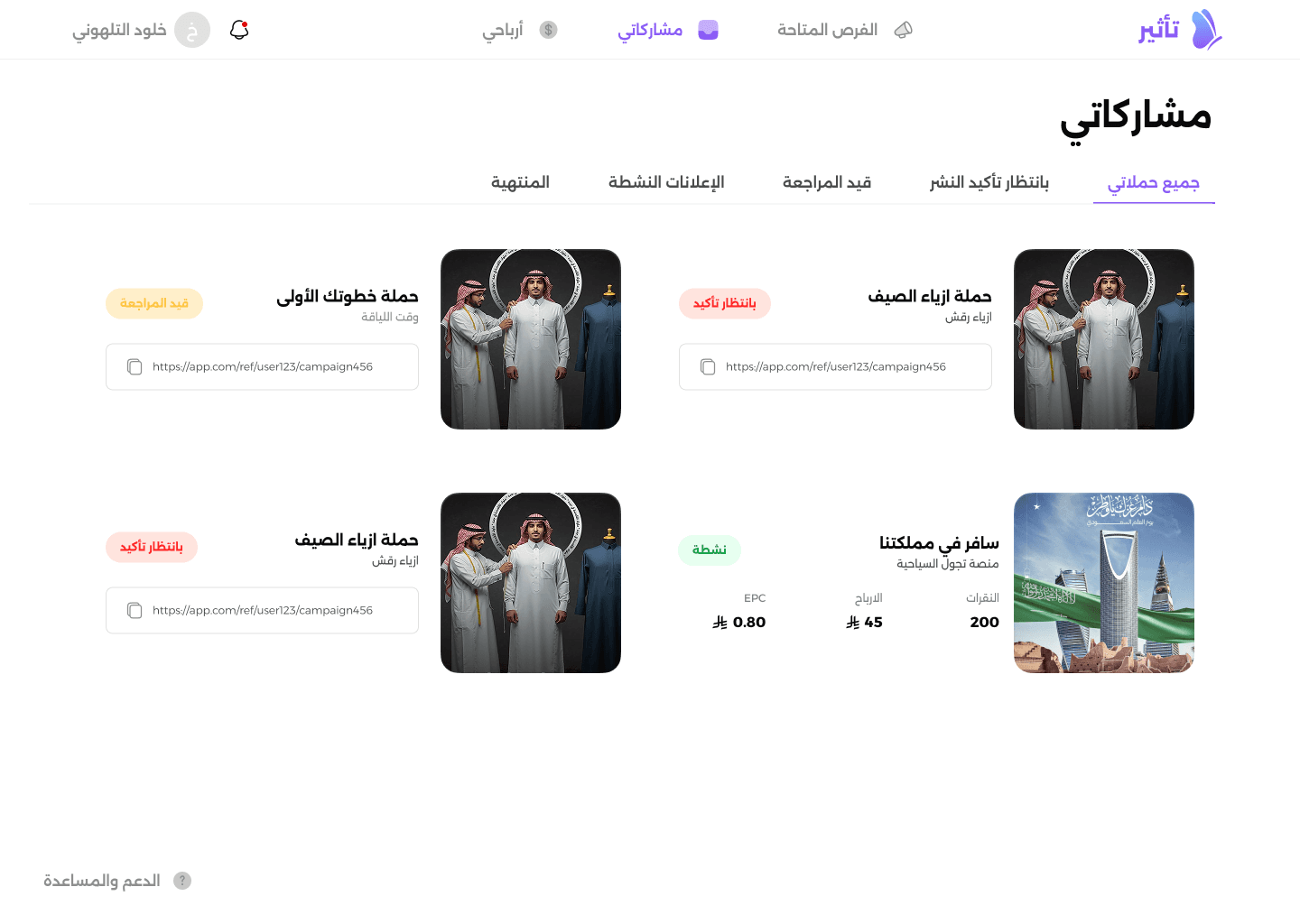
We made the card clickable and put the URL outside for easy navigation.
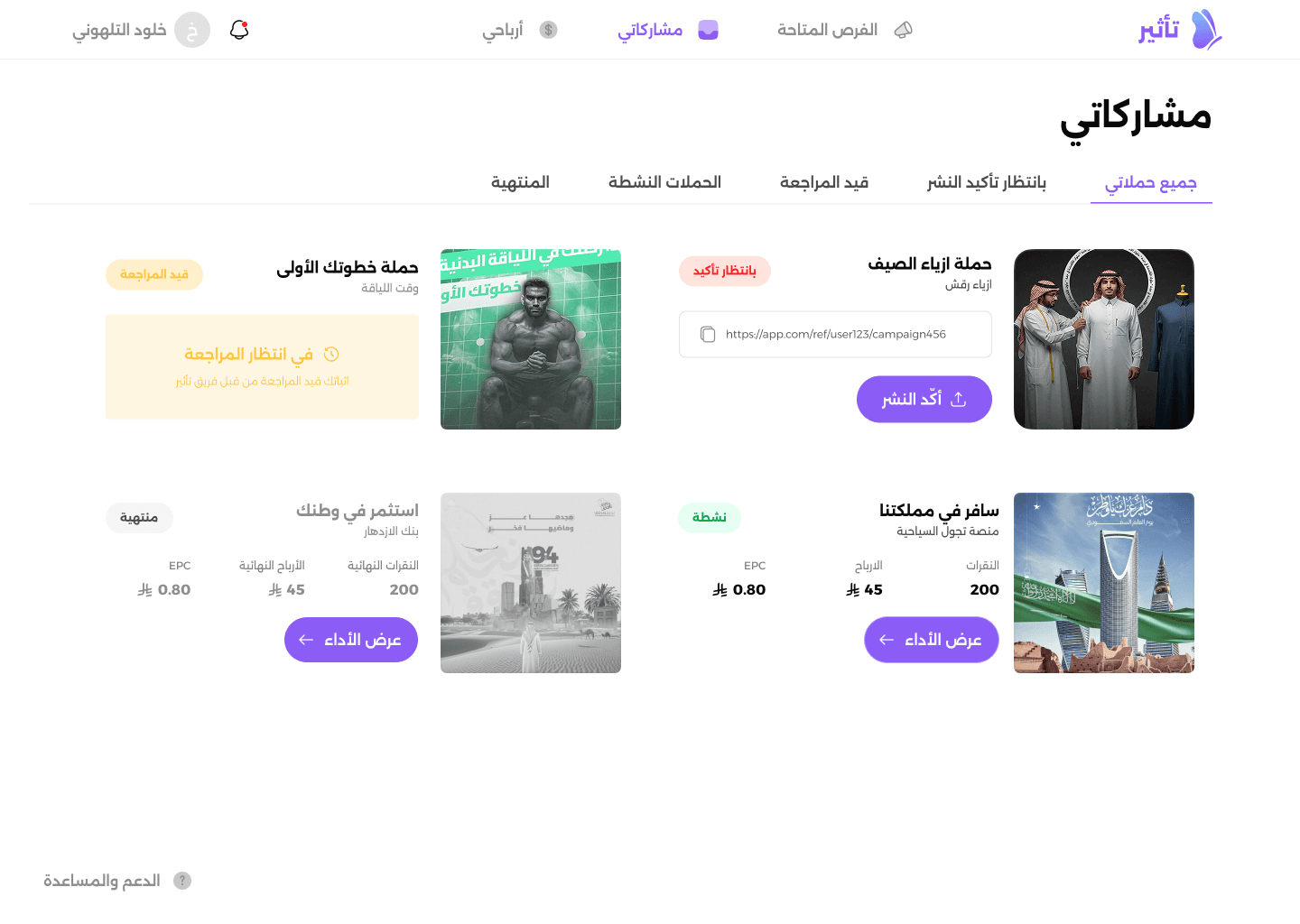
Adding tabs for better organization and presenting cards horizontally rather than vertically. It ensures this page is distinguishable from the homepage, which shows cards of campaigns a user can participate in.
We iterated on what not to show. It was tempting to cram stats onto the cards (clicks, earnings, dates, everything). But each time we did, the page drifted back toward corporate dashboards. The final compromise was strict: image, title, tag. Nothing more. Cards are for recognition and navigation; detail pages are for analysis.
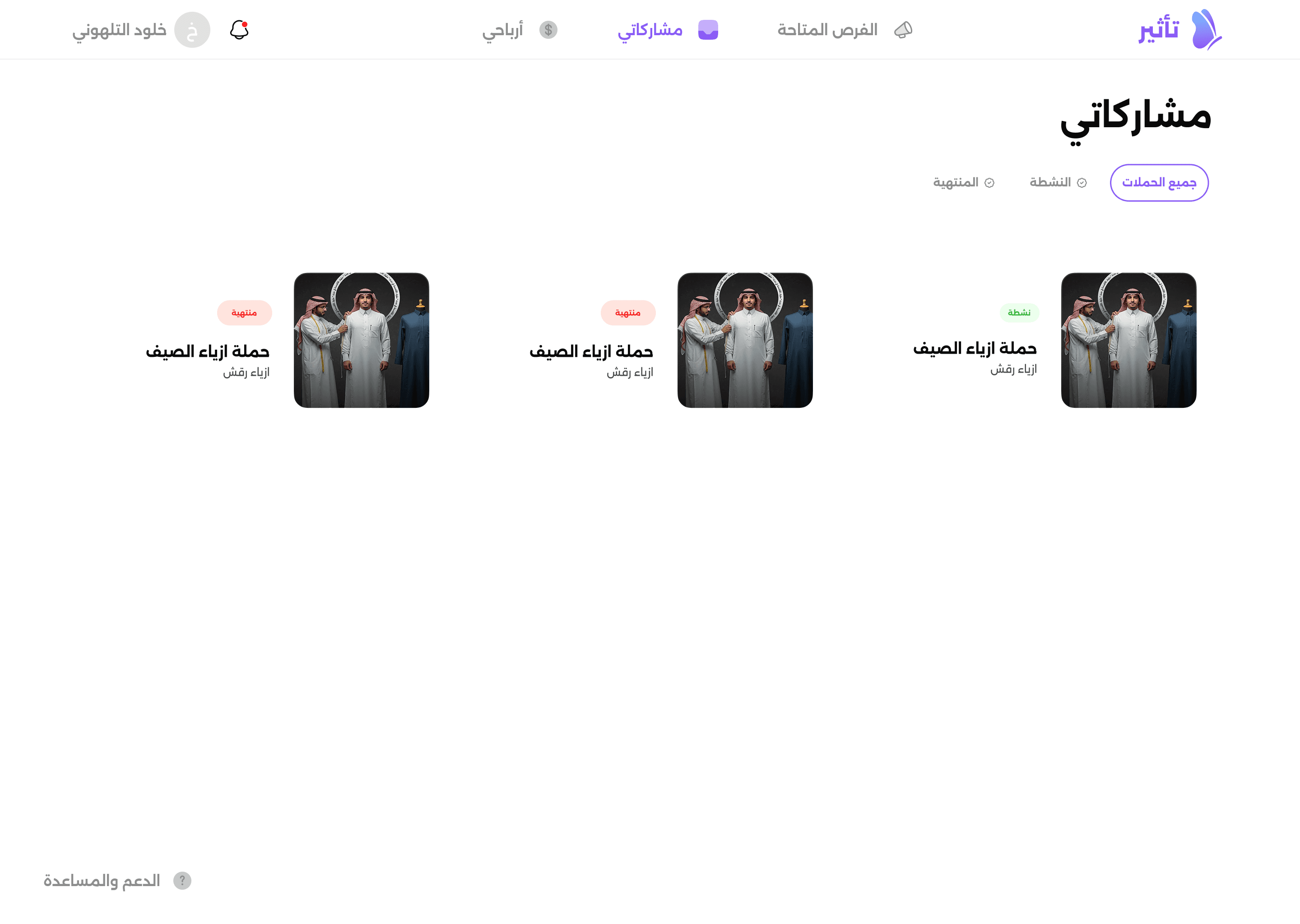
We simplified tabs and categorized campaigns as “Active” and “Inactive.” We also removed the URL because we realized people usually open the card to view campaign details.
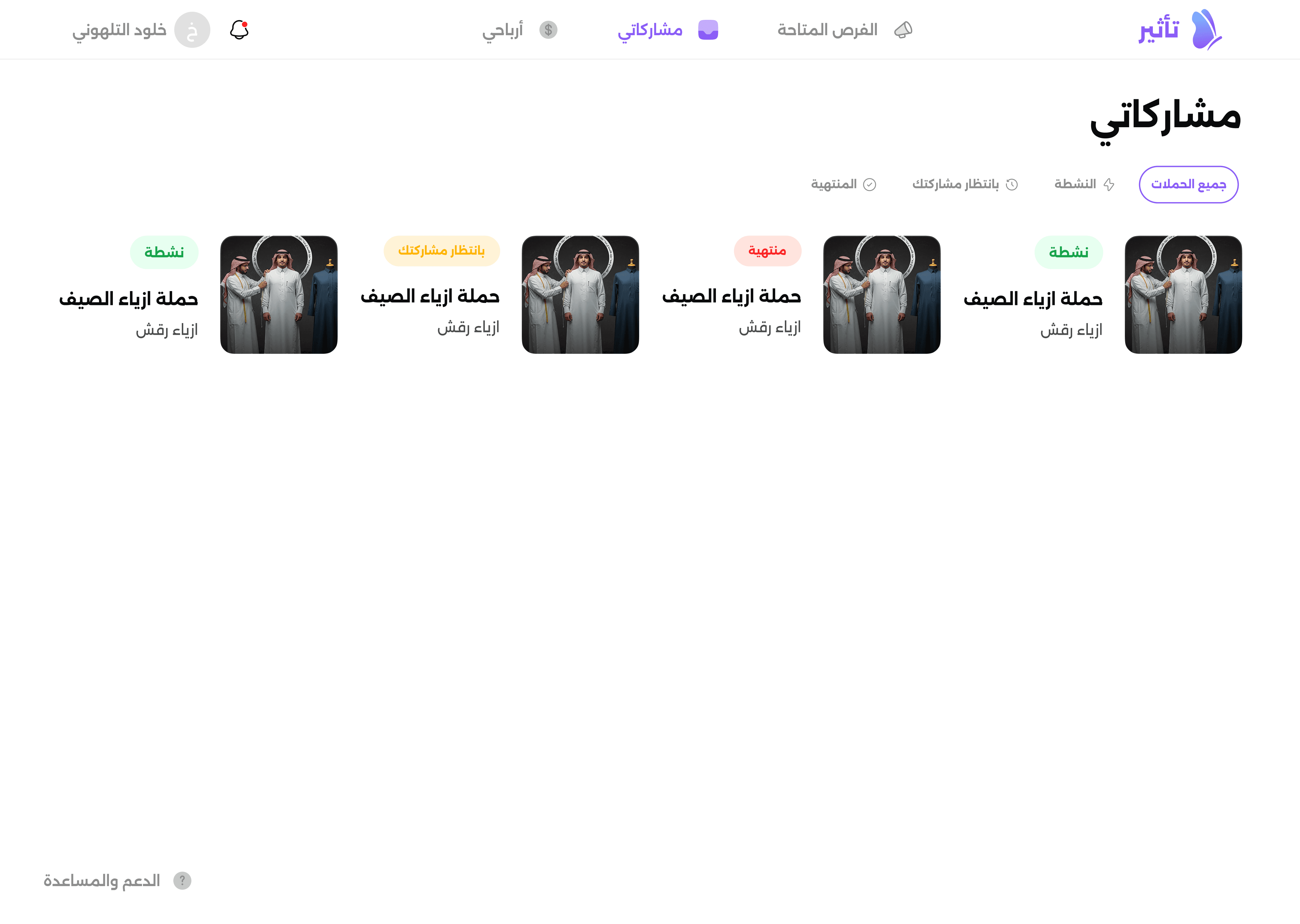
We love simplification, but we wanted to bring attention to the “Upload Evidence” case, so we made a whole tab dedicated to this category.
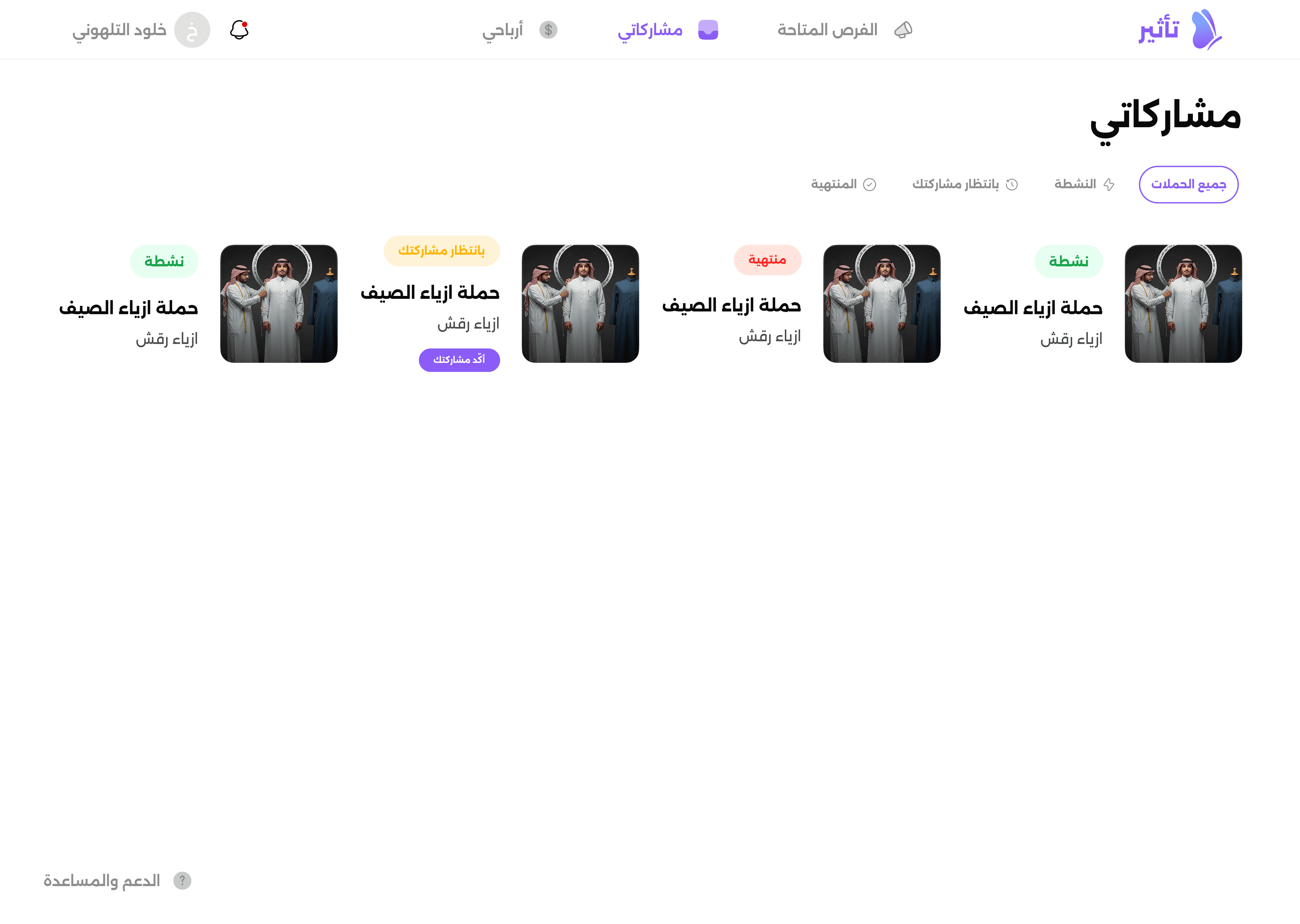
This is the “My Participations” page. We added a state called “Needs verification” with a button that says “Upload screenshot” to complete the interaction.
What Tatheer Taught Me About Systems, Incentives, and Interfaces
Tatheer has been less about “designing screens” and more about sitting with a system where incentives and interfaces keep colliding:
Advertisers want clarity and control but not friction.
Creators want autonomy and fair pay but are wary of platforms that overpromise.
Audiences want to feel like humans are talking to them, not scripts.
Every design decision is a small choice about who we believe we’re serving and how honest we’re willing to be. This spans from whether a button says “Error” or “Ready to launch,” to where we ask for a URL, to how we phrase a headline.
If I imagine this case study in my portfolio, I see:
Early messy versions next to the quieter final ones.
Arrows showing what we tried, what happened, and what we changed.
A narrative that doesn’t just say, “Here’s a platform,” but instead answers, “Here’s how we tried to make a messy, human market a little more legible and fairer.”
That, to me, is the work of a design thinker. It is not just making something look polished, but patiently redesigning the loops where people, money, and meaning move. Persevere until the system starts to feel less like a black box and more like a conversation everyone can see.
Why “Tatheer” and why the butterfly?
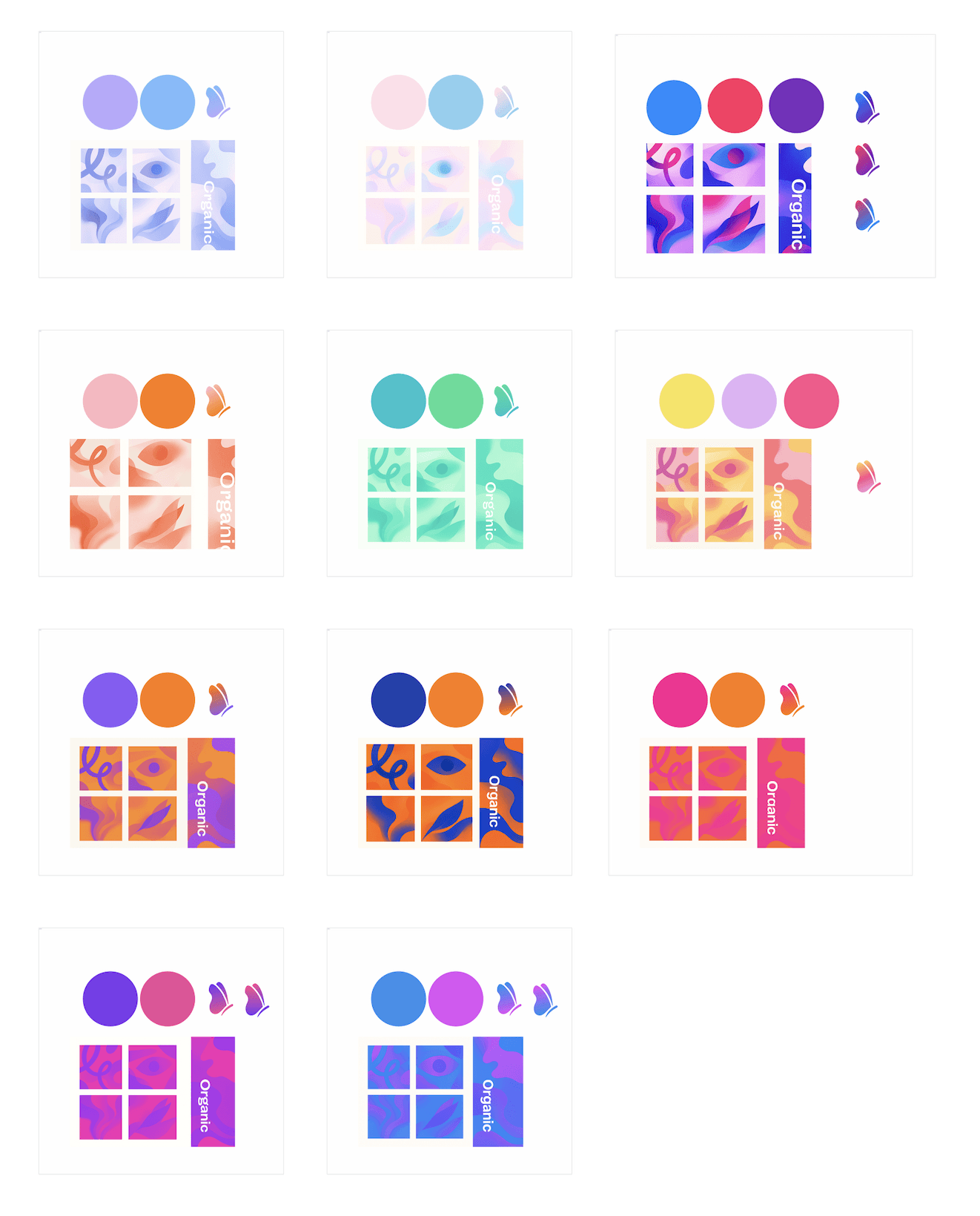
“Tatheer” is an Arabic word that means influence or impact, inspired by our main audience: social media influencers. And because we’re targeting micro-influencers specifically, we wanted a symbol that captures how “small” creators can have massive impact. Rather than using yet another circle, square, or triangle, we chose a unique mascot inspired by the butterfly effect—where even the smallest actions can create big waves.
Who’s “We”?
It’s me (Moayad), leading product design, my older brother (Mohammad) leading business & ops, and a great team of five designers and engineers.
This project has been my way of sitting inside a messy system of advertisers, creators, audiences, and money, and asking, repeatedly: What would this look like if we took trust, proof, and human limits seriously?