BACK
Tayseer - An Easy Way To Memorize?
Designing a Quran Memorization Companion for a Distracted Generation
There is a strange contrast in the world I grew up in.
On one hand, our generation has outsourced memory to devices. We live with endless notifications, short-form content, and the quiet sense that our attention is never fully ours. On the other hand, there is a 1,400-year-old tradition in which millions of Muslims voluntarily memorize an entire book, line by line, page by page.
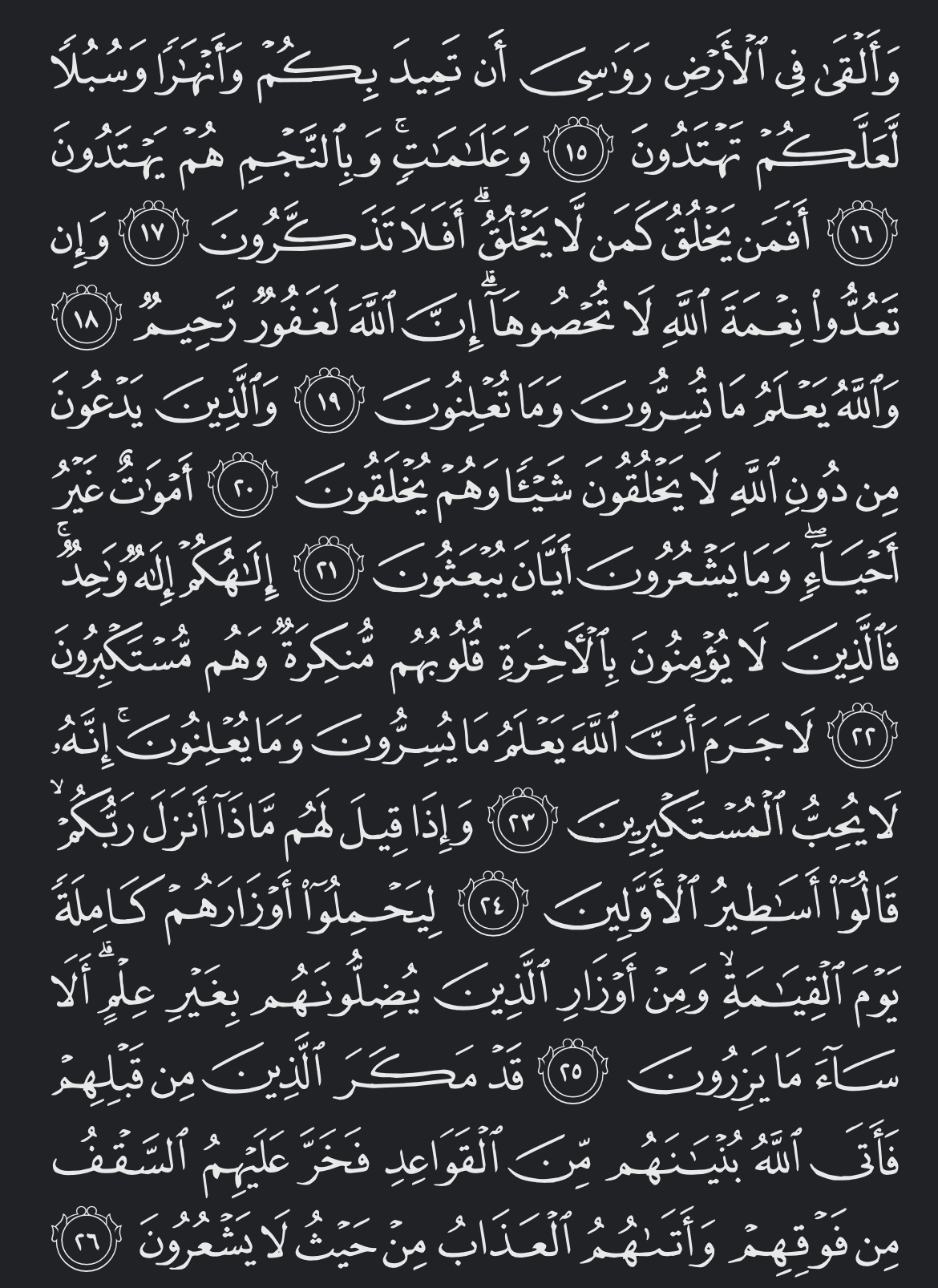
Example page of the Quran
I am one of the people caught between those worlds. I have spent years trying to memorize the Quran in the traditional way, and I have also spent years fighting the pull of my phone. Tayseer grew out of that tension: What would a memorization tool look like if it took both realities seriously: modern distraction and ancient discipline?
This is not a launch story or a feature tour. It’s a look at the problem as I understand it, the principles that emerged from research and experience, and how those principles shaped the product decisions behind Tayseer.
Where the Problem Really Is
Many of my friends voiced the same opinion:
I care a lot about the Quran, but I’m either busy, tired, or distracted.
Quran memorization sits in the same overloaded schedule as midterms, internships, late-night group chats, and short-form content. The desire is there, but consistency and focus are not.
The current traditional model of hifdh (Quran memorization) goes like this:
You have a teacher in the afternoon or evening sitting everyday in the Mosque listening to students reciting the Quran by heart and correcting them if he spots a mistake.
You have to stay consistent, showing up everyday with a new set of verses memorized and an old set revised.
Once that structure disappears, the memorization journey becomes “on and off,” in their words: intense bursts followed by long gaps.
So the real problem is not a lack of intelligence or sincerity. It’s a three**-way mismatch**:
Memorization is built on patience and repetition.
We live in an era of fractured attention.
We don’t have tools that blend spirituality (inspiration / content) or productivity (streaks, timers).
After all, the Quran was revealed for humanity to learn from its wisdoms. But sometimes people overly focus on memorizing it instead of applying its teachings.
Tayseer is my attempt to fill these gap.
What Students Currently Do To Learning
Before sketching screens, I had conversations with Muslim students and asked a simple question: When you actually learn something well, what are you doing? I deliberately did not ask about “apps” at first; I asked about habits.
A few patterns showed up again and again:
Consistency is the real boss battle.
People kept saying things like, “The memorizing itself isn’t hard; staying consistent is.” Once they sit down and start, they’re fine. The problem is overcoming the thousand reasons not to start.
Understanding makes things “stickier.”
They described doing better, both in school and in Quran, when they knew what something meant. Reading a short tafsir or explanation first turned rote repetition into something more anchored.
Learning is multi-sensory.
When they remembered best, they weren’t just reading silently. They were listening, reciting aloud, writing, filling in gaps, or explaining it to someone else. Hands, eyes, and voice were all involved.
They miss structure and people.
The periods they spoke of as “my best memorization days” almost always involved a teacher, a fixed time of day, and a group. The “on and off” periods were usually solo and unstructured.
One sentence from a student stayed with me:
“I want to memorize the Quran, so that in life… I can recall the exact verse I need.”
That sentence quietly became the north star of this project. The goal is not just to finish pages. It’s to help someone build a relationship with the text that shows up when it matters.
Learning from Existing Apps
To avoid inventing yet another generic learning app, I benchmarked products that already try to help people learn and memorize: Quranly, Tarteel, Kalam, and Bible Chat app for comparison.
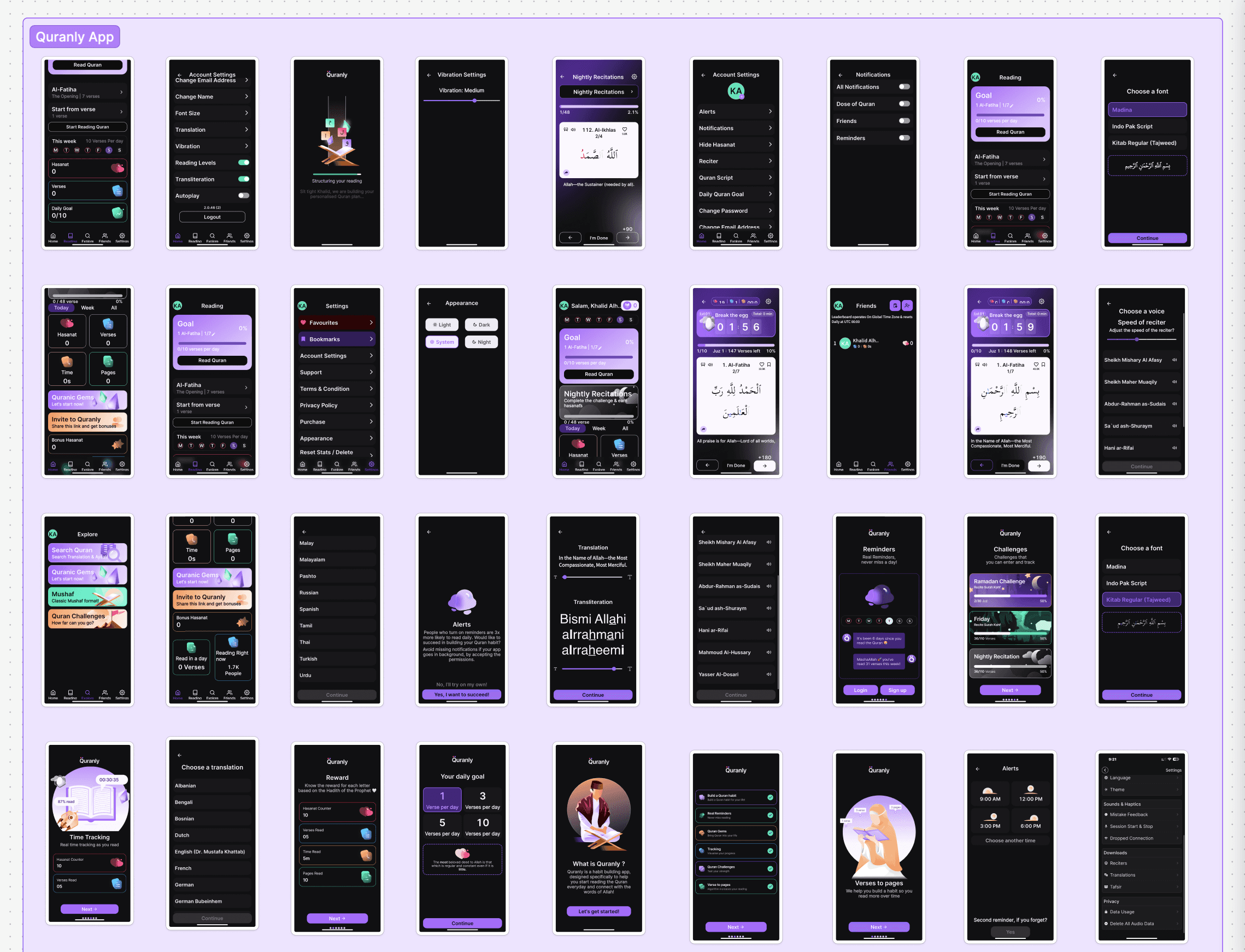
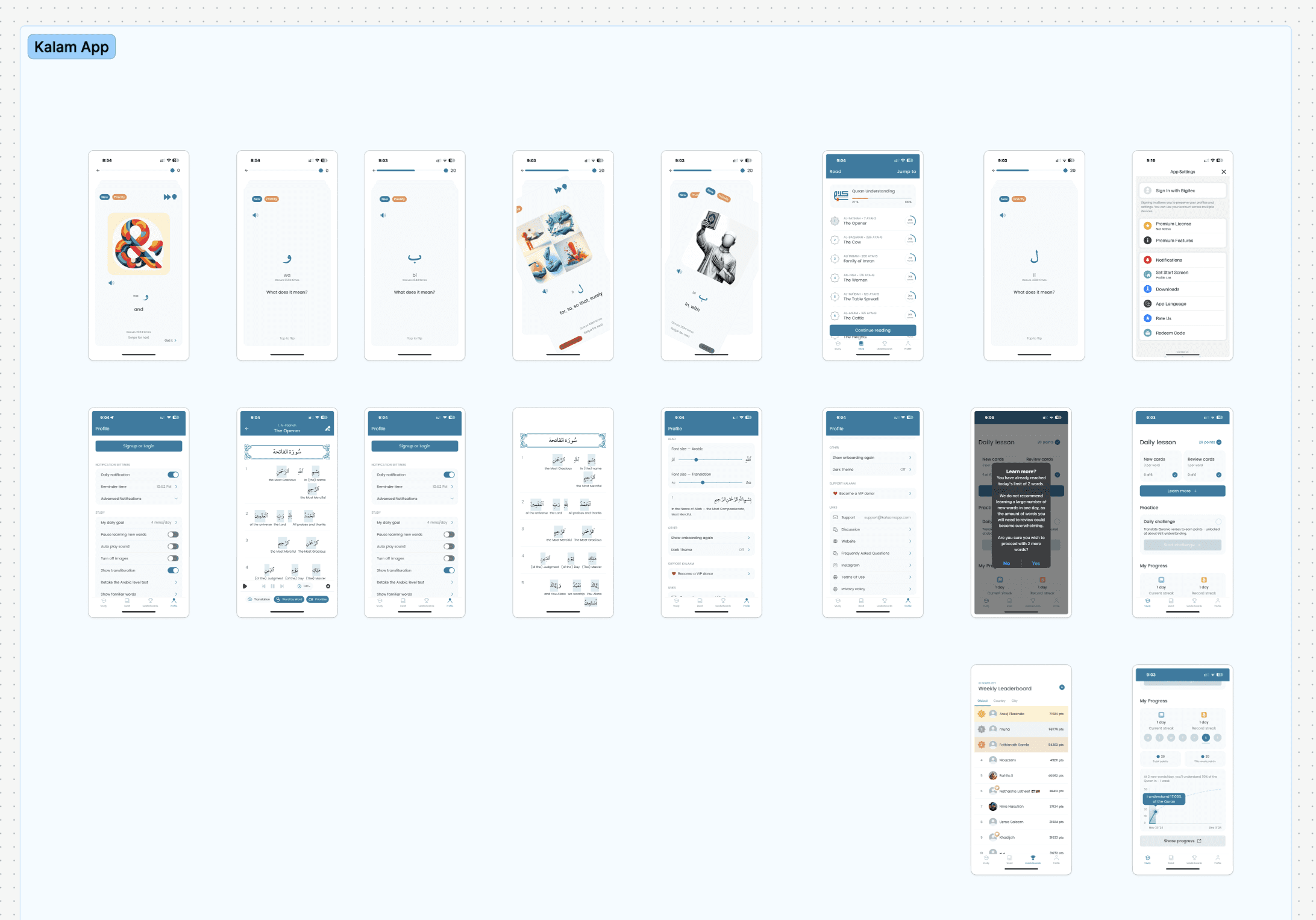
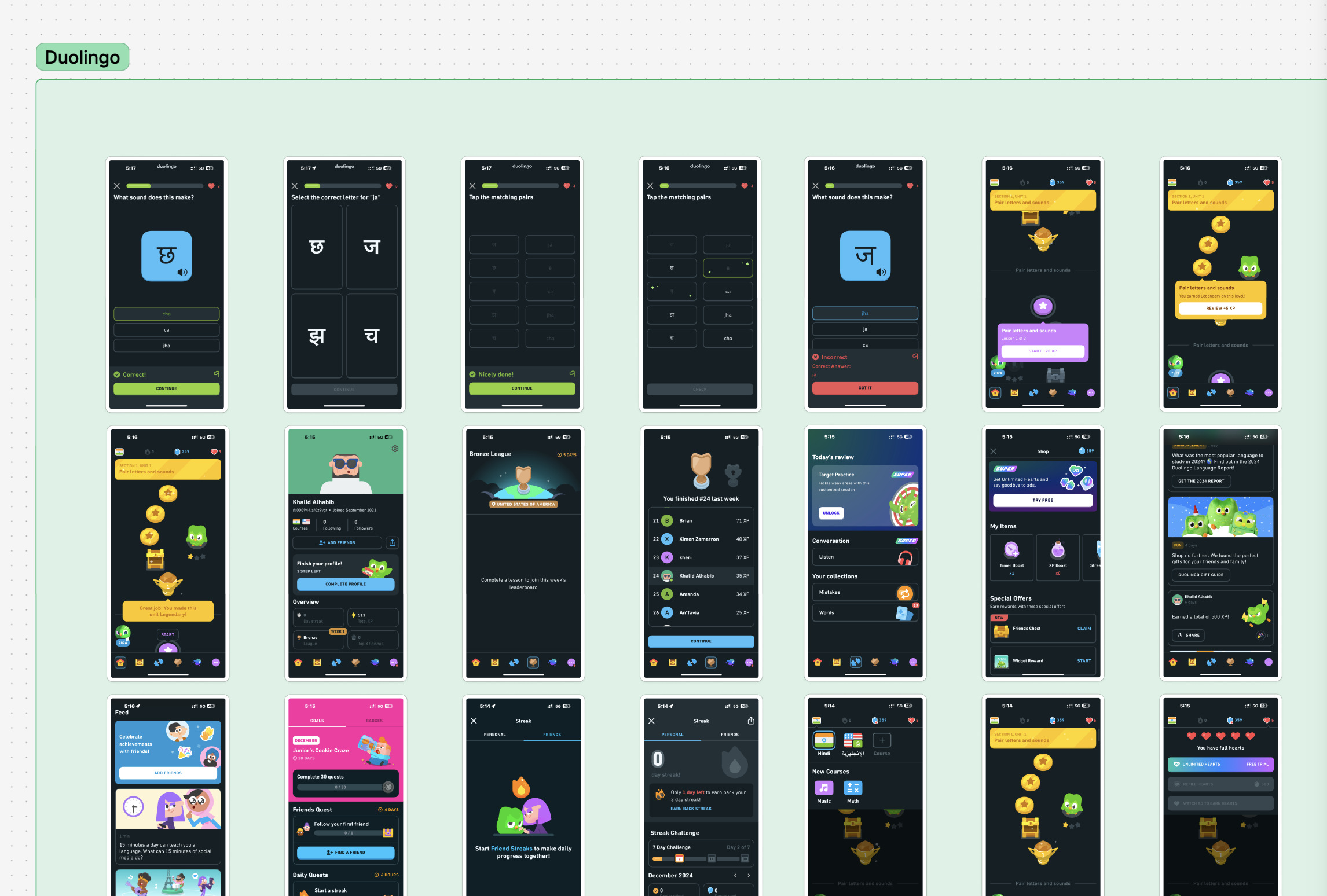
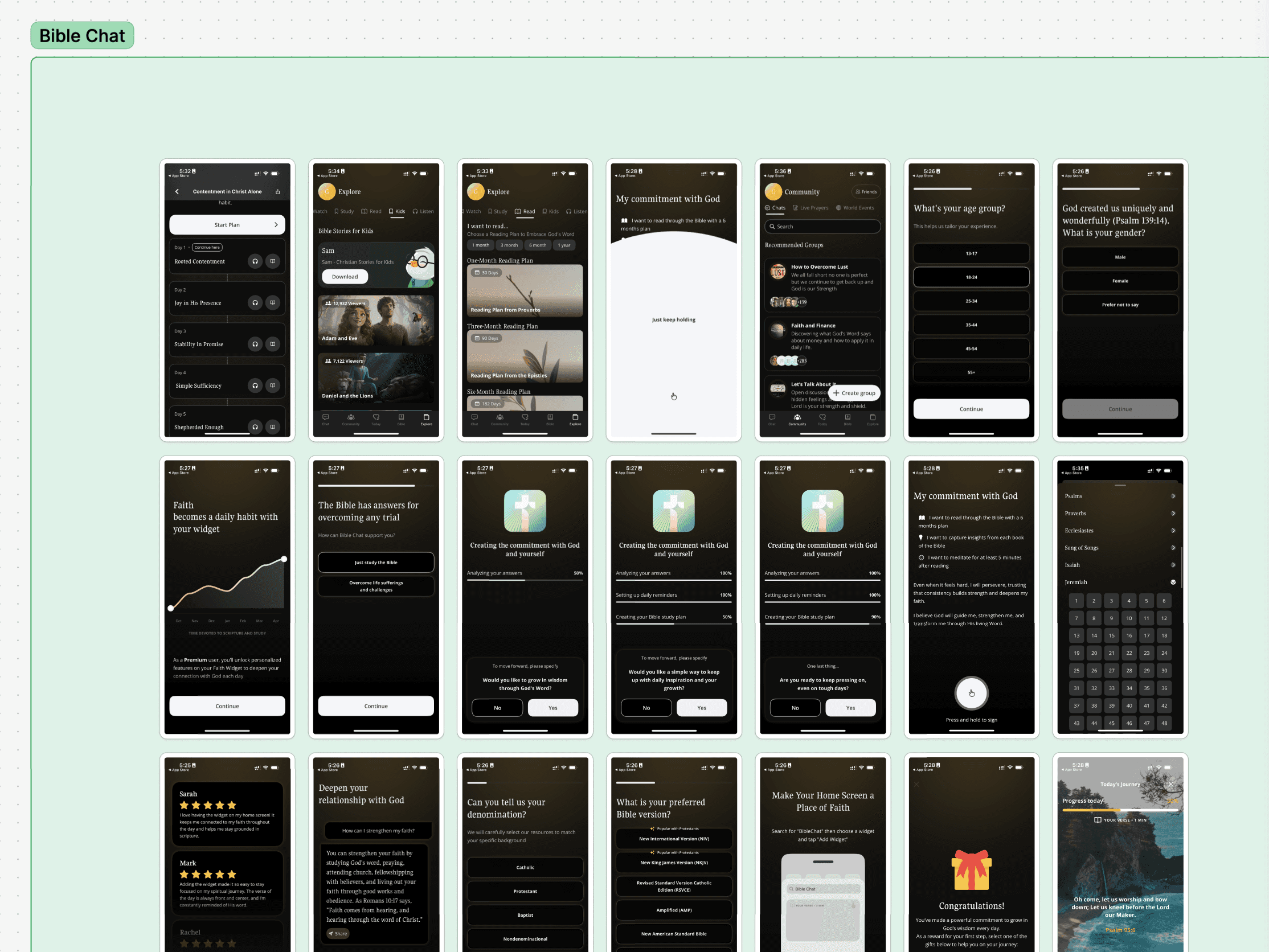
They taught me two things at once:
Modern apps are very good at habit mechanics.
Using streaks, daily goals, progress bars, badges, notifications, these tools know how to get you to open them again tomorrow. Some use AI to listen to your recitation, and others schedule a review using spaced repetition.
They rarely address the full memorization journey in one coherent flow.
Spiritual apps are rich in content (recitation, tafsir, reminders), but often treat memorization as “just read more.” Learning-oriented apps handle practice and review well, but lack the spiritual framing and teacher-like warmth that hifdh students value.
I didn’t want to copy any single app. Instead, I treated them as a vocabulary. I looked at what pieces already exist, and how they might be recomposed into a Quran-specific memorization experience that makes sense to someone like the students I spoke to and my younger self.
What I Optimized For
From the research, personal experience, and benchmarking, three principles kept resurfacing. However, I didn’t start with them; they surfaced after many false starts:
Consistency over intensity
It is better to memorize one line every day for years than a page once a month. The app should make showing up easy and missing a day feel like an exception, not a habit. Big, heroic sessions are nice, but tiny daily wins are more important.
Understanding as part of memorization, not a separate tab
Meaning should be woven into the act of memorizing itself. Every verse is something you can recite and use in life. Translation and tafsir cannot be an afterthought hidden behind another button.
Human-like accountability in a digital container
The app can’t replace a teacher or a circle, but it can behave less like a content library. It can be more like a quiet companion who remembers your goals, nudges you when you drift, and gives you small moments of “Someone is expecting me.”
The rest of this case study is about how those principles shaped the product.
A Journey
For Tayseer, I imagined the home as a journey, not a catalog.
Instead of a grid of surahs, you see a path of small steps. Each “node” on the pathway is a tiny unit of verses, maybe two or three ayat. They are labeled in a way that feels human with the first word of the first verse of the 98th chapter. The path moves forward slowly but visibly.
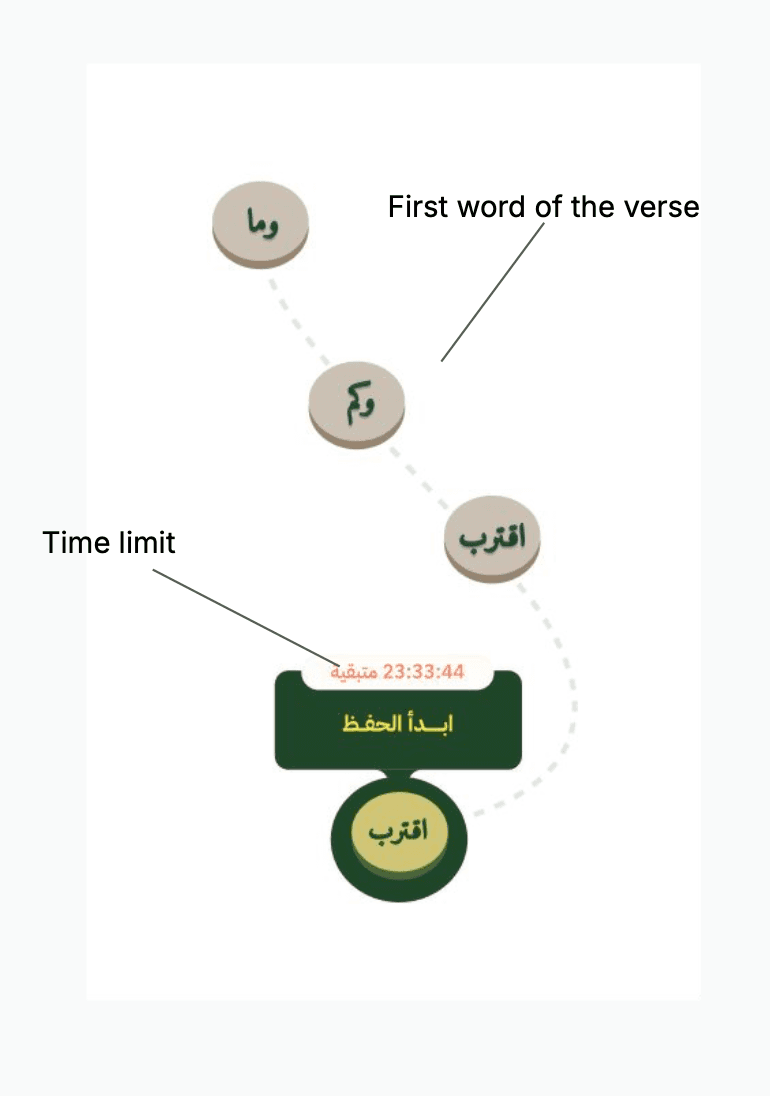
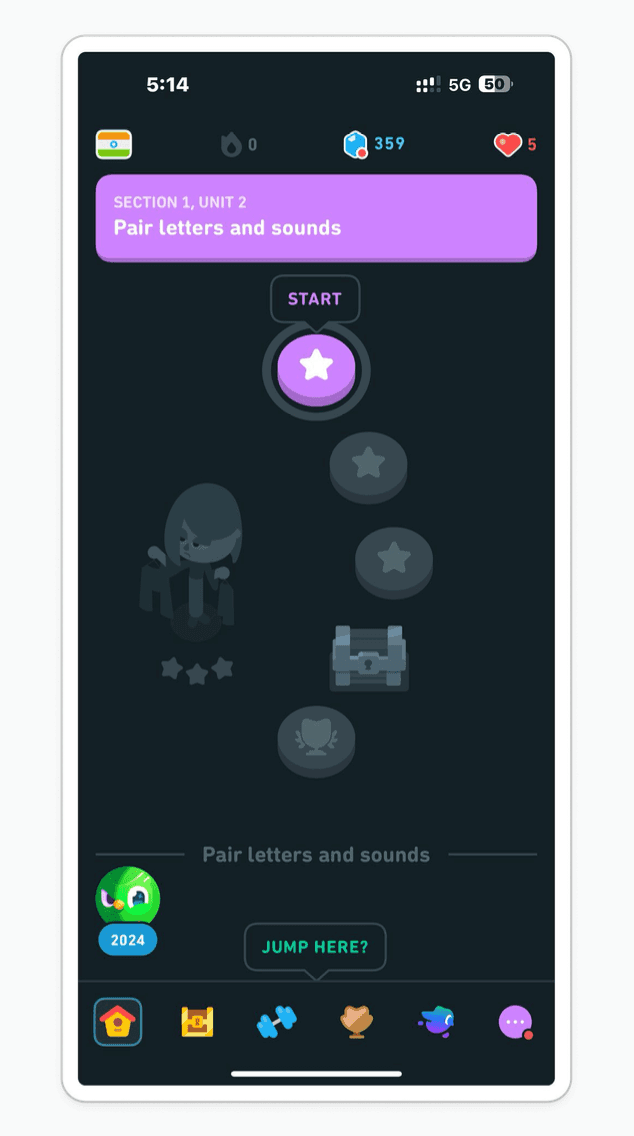
Of course, their UI is prettier
When you open the app, you are not asked, “What do you want to do?” You’re reminded, “Here’s where you left off. Ready to take the next small step?” This way, starting becomes the default.
Some early ideas, like aggressive countdown timers, looked clever in mockups but generated anxiety in context. They seemed more like exam prep than worship. Those experiments helped narrow the tone toward something calmer: less “gamified grind,” more “quiet path.”
Level Design: How to Memorize A Verse
I wanted each tiny level to feel like a complete learning cycle:
Understand → Hear → Practice → Recite (for X number of times) → Test → Review
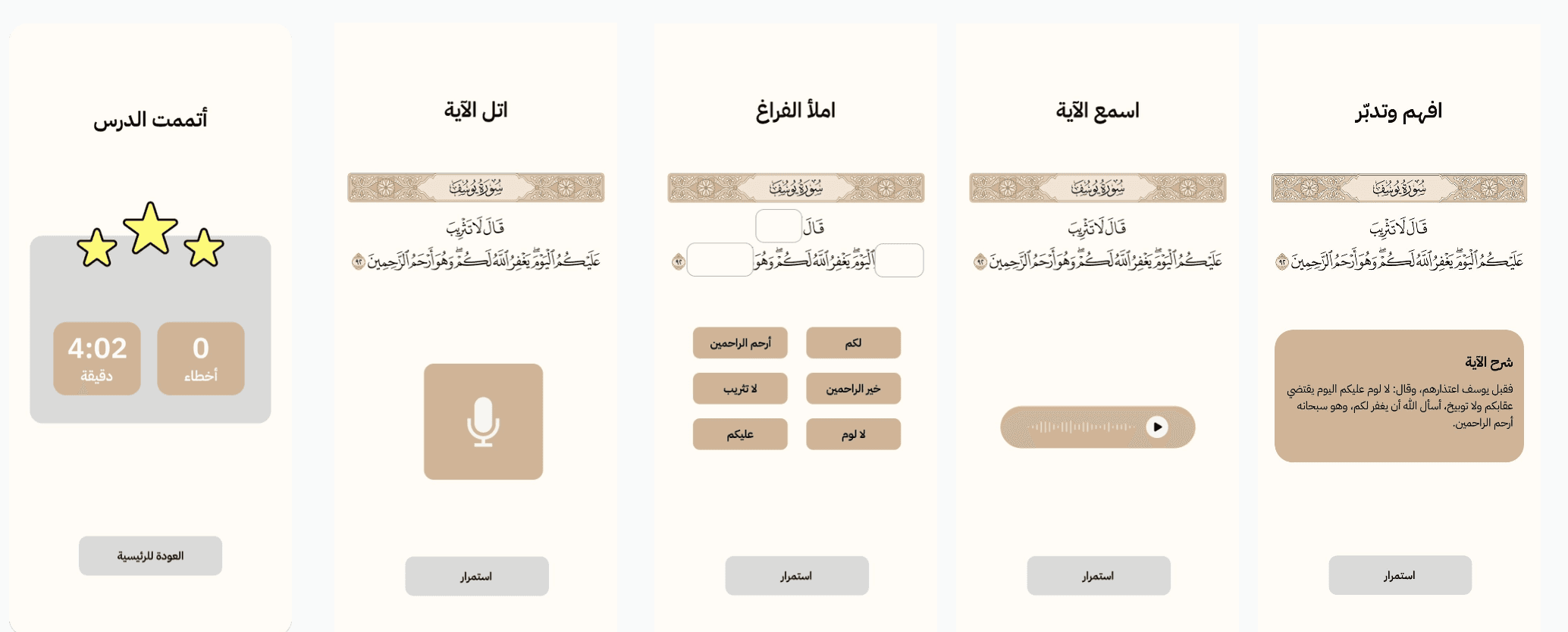
Full prototype here: https://www.figma.com/design/Ujm0FWDo4xIAi3GUyBJN1g/Quran-Memorization-App?node-id=0-1&t=jNJPqnEuTjSzTClT-1
Rather than walk through interfaces, I’ll describe how the loop feels.
i. Start with meaning and a “life hook”
Before anything else, the app shows:
A short, plain-language explanation of what the verse is about.
A “life hook,” which is a one-line prompt that suggests where this verse might matter. For example, “This is a verse to remember when you feel unsafe,” or “This is about gratitude when things are going well.”
It’s not a full tafsir, but it gives your brain something to attach the sounds to. It echoes what students told me: Verses stick better when they can imagine using them.
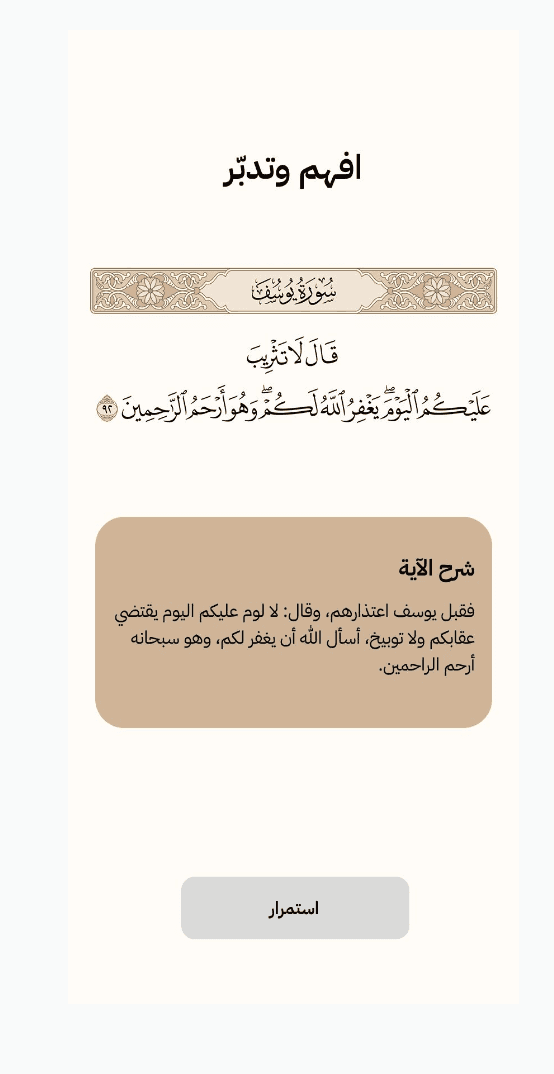
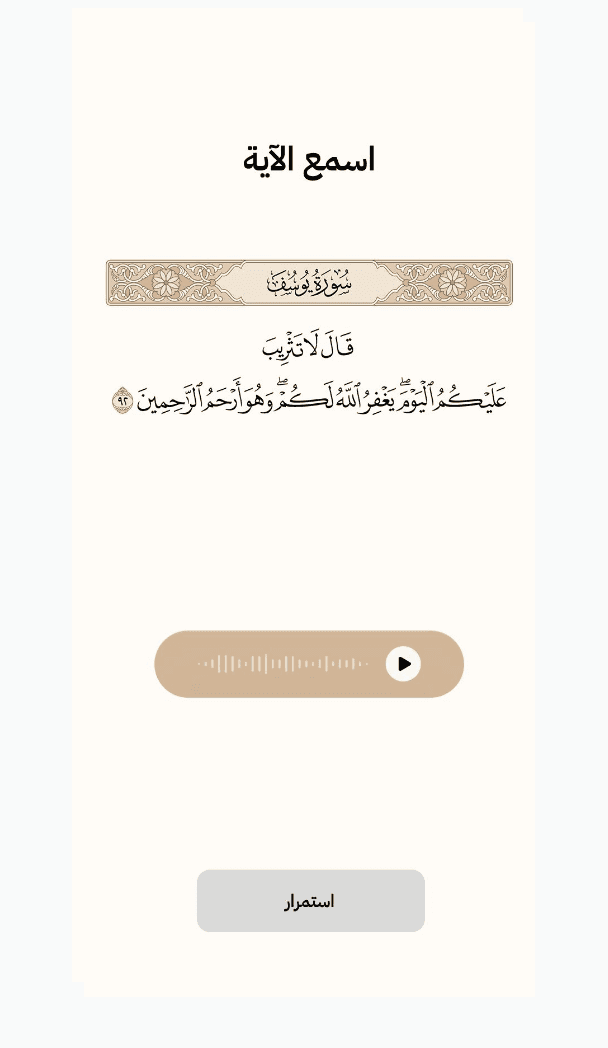
ii. Listen until the melody feels familiar
Next, you listen.
The verse is recited clearly by a qari, with the option to loop it. You can slow it down slightly or listen with subtle highlighting that follows the words as they are recited.
The goal here isn’t to “get it right” yet. It’s to let the rhythm and melody soak in. Traditional hifdh often starts like this: just listening to the teacher’s recitation a few times before attempting to follow.
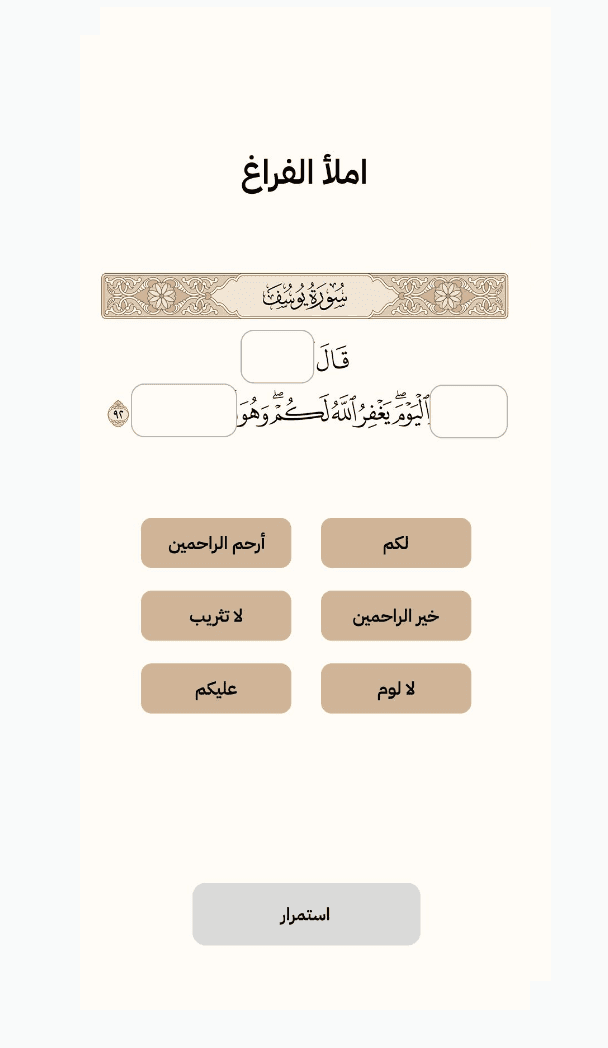
iii. Touch the text with your hands
Now the interaction becomes more active.
You might see a fill-in-the-blank exercise where one or two key words are missing, and you drag or type them in. They are fun and give quick hits of “I got it,” but it doesn’t magically guarantee long-term retention. So I consider them a warm-up.
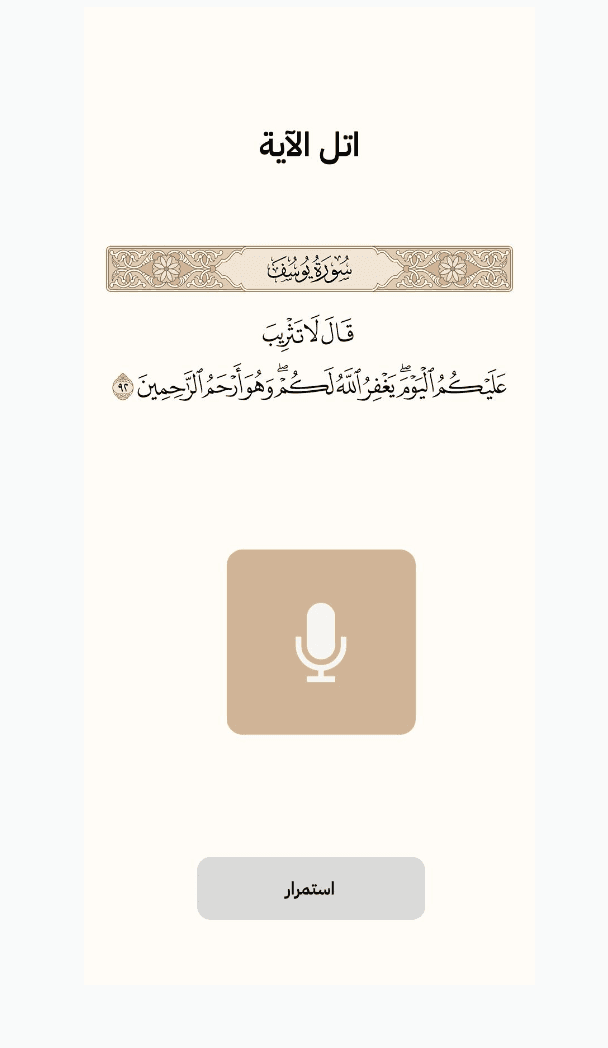
iv. Recite with gentle feedback
At some point, the app asks you to recite.
You hold down a button, recite the verse aloud, and the app listens. Instead of using harsh red/green judgments, the feedback is more like a teacher’s light correction. It highlights missed words, hesitations, or tajwīd mistakes without shaming you.
This part is technically ambitious, but the design principle is simple. It should feel like the app is paying attention with care, not grading you like a machine.
v. Test without seeing the text
The real test of memorization comes when the text disappears.
The app dims or hides the words and simply shows a marker for where you are in the journey. You recite the verse from memory. If you struggle, you can tap to reveal the first word or a prompt, similar to how a teacher might nudge you in a circle.
Accountability Without Turning Into Social Media
Traditional hifdh thrives on accountability. A teacher always notices if you’re absent, and your peers would certainly pull ahead if you miss a day. When other productivity / learning apps try to add “social” elements, they mostly resort to leaderboards and public streaks, but that never felt right for something as intimate as the Quran.
So I leaned toward softer, more private forms of accountability:
You can pick one or two accountability partners, such as a friend, parents, sibling, or mentors. They aren't shown your exact verses or mistakes; they just see whether you showed up: “5 out of 7 sessions this week.”
The aim is to borrow the feeling of “Someone is expecting me” without recreating the noise, pressure, and comparison culture of mainstream social networks.
Beyond the Prototype
Around the core loop, I sketched features that extend Tayseer into a richer ecosystem:
A surah browser that lets you jump to any surah while still integrating with your main journey.
A “Reflection of the Day” space to jot down how a verse showed up in your life.
Spaced repetition scheduling for review, similar to Anki, so that older verses quietly come back before they fade.
Lightweight group journeys, where a small circle can agree on a portion and see, gently, how far along each member is.
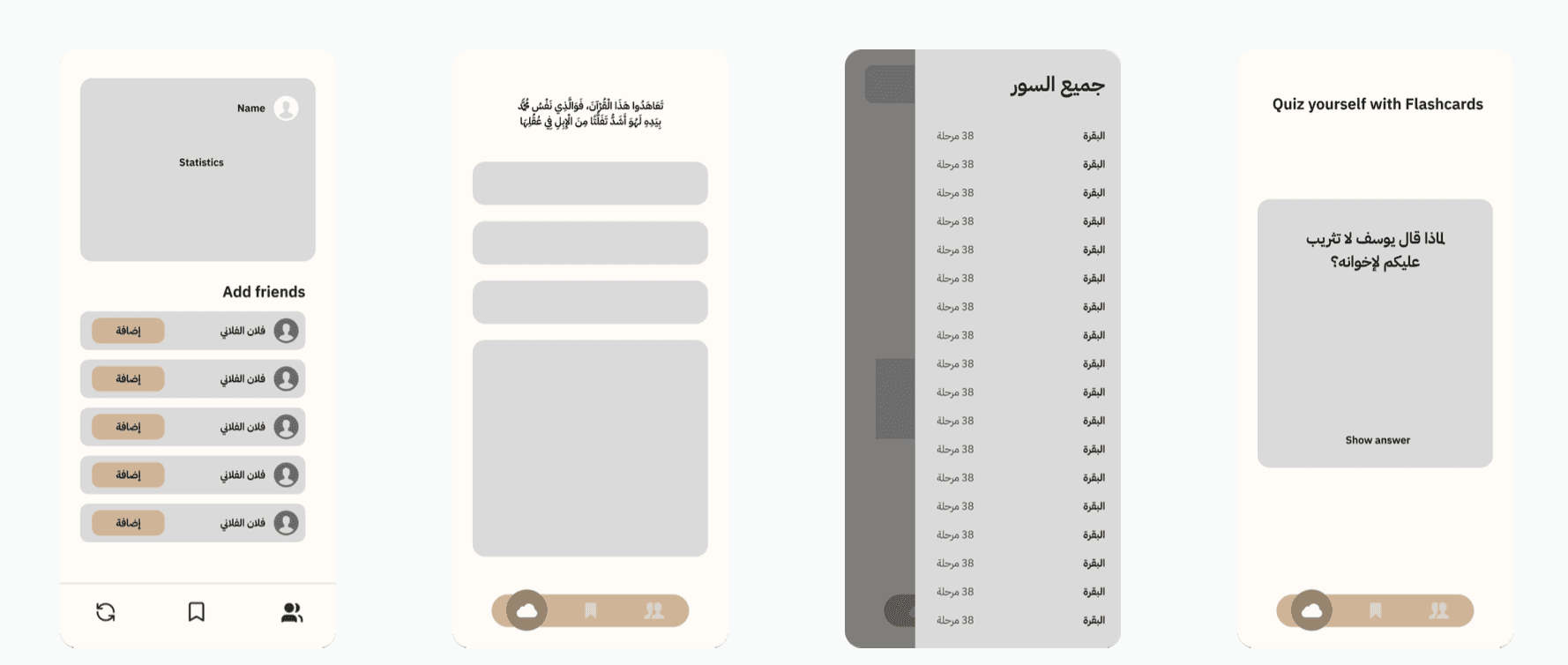
These ideas are less polished than the main loop, but they point toward a vision where Quran memorization is not just a solo habit between you and a screen. It becomes a shared, trackable path with people and structures you trust.
Working on Tayseer forced me to hold two very different images side by side. The first was kids sitting in a circle in a masjid, repeating verses to a patient teacher. The second was those same kids ten years later, lying in bed at 1 a.m., phone in hand, telling themselves they’ll start memorizing “soon.”
This is what pushed me to sketch the answer to a question I care about: How can we build a long, steady, loving relationship with the Quran for distracted students?