BACK
Feb 12, 2025
Enhancing the Islamic Pilgrimage Experience
Enhancing the Islamic Pilgrimage Experience Moayad Alismail
Enhancing the Islamic Pilgrimage Experience
Every year, 1.8 million Muslims from all around the world embark on the journey to the holy site of Mecca to perform Hajj – the sacred Islamic pilgrimage. This heavy duty of ensuring a smooth experience for millions of Muslims presents a huge challenge for the Saudi Arabian Ministry of Hajj, prompting them to ask the public: “How might we enhance the pilgrimage experience?” with a tempting cash prize on the table for the top voted ideas. Kind of like an OpenIDEO website but for Hajj. My family and I eagerly decided to take on the challenge, and here's what happened.
When Your Parents Are One of The Intended Users
Luckily, my parents have performed Hajj before, so this made the first step of the design thinking process, "empathize", a smoother ride. They described their pilgrimage experience from start to finish, exploring the highs of spiritual connection and the lows of physical and cultural challenges, painting a vivid picture of their delights and pain points. The conversation soon turned into them venting about exhaustion, the hot weather, the limited space, and many "I wish if..." moments. Lesson number one: having users who share their complaints makes designing solutions much easier.
Now, the challenge outlined the main problems that our solutions must address, things like accommodation, transportation, communication, and some other problems the ministry of Hajj faces each year. Those problems were too broad, and thinking about a specific solution for a general problem would be very difficult. So, what should we do? Yes, “define” the problem.
Defining the Problem
We took a moment to clearly pinpoint the exact problems within what the ministry proposed. When it comes to where pilgrims stay, we wanted something cheap, but also comfortable and had some privacy. Crowded places and not having personal space affected how we felt mentally and physically. For transportation, we had many criteria: we wanted trains to be fast, available, comfortable, and safe. Then, we decided to prioritize availability and safety over making them super comfortable because that seemed more practical considering the huge demand. In terms of guidance, we know that the ministry has a mobile app that maps out the entire mosque and nearby holy sites (with an area totaling to 7km2, twice as large as central park), but we thought we should consider cases where people have died phones, or at least make information more accessible – especially for people who don't speak Arabic.
Enhancing the Islamic Pilgrimage Experience Moayad Alismail
All these problems are equally as important for the whole pilgrimage experience, where we stay, how we get around, and how we communicate. We realized how big of a duty the ministry of Hajj handles because of the many complex and diverse challenges to account for.
Unexpected cases like fires or health hazards. Mothers losing their children in the crowd. Making sure facilities are accessible for the elderly or the disabled pilgrims. Not to mention the weather – extreme heat, sudden rain, or sandstorms – can make things tricky. Every single element of the journey shapes the story of the pilgrimage.
Here's our three big ideas to enhance the Hajj experience through accommodation, transportation, and communication.
Idea #1: Sleeping Capsules within the Holy Mosque
Pilgrims walk 5,000 to 20,000 steps a day, so the concept of sleeping capsules within the holy mosque addresses the exhaustion they face in a space-efficient manner. With this temporary resting place, pilgrims can recharge anytime anywhere in small affordable capsules without the need to leave and re-enter the holy site.
Courtesy of
Some might argue that implementing modern elements like capsules within the mosque could alter the traditional ambiance of the holy site, but we can always manage to place those capsules in a dedicated corner or maybe scatter them around outside the mosque. The purpose of capsules is to act as an alternative to hotels or camps.
Enhancing the Islamic Pilgrimage Experience Moayad Alismail
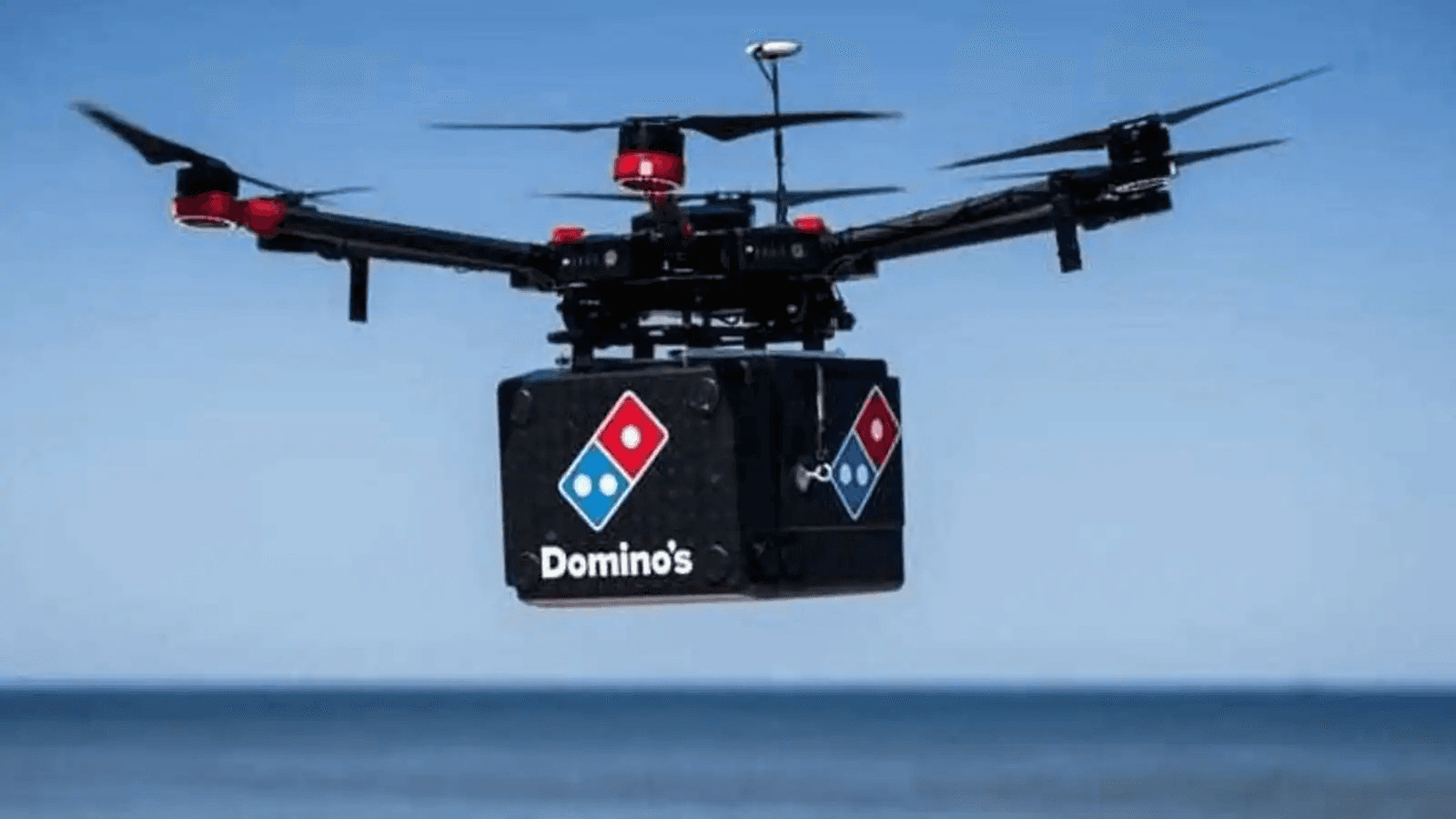
Idea #2: Drones for Delivery Services
Courtesy of
My parents found it a struggle to go get food and come back because of the huge crowds of people doing the same thing. A sea of cars on the streets, and incredible chaos inside nearby restaurants, all while being exhausted after a long hot day. Ordering from delivery apps isn’t efficient anymore since it takes too long to arrive, and it’s expensive because of peak hours. With drones, we can streamline the process and deliver food and supplies to pilgrims in minutes. There are many other advantages for implementing that we used in our pitch: reducing carbon footprint, boosting quality of life, stimulating economic activity, and so on.
On paper, this could make the pilgrimage experience much more convenient, but there are a few edge cases to consider. One of which is human interaction with autonomous drone technology. Let’s say that the food someone ordered is now hanging under the drone, how can we ensure that the customer will properly receive their food from this “absurd” robotic creature? Keep in mind that 1.8 million people are coming from different parts of the world, so it’s not uncommon for some to be technologically illiterate.
Of course, we can optimize distribution using alternative logistic systems other than drones. But drones seemed less expensive and much faster in delivery.
Idea #3: Massive Screens with Real-time Updates
My parents noticed themselves asking security guards and local guides all the time for directions.The idea we suggested is to have massive screens scattered around the mosque providing real-time updates about traffic and interactive maps, reducing uncertainty.
Some might say that this is redundant because there is already a mobile app that shows this information, but the advantage here is that we make information more accessible.
Enhancing the Islamic Pilgrimage Experience Moayad Alismail
Conclusion
We submitted our ideas and, spoiler alert, we didn't win the challenge. Our ideas
seemed flawless on paper, but as any good design thinker knows, the real magic happens in
the testing phase. Perhaps a real-world trial could've flipped the outcome.
Reflecting on this short creativity exercise, I’m proud we were able to come up with
solid ideas with no prior knowledge about design thinking at all. It turns out that finding
solutions doesn't require a certain framework.
More